Small and mid-sized businesses (SMBs) in the United States face a recurring challenge: turning a nicely designed website into a reliable customer acquisition engine. Too often, web design, search engine optimization (SEO), and paid search (Google Ads) live in silos, leading to friction, wasted budget, and slower growth. For a web design agency USA like VCweb, the path to sustainable growth is not a single clever tactic but a disciplined, multi-channel playbook that treats the website as a holistic system: fast, accessible, and optimized for both organic and paid discovery. This article outlines a practical framework to align website development services with SEO and Google Ads management, backed by industry insights and real-world trade-offs.
The SMB growth triad: design, SEO, and ads must work as a single system
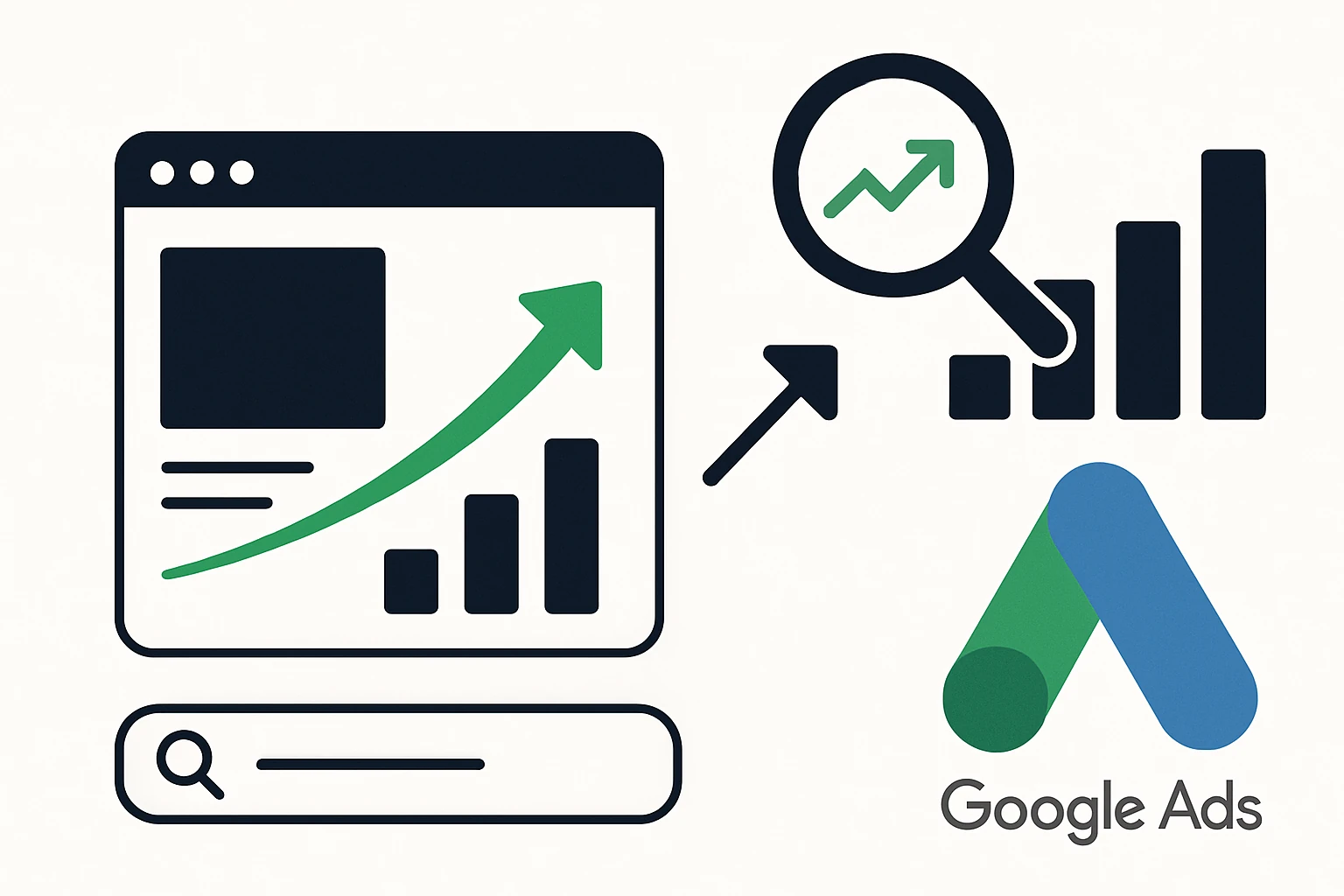
There is broad agreement among industry thinkers that a successful SMB digital program requires more than pretty visuals or a single advertising channel. A well-executed site design sets the stage for fast load times, accessible UX, and clear value propositions, SEO ensures your pages answer the questions real customers are asking, and Google Ads management accelerates visibility while you nurture organic growth. When these three pillars are aligned, you improve not just traffic, but the quality of that traffic and the likelihood of conversion. For SMBs, the payoff is most visible when you can trace a visitor from first touch to meaningful action, and attribute that journey across channels. Salesforce emphasizes the importance of diagnosing visitor paths to understand what drives conversion, which is essential when combining design, SEO, and paid search in a single strategy. (salesforce.com)
From a practical perspective, a web design agency USA should view the site as a conversion engine first - not a static brochure. Google’s page experience framework - centered on speed, usability, and stability - has been a core driver of how pages are perceived and ranked. In 2024–2025 Google reinforced that Core Web Vitals and overall page experience influence how pages perform in search results, especially for mobile users. While not the only signal, fast, mobile-friendly experiences contribute to engagement and conversion, making speed and UX investment a sound SMB decision. (developers.google.com)
A practical framework for SMB growth: 5 simultaneous stages
Below is a lightweight framework designed for SMBs seeking to harmonize website design, SEO, and Google Ads management without overhauling every channel at once. Each stage builds on the previous one, but you can implement elements in parallel to accelerate progress. The framework is structured to be implementable by a small in-house team or a lean agency partnership and is designed to scale with your budget and data maturity.
- Step 1 - Define goals and buyer journeys: start with clear metrics (leads, qualified opportunities, new customers) and map the typical buyer journey. Align your site’s value propositions with these stages, so every page and ad touchpoint nudges visitors toward the target action. This alignment helps ensure your design decisions, SEO content, and ads messaging reinforce one another rather than compete for attention.
- Step 2 - Audit and optimize the user experience (UX) at speed: evaluate site speed, mobile usability, and accessibility. A fast, responsive site is the foundation of both SEO and paid search success. Core Web Vitals and general page experience remain important signals for ranking and engagement, improving them tends to reduce bounce, raise engagement, and increase conversions. (developers.google.com)
- Step 3 - Build a solid SEO foundation: cover technical SEO basics (crawlability, structured data, sitemap health), create topic clusters around your service areas, and optimize for local intent where relevant. Local optimization often yields high ROI for SMBs because many queries are location-based and transactional. A robust SEO foundation supports long-term growth alongside paid campaigns. (developers.google.com)
- Step 4 - Align paid and organic strategies: integrate Google Ads with your SEO and content strategy. Allocate budget to high-intent keywords, but ensure landing pages match ad promises and SEO-optimized content. A coordinated approach reduces wasted spend and improves Quality Score, click-through rates, and conversion rates. SMB-focused coverage emphasizes tailoring campaigns to local and low-volume opportunities, which can deliver meaningful returns when properly structured. (searchengineland.com)
- Step 5 - measure, learn, and scale: establish dashboards that link ads, traffic, on-site behavior, and conversions to revenue. Use path analytics to understand where users drop off and which pages contribute most to the funnel. Continuous testing - landing pages, headlines, and CTAs - drives iterative improvement and compounding results.
In practice, this 5-step framework is not a one-size-fits-all playbook. The right sequence depends on your starting data, technical setup, and growth tempo. A balanced mix of quick wins (e.g., faster landing pages and tighter ad targeting) and longer-term bets (e.g., content clusters and authoritative landing pages) tends to deliver both short-term ROI and durable visibility. Expert voices in the industry underscore the need for a tailored SMB approach to PPC and SEO, rather than applying generic playbooks designed for larger, resource-rich brands. (searchengineland.com)
Delving deeper: what to optimize in each pillar
Design: speed, clarity, and trust
Effective SMB web design prioritizes speed, legibility, and a clear path to action. That means optimizing images, minimizing third-party scripts, and structuring content so users can quickly discern the value proposition and next steps. A fast, clean site also reduces bounce and supports higher quality user interactions - key precursors to successful conversions. In addition, the design should reflect a consistent narrative across pages that mirrors the intent behind your paid and organic traffic. When the site design communicates credibility and value from the first pixel, SEO and ads performance can compound more effectively.
SEO: foundations that scale with content and intent
SEO for SMBs often starts with technical soundness (crawlability, indexability) and a content strategy anchored in user intent. Topic clusters help search engines understand how your products and services relate to what buyers are asking, while local SEO ensures visibility for neighborhood and regional searches. As Google and other search engines continue to refine how they interpret user intent, content must answer the questions buyers actually have, not just keywords. The long-term value of SEO lies in durable, high-quality content that earns authority and traffic even as paid channels evolve.
Google Ads management: precision, not volume
For SMBs, Google Ads success isn’t about pouring money into broad campaigns, it’s about precision: targeting high-intent queries, optimizing landing pages for relevance, and using well-structured campaigns and ad groups to test messaging quickly. The literature on SMB PPC consistently highlights the importance of tailored, local, and conversion-focused approaches rather than generic, high-spend strategies. A well-managed Google Ads program can deliver meaningful ROAS when supported by clear measurement and strong landing-page quality. (searchengineland.com)
Limitations and common mistakes: what to avoid
While the framework above is practical, SMBs should be aware of common pitfalls that erode ROI. These are not only technical missteps but strategic misalignments that can undermine an integrated program:
- Overemphasis on visuals at the expense of speed and usability. A beautiful site that loads slowly or behaves poorly on mobile will hurt both SEO and paid performance. Page experience signals, including speed, matter for search visibility and user satisfaction. (developers.google.com)
- SEO content that isn’t aligned with user intent or with paid landing pages. If keywords exist only in metadata and not on user-facing pages, you miss critical opportunities for organic and paid synergy. The right approach pairs intent-driven content with conversion-focused landing pages. (developers.google.com)
- Disjointed ad campaigns from organic and on-site experiences. In SMBs, a cohesive narrative across ads and landing pages is essential to maintain Quality Scores and reduce wasted spend. Tailored strategies for local and low-volume terms can outperform broad campaigns when data is used to optimize micro-munnels and pages. (searchengineland.com)
- Not measuring the full customer journey. Salesforce emphasizes tracing the path visitors take before converting, without this, it’s hard to know which touchpoints actually move the needle. Without a robust analytics framework, you’ll struggle to justify budget shifts or scale confidently. (salesforce.com)
Another real-world limitation is data maturity. SMBs often start with partial data or fragmented systems, which makes it hard to attribute ROI across channels. The practical remedy is to start with unified events and landing-page tracking, then progressively connect paid and organic data into a single dashboard. This approach improves clarity around what to adjust first and how to scale responsibly.
Structured block: a practical SMB Growth Framework in one view
The following framework consolidates the five steps into a concise, repeatable routine. Use this as a quarterly operating rhythm to keep your site, SEO, and ads aligned.
- Goal alignment and funnel mapping: define 2–3 core metrics and map the buyer journey to your site structure.
- Technical & UX audit: run a speed and accessibility sprint, fix critical issues, and optimize for mobile first.
- SEO foundation + content plan: establish technical health, keyword clustering, and local relevance with a content calendar.
- Ads + landing pages alignment: structure campaigns that mirror the topic clusters, ensuring landing pages deliver on ad promises.
- Analytics & iteration: build dashboards that tie ad spend to on-site behavior and revenue, then run quarterly experiments to lift ROIs.
As an editorial note, the value of this framework grows when you treat it as a living playbook rather than a monthly to-do list. The best SMBs continuously test, learn, and adapt, rather than assuming a single tactic will sustain growth over time. This approach is echoed by practitioners who advocate for tailored SMB PPC and SEO strategies that prioritize local relevance and conversion-focused optimization. (searchengineland.com)
Integrating the client’s domain data resources editorially and responsibly
For SMBs exploring domain portfolio strategy, WebAtla provides practical data resources that can complement the website and marketing program. Consider lightweight domain research and portfolio management as part of a broader digital strategy: you can explore resources like download list of .info domains, download list of domains by TLDs, and RDAP & WHOIS Database to understand domain availability, ownership patterns, and potential brand-expansion opportunities. Integrating domain intelligence into your growth program can help you plan brand extensions or local acquisitions that support SEO and paid strategies over time.
Realistic expectations and next steps
SMBs should expect paired, not exponential, gains from a coordinated program. The most reliable path to lift metrics over time is through disciplined experimentation, transparent measurement, and a shared narrative across design, SEO, and ads. While fast wins (improving page speed, refining ad copy, tightening on-page relevance) can deliver immediate improvements, durable growth requires ongoing content development, technical optimization, and a thoughtful, market-aware advertising strategy. For many SMBs, this means starting with a few high-impact landing pages, a targeted local SEO push, and a small but well-segmented Google Ads campaign that mirrors the site’s new structure. A measured approach reduces risk and sets the stage for scalable growth as data quality improves.
Expert insight
Industry practitioners consistently emphasize that the most sustainable SMB growth comes from integrating channels rather than optimizing in isolation. Aligning SEO and paid search with a well-designed site creates a feedback loop where improved on-page relevance and faster UX reinforce each other, driving higher engagement and better ROI on both organic and paid programs. This holistic view aligns with the latest guidance on page experience and search intent, and pairs well with domain-related data strategies for brand expansion.
Conclusion
For US SMBs, the best path to growth in 2026 is a disciplined, multi-channel program that treats the website as a living, conversion-first system. A web design that prioritizes speed, accessibility, and clarity, SEO that builds durable, intent-aligned visibility, and Google Ads management that focuses on high-impact, local, and conversion-driven terms - these elements must work in concert. The five-step framework presented here provides a practical way to start, scale, and optimize without requiring a full-scale enterprise budget. If you’re looking to operationalize this approach, consider a collaborative partner who can bring editorial rigor, technical competence, and performance-minded marketing to your SMB - while integrating domain intelligence as part of a longer-term growth strategy.