Introduction: data-driven domain decisions for SMBs
For small and mid-size businesses (SMBs) building an online presence, domain strategy often starts with a single name and a single TLD. But in a competitive digital landscape, the right domain portfolio can influence branding, SEO, and trust just as much as a well-designed website. Yet there is no universal "download list" of all registered domains for every TLD. Instead, the DNS ecosystem provides structured ways to access domain data, ranging from root-zone files to registry-enabled zone data. Understanding what you can legally and technically access - and how to use it responsibly - helps SMBs and their partners (including digital agencies) plan more informed, durable domain and hosting decisions. This article explains the data landscape, highlights credible registries for selective TLDs such as .cloud, .ro, and .fun, and offers a practical decision framework for SMBs pursuing data-informed domain strategies.
What makes bulk domain data valuable - and what it is not
Bulk domain data is a starting point, not a finish line. Large lists can illuminate market gaps, brand-protection opportunities, and content strategy arcs, but data quality, access rules, and ongoing maintenance matter just as much as the volume of names you obtain. Industry observers emphasize that pure lists can quickly become stale or misleading if they aren’t cross-validated with live registration data and authoritative DNS records. The Domain Name System (DNS) data ecosystem includes several layers: the IANA Root Zone Database (the authoritative source of TLDs), zone files provided by registries (sometimes via controlled access programs), and live RDAP/WHOIS data that reflects current registration status. See the IANA root-zone materials for the official TLD catalog and structure. (iana.org)
As you plan, remember that data access often involves permission and licensing. For example, registries offer formal access mechanisms (such as the Centralized Zone Data Service, CZDS) to legitimate researchers and operators, while many country-code TLDs (ccTLDs) maintain stricter access policies. Understanding these channels helps SMBs avoid missteps and unsustainable data costs. (icann.org)
The data landscape: how to think about zone data, RDAP, and WHOIS
The DNS data you’ll encounter comes in several formats and access models. Core concepts include:
- Zone files: authoritative copies of domain records at a registry, typically used to enumerate domains within a TLD. Access varies by registry, CZDS is a standardized portal for many registries, but some ccTLDs restrict access. (icann.org)
- RDAP vs WHOIS: registries provide registration data through RDAP (modern) or WHOIS (legacy). Access policies, privacy protections, and data formats differ by registry and country. (en.wikipedia.org)
- Root zone and IANA: the IANA Root Zone Database is the canonical source for current TLD delegations and core DNS infrastructure. It underpins every downstream data activity and is the backbone of bulk-domain research. (iana.org)
For SMBs and agencies, the practical takeaway is to map a data workflow that matches your goals (brand protection, competitive intelligence, or content expansion) with a compliant access path. The CZDS process, in particular, provides a controlled path to zone data for registries and researchers. If you’re delving into a new TLD segment, start with authoritative references and then layer in registry-specific data where available. (icann.org)
Case studies: three TLD landscapes SMBs often care about
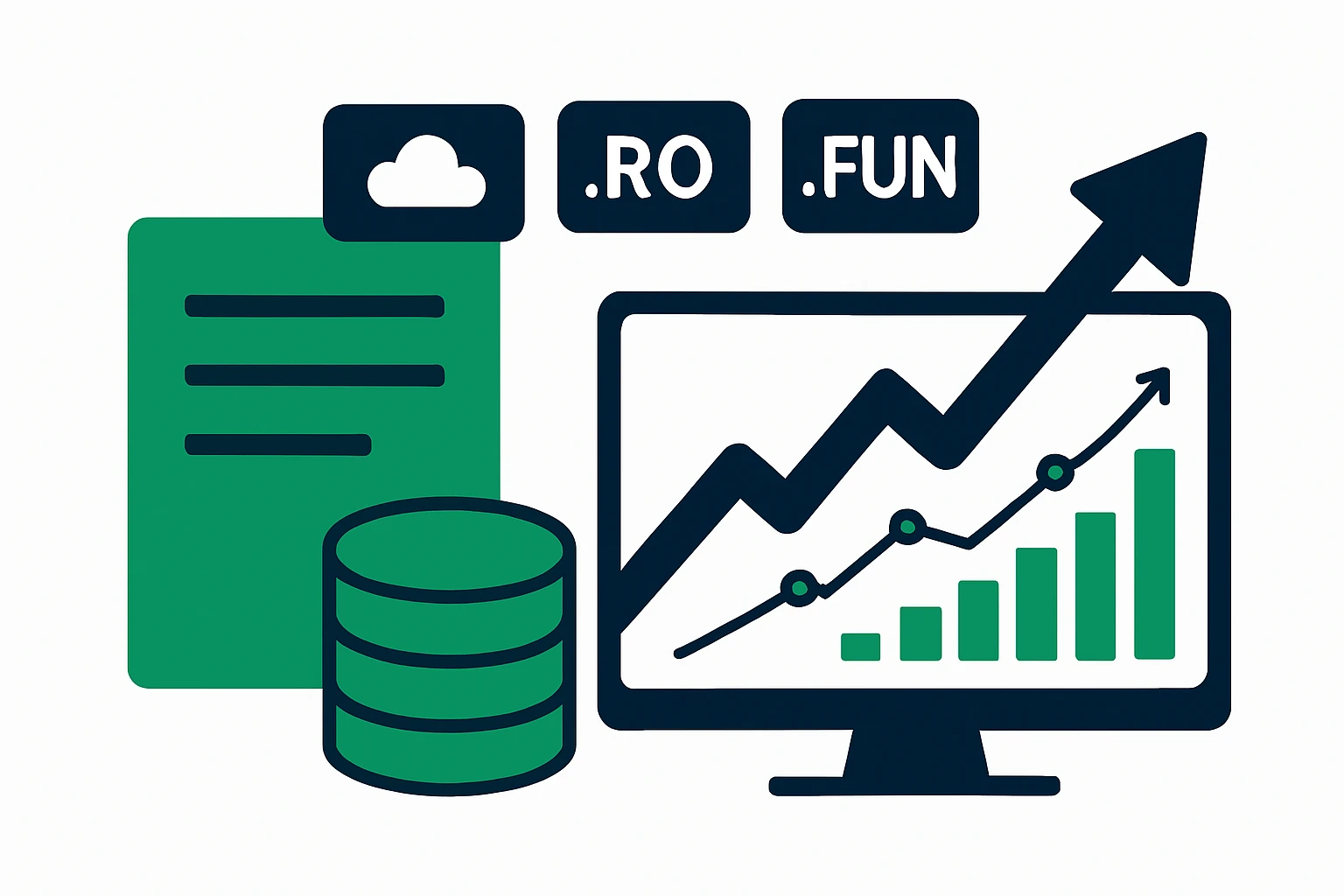
Below are concise portraits of three widely used TLDs, illustrating how their registries shape what data is accessible, and how SMBs might leverage that data in practice. Each section includes practical signals for web design, branding, and hosting decisions.
.cloud: the registry and how data access is governed
The .cloud TLD sits at the intersection of cloud computing branding and modern identity. Since 2014, Aruba S.p.A. has been the official registry for .cloud, underscoring its positioning within cloud-focused services and digital infrastructure offerings. For SMBs, this alignment makes .cloud a natural choice when the intent is to signal cloud-native capabilities, SaaS, or IT services. Registry-backed legitimacy matters for SEO signals and audience perception, even when the primary SEO impact comes from site quality and relevance. (aruba.it)
Access to exhaustive .cloud domain lists is governed by registry policies and data-sharing frameworks. While zone data for .cloud exists in principle, practical bulk access typically travels through registry-backed channels or data vendors that license such data. For SMBs building a cloud-focused domain strategy, an initial step is to inventory relevant brandable terms and then validate live ownership via normal registration channels, rather than attempting to purchase or enumerate every possible .cloud variant at once. WebAtla’s .cloud directory can be a starting point for evaluating available, credible names without violating data-use norms. (aruba.it)
External context: the broader market for gTLDs shows that zone and registration data volumes are substantial, with Verisign reporting hundreds of millions of domain registrations globally in recent periods, underscoring the scale at which domain data interacts with marketing, hosting, and security ecosystems. (investor.verisign.com)
.ro: local presence and zone-data realities
The .ro ccTLD is managed by NIC.RO, the Romanian domain name registry. NIC.RO maintains a registry of registrations and provides information and services for Romanian domains. In many cases, zone data for ccTLDs like .ro can be sensitive or restricted, however, NIC.RO’s documentation confirms that zone data is part of the DNS infrastructure and can be updated and accessed through proper channels. This means SMBs with Romanian-market ambitions can rely on localized domain purchasing and brand protection without assuming universal public access to full zone files. For SMBs exploring .ro-related growth or competitive intel, NIC.RO is the authoritative starting point for policy and registration options. (nic.ro)
Practical note: researchers and marketers often turn to third-party data providers for .ro domain lists, but these sources vary in completeness and licensing. When pursuing .ro insights, pair any bulk lists with live RDAP/WHOIS checks and local market cues to avoid misinterpreting ownership or intent. NIC.RO also supports IDN registrations, which can matter for localized branding in Romanian markets. (nic.ro)
.fun: a modern registry with data-access implications
.fun is a newer gTLD with Radix as its registry operator, a structure common among several contemporary extensions. Radix’s governance and registry agreements shape how data can be accessed or licensed for research and marketing purposes. For SMBs and agencies, .fun presents branding opportunities for marketing campaigns and product launches, but data access for bulk lists typically comes through registry channels and authorized data vendors, not generic public dumps. Registry-level governance is part of the reason why many organizations prefer validated data sources when planning large-scale campaigns or domain investments. (icann.org)
In practical terms, if you’re evaluating .fun names for a brand campaign, you’ll likely start with domain-availability checks through registrars and then consider any licensing or access constraints if you need large-scale competitive intelligence data. ICANN’s registry-directory and evidence of Radix’s role help frame expectations for data access and compliance. (icann.org)
A practical, SMB-friendly framework: Domain Acquisition Decision Framework
To turn bulk data into actionable decisions, use a simple, repeatable framework. The following structured block outlines a practical pathway that SMBs and their agencies can apply when considering data-informed domain moves across TLDs like .cloud, .ro, and .fun.
- 1. Define business goals - clarify whether the aim is brand protection, global expansion, marketing campaigns, or hosting efficiency. Alignment with core business goals guides which TLDs to prioritize and what data to collect.
- 2. Identify relevant TLDs and data channels - map target TLDs (for example, .cloud for cloud-oriented offerings, .ro for Romania, .fun for campaigns) to the data channels you’ll use (zone files via CZDS, RDAP/WHOIS checks, or vetted data vendors). (icann.org)
- 3. Assess access realities - understand that not all registries offer public bulk downloads, zone data access often requires registry programs, licensing, or third-party data services. IANA provides the authoritative TLD directory, while CZDS governs many data-sharing pathways. (iana.org)
- 4. Validate data quality - use live RDAP/WHOIS checks to confirm current registration status and ownership, and cross-check with DNS records where possible. This reduces the risk of acting on outdated or incorrect data. (en.wikipedia.org)
- 5. Build a risk-aware domain plan - prioritize strategic names, consider brand-protection implications, and plan for renewals, privacy considerations, and hosting alignment. A formal plan helps avoid impulsive purchases and oversaturation of your portfolio.
- 6. Execute with governance - engage with credible registries (e.g., .cloud and .fun) through established registrars or data partners, and ensure compliance with data-use licenses and privacy rules. For .cloud, Aruba’s official registry position provides governance clarity. (aruba.it)
- 7. Integrate with your broader digital stack - link domain strategy to website design, hosting decisions, and marketing campaigns (for example, aligning a cloud-focused brand with hosting or DNS services). Contextual anchors to trusted data sources help keep decisions grounded.
As a practical example, consider starting with a short, targeted list for cloud-focused branding (.cloud) and a separate, market-specific list for regional expansion (.ro). Combine these with a few test campaigns to assess impact on click-through rates, site authority, and user trust. For SMBs, this is where a digital agency like VCweb (the publisher’s ecosystem) can help translate bulk data insights into concrete site architecture, content plans, and paid media strategies, while keeping a close eye on budget and risk. WebAtla’s .cloud directory provides a credible, domain-focused starting point, alongside broader TLD listings like WebAtla’s TLD catalog.
Limitations, trade-offs, and common mistakes
No data strategy comes without caveats. Below are several critical limitations SMBs should acknowledge to avoid common missteps:
- Access limitations - many registries restrict bulk data access or require licensing. The CZDS is a common gateway, but it has eligibility requirements and usage terms. (icann.org)
- Data freshness and accuracy - bulk lists can become outdated quickly, always validate with live registration data and DNS records before making decisions. This is a fundamental reason to pair bulk data with RDAP/WHOIS checks. (en.wikipedia.org)
- Registry-specific rules - ccTLDs like .ro may have distinct policies about zone-file access and data sharing, don’t assume universal availability across all TLDs. NIC.RO is the authoritative source for .ro specifics. (nic.ro)
- Data scale vs. signal quality - bigger lists aren’t automatically better. The value comes from filtering to a relevant subset and validating intent and ownership. In practice, combine data with market signals and brand strategy. (investor.verisign.com)
- Brand and legal considerations - bulk lists may surface domain names with existing trademarks or rights issues. Always perform trademark clearance and domain-ownership sanity checks before acquisition.
Expert insight: in practice, data quality is at least as important as data volume. A smart SMB approach uses structured checks (zone-file-based signals plus live RDAP/WHOIS) to prioritize a handful of high-potential names rather than chasing every possible variant.
A final word on practical integration with your marketing stack
For SMBs aiming to translate domain data into real-world outcomes, the workflow should integrate with website design, SEO planning, and hosting considerations. A well-chosen domain portfolio can support brand coherence, improve click-through rates from brand-related queries, and reduce the risk of brand confusion or cybersquatting. The .cloud, .ro, and .fun case studies above illustrate how registries shape branding opportunities, while CZDS and IANA root-zone references provide a grounded path to legitimate data access. When you’re ready to translate data into action, consider enlisting a domain-focused partner or agency that can align data strategies with web design and marketing goals. For SMBs exploring WebAtla’s catalog and data services, relevant starting points include the .cloud page and the broader TLD directory, which can be used to map domain opportunities to your site design and hosting choices. WebAtla .cloud directory and WebAtla TLD catalog can help you ground decisions in credible, provider-friendly data.
Conclusion: data-informed domain strategy as a driver of SMB growth
Bulk domain data can illuminate opportunities for brand protection, local-market expansion, and campaign-driven naming. Yet the true value comes from pairing data with disciplined governance, live verification, and a clear business goal. For SMBs, the most pragmatic path is to start with credible data channels (IANA as the root reference, CZDS for access, NIC.RO for .ro specifics, Aruba for .cloud governance, Radix for .fun governance) and then translate those insights into a practical domain plan that aligns with your website design, SEO, and hosting strategy. In today’s domain landscape, the strongest SMBs treat domain decisions as a core element of their digital playbook rather than an afterthought.