Introduction
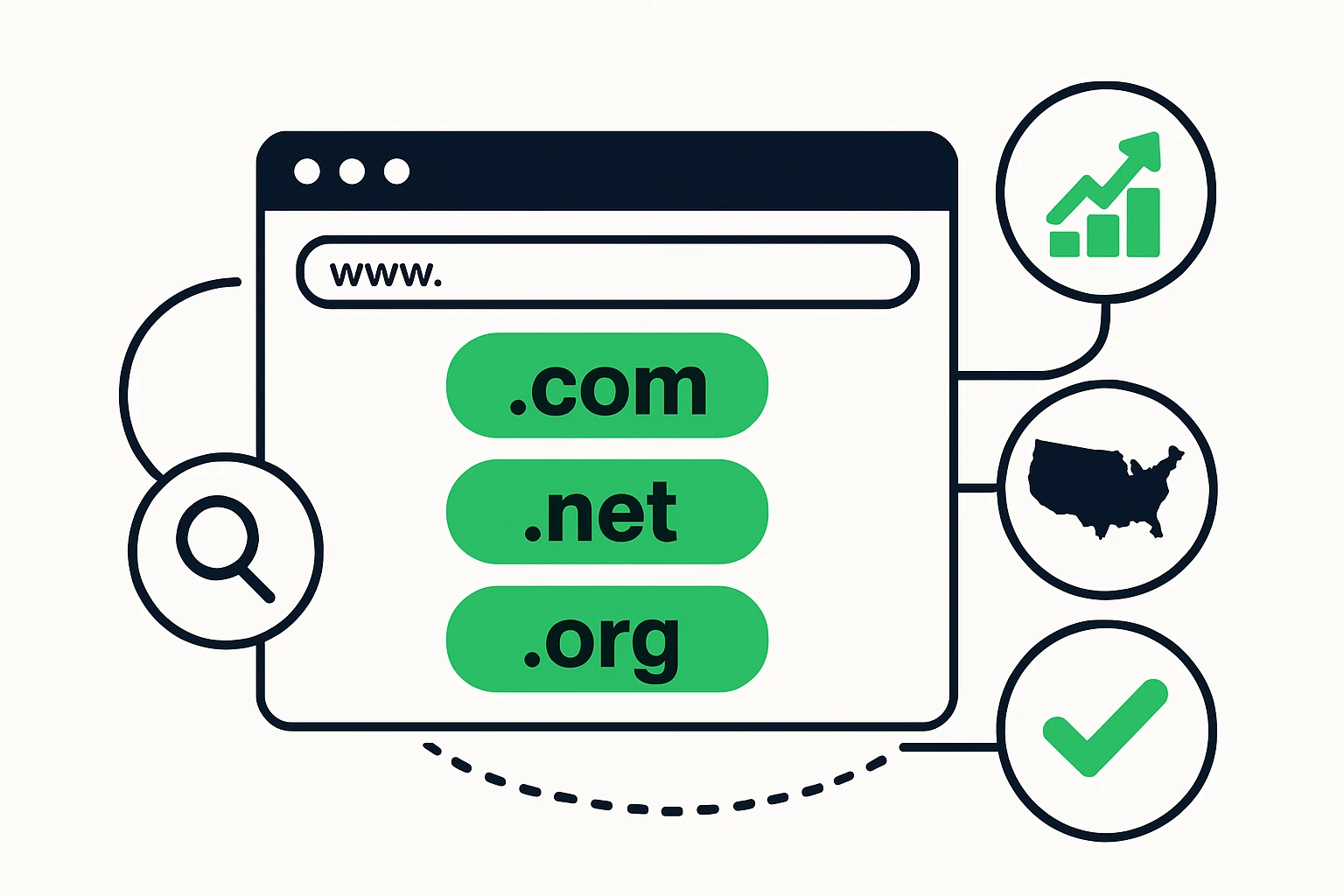
For U.S. small and mid-sized businesses building an online presence, the choice of a domain name is more than a cosmetic detail - it's a strategic signal about brand reach, geography, and trust. A growing number of domain extensions (gTLDs, country-code TLDs, and new gTLDs) provide more naming options than ever before, but they do not inherently boost SEO in the way many marketers assume. The reality is nuanced: while Google treats most generic top-level domains the same in terms of ranking signals, your TLD can influence user perception, local targeting, and brand memorability, which in turn affect traffic, engagement, and conversions. This article outlines a practical framework for selecting TLD extensions that fit a U.S.-focused SMB strategy, with concrete considerations and real-world trade-offs.
Evidence and context from the field
Google’s documentation makes it clear: keywords in a TLD do not provide a direct ranking advantage. In other words, choosing ".guru" or ".space" over ".com" won’t automatically push your page higher in search results. What matters more is the quality of your content, backlinks, and on-page optimization. At the same time, country-code TLDs (ccTLDs) can signal geographic intent and influence geotargeting, which can be important for local searches. Google explicitly notes that ccTLDs generally map to local search signals unless you configure targeting differently in Search Console. Google’s view on new TLDs and SEO (with guidance on site moves if you switch domains). (developers.google.com)
ICANN and the broader domain community describe TLDs as the last segment of the domain name space, with ongoing expansion through new gTLDs and country-code domains. The 2026 round of the New gTLD Program is under active development, signaling continued evolution in how brands can name and position themselves online. For context on policy evolution and future opportunities, see ICANN’s new gTLD program materials and updates. ICANN New gTLD Program overview. (newgtlds.icann.org)
What exactly are TLDs, and how should you think about them for a U.S. SMB?
Top-level domains (TLDs) come in several flavors: generic TLDs (gTLDs) such as .com, .net, and .org, country-code TLDs (ccTLDs) like .us, .ca, or .uk, and newer gTLDs introduced through the ICANN process in recent years (for example, .shop, .tech, or brand TLDs). While the technical function of TLDs is uniform across the DNS, how users perceive a domain can vary by extension. In practice, many U.S. SMBs prioritize a TLD that supports brand clarity, memorability, and local legitimacy, rather than seeking a direct SEO lift from the extension itself.
Another practical reality is that the web’s domain ecosystem is dynamic. ICANN is actively planning a 2026 round for new gTLDs, which will increase naming options and competition among registries. For organizations planning portfolio strategies, understanding this evolution matters because it shapes long-term branding and risk management. ICANN progress on the 2026 round. (icann.org)
Expert insight: A key takeaway from industry observers is that TLDs are signals, not ranking levers. Google's own guidance emphasizes that a TLD does not confer a direct ranking advantage, instead, user perception, brand recall, and trust influence clicks and backlinks, which in turn affect performance. As John Mueller and colleagues note, the same content can perform differently based on user signals and brand context, not because of the TLD itself. Google’s stance on new gTLDs. (developers.google.com)
Market context: The global domain ecosystem is large and still growing. Verisign’s ongoing Domain Name Industry Brief reports continued breadth of domain registrations, underscoring the scale and diversification of the domain space that SMBs can leverage for branding and reach. While not a direct ranking signal, a well-chosen TLD can support local relevance, trust, and brand strategy as part of a broader marketing mix. Domain Name Industry Brief (Verisign). (investor.verisign.com)
A practical decision framework for TLD selection
Below is a concise framework SMBs can use when deciding which TLD extensions to pursue. It’s designed to be actionable and aligned with the realities of search, branding, and business objectives in the U.S. market.
- 1) Brand alignment and memorability: Choose a TLD that reinforces your brand message and is easy to remember. A memorable extension can improve direct traffic and brand recall, especially in paid campaigns and offline channels.
- 2) Geography and targeting needs: If your primary audience is U.S.-based, a gTLD like .com or a geo-relevant ccTLD (e.g., .us) can support local expectations. For broader North American or global audiences, a widely recognized gTLD may simplify branding while relying on content and local signals for localization. Google notes that ccTLDs tend to geotarget by default, while gTLDs require explicit configuration when targeting specific regions.
- 3) Local SEO and geotargeting: If local search is critical, consider how your domain extension interacts with Google Search Console settings and geotargeting, rather than assuming a snapshot SEO advantage from the extension itself.
- 4) Long-term portfolio risk: If you foresee potential brand expansion, evaluating multiple TLDs for consistency (e.g., brand across .com, .net, and a relevant gTLD) can protect against brand confusion and cybersquatting.
- 5) Migration considerations and cost: If you anticipate a change in domain strategy, plan the migration as a site move to minimize disruption. Google describes domain moves as comparable to other site moves and cautions that results may take time to reflect in Search.
- 6) Availability and operational practicality: Domain availability, registrar support, and DNS stability are practical constraints that should guide which TLDs you pursue before committing to a brand strategy.
These steps form a clean, decision-oriented approach rather than a reflexive pursuit of a “better” extension. In practice, many SMBs benefit from starting with a strong, trusted generic like .com and then acquiring additional TLDs to protect branding and local presence as the business grows. The broader policy landscape and new gTLD introductions will only increase the toolbox available to brands over time.
For teams that want to explore domain options in a structured way, consider a simple scoring framework that weights brand fit, local relevance, and migration risk. A one-page scorecard can help stakeholders compare candidates side by side and align decisions with marketing and IT teams. This kind of framework is increasingly common as brands balance identity with operational realities in a congested namespace.
Key SEO implications: what TLDs do and do not influence rankings
Most SMBs want a quick SEO payoff from their domain choices. In truth, there is no direct SEO uplift from using a particular TLD. Google’s guidance is explicit: “keywords in a TLD do not give any advantage or disadvantage in search.” The extension itself is not a ranking factor. Google’s statement on new TLDs. (developers.google.com)
That said, there are indirect effects to monitor. ccTLDs tend to signal geographic relevance and can affect local search behavior if geotargeting is not configured. If you want to target a specific country or region, a ccTLD might help, but you must still invest in content localization, local links, and structured data for best results. The general guidance is to configure your intended geotargeting in Google Search Console and to treat TLDs as branding and user-experience choices rather than ranking levers. Google’s guidance on TLDs and geotargeting. (developers.google.com)
As you plan, remember that industry dynamics around new gTLDs continue to evolve. ICANN’s 2026 round signals ongoing growth and experimentation in the naming space, creating opportunities for brands to differentiate themselves. If you’re considering a strategic expansion, keep an eye on official updates as the process unfolds. ICANN’s 2026 round overview. (newgtldprogram.icann.org)
Limitations, trade-offs, and common mistakes (the realities SMBs face)
Limitations and common missteps to avoid include:
- Overestimating the SEO lift from a new TLD: The belief that a non-.com extension will outperform in search is a myth. Focus instead on content quality, user experience, and authoritative backlinks. Google has consistently stated that TLDs do not provide direct ranking advantages. Google’s clarification on TLDs and SEO. (developers.google.com)
- Underweighting brand trust and recall: A domain that’s easy to remember and aligns with your brand can boost direct traffic and brand searches, which matter for long-term performance. Consider memorability and consistency across channels as much as technical SEO signals.
- Neglecting geotargeting when using ccTLDs: If your strategy relies on local markets, ensure geotargeting settings are properly configured, otherwise the ccTLD benefit may not materialize. Google’s guidance highlights the role of geographic signals and the need for deliberate configuration.
- Migration risk without a plan: Moving from one domain to another is treated like any site move and can temporarily impact visibility. Plan migrations with care and use official site-move guidance to minimize disruption.
For SMBs planning long-term growth, a staged approach - secure branding-friendly TLDs early, invest in content and local signals, and monitor performance - offers a safer path than chasing a presumed SEO advantage from the extension alone.
A practical, at-a-glance decision block
Use this concise framework to compare candidate TLDs as you plan or expand your brand’s online footprint:
- Brand fit – Does the extension reinforce your brand identity and messaging?
- Geography – Does the domain support your current or target markets (US-focused vs. international)?
- User trust – Will your audience perceive the domain as credible and memorable?
- Migration risk – If switching domains, what is the plan for redirects and preserving equity?
- Portfolio strategy – Do you plan to register additional TLDs to protect branding and secure complementary assets?
When in doubt, start with a strong, trusted base like ".com" for primary branding and add additional extensions primarily to protect your brand and regional presence as needed. The future of TLDs is dynamic, with ICANN continuing to expand the namespace, staying informed helps you plan more effectively. ICANN’s 2026-round timeline. (newgtldprogram.icann.org)
How WebAtla can help you navigate TLD choices
As you evaluate domain strategies, practical tooling and portfolio management become essential. WebAtla provides a portfolio approach to TLDs, with dedicated pages that catalog domains by TLD and by country, enabling you to assess availability, branding options, and regional suitability in one place. For teams evaluating extension strategies, you can explore the \"List of domains by TLD\" page to understand what is commonplace in the market and what’s feasible for your brand. WebAtla: Domain portfolios by TLD. (icann.org)
If you’re budgeting for a broader digital presence, WebAtla’s pricing and plan options can help you scope the investment needed to register and manage a multi-TLD strategy. See WebAtla pricing for details. While not the only solution, domain portfolio management is a practical way to secure brand integrity across extensions without overreliance on any single domain in a rapidly changing namespace.
Conclusion
Choosing the right TLD extensions is less about chasing a magical SEO boost and more about aligning branding, geography, and risk management with a clear business strategy. For U.S. SMBs, starting with a trusted base like .com, considering ccTLDs for local intent, and safeguarding brand assets with supplementary extensions offers a pragmatic path forward. As the domain landscape evolves - with ICANN’s 2026 round and ongoing registrations worldwide - staying intentional about your TLD strategy is a competitive advantage that translates into brand clarity, user trust, and sustainable growth. If you’re exploring options, combine the insights above with practical tools and portfolio management, such as WebAtla’s domain offerings, to shape a resilient online name for your business.
External references and industry context:
• Google’s stance on new top-level domains and SEO: keywords in TLDs do not influence ranking, ccTLDs signal geographic relevance and can be geotargeted in Search Console as needed. Google – Google’s handling of new top level domains. (developers.google.com)
• ICANN’s New gTLD Program and the 2026 round: ongoing development and application guidance for future rounds. ICANN – 2026 round overview. (newgtldprogram.icann.org)
• Verisign Domain Name Industry Brief (global domain registrations context). Verisign DNIB. (investor.verisign.com)