Introduction: Why a country domain list is a strategic asset for US SMBs
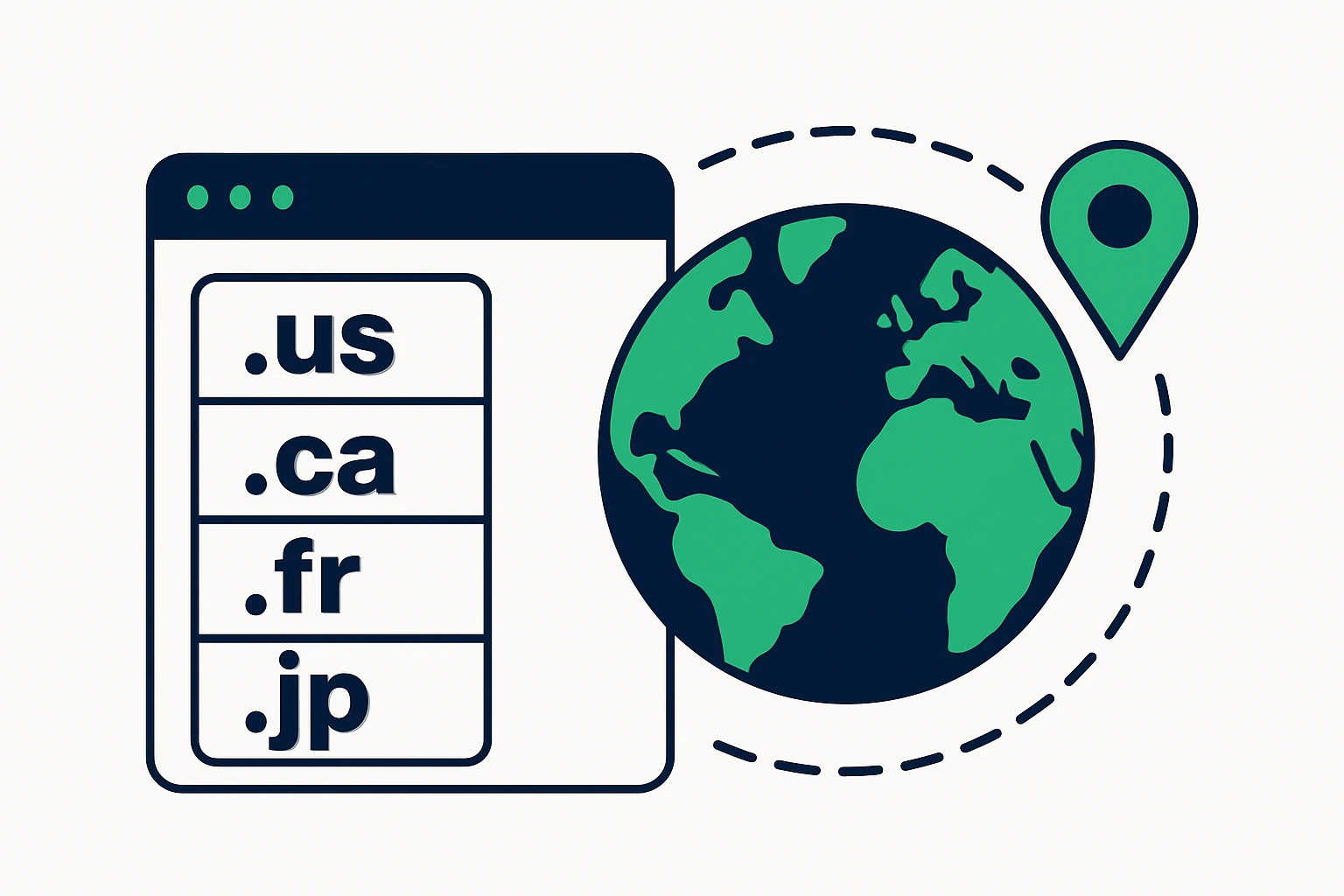
For many small and medium-sized US businesses, a single .com domain has been the default, assumed to be sufficient for growth. Yet in a world where local intent drives online decisions, a deliberate country domain list - an organized portfolio of ccTLDs and related domains - can unlock local trust, clear international signaling to search engines, and better support localization efforts. This is not about chasing every new TLD, it is about a disciplined, scalable approach to domain management that aligns with expansion plans, content strategy, and technical governance. The concept rests on two simple realities: first, consumers respond differently to local signals, second, search engines use those signals to determine which results to show in which markets. ccTLDs are country-specific suffixes that help convey geographic relevance, while generic domains can be optimized for multi-regional reach with proper signals.
This article lays out a practical framework for SMBs to build a country domain list that supports localization, brand protection, and scalable marketing - without overcomplicating operations. We’ll balance editorial insight with concrete steps, including how to inventory domains, decide between ccTLDs and other hosting options, and structure content for multi-regional visibility. Expert insight: international SEO guidance emphasizes that while ccTLDs can strengthen local signals, they are one piece of the puzzle. Proper hreflang implementation, localized content, and clear site structure remain essential.
For SMBs considering external help, firms like WebAtla offer domain-related tools (RDAP & WHOIS databases, domain inventories, and straightforward pricing) that can streamline governance and risk management across a growing portfolio. See their RDAP &, WHOIS Database and Pricing pages for practical options. You can also explore their regional domain listings to understand how portfolio composition might evolve over time.
This article targets US SMBs with international ambitions and digital marketing needs. It offers a framework you can adapt to your business model, industry, and target markets. The goal is to help you answer: which country domains should you own, how should you structure them, and how do you measure the impact on search, users, and revenue. If you’d like to see how a domain inventory could look in your plan, you’ll find a practical framework below, including a decision matrix you can apply with your team.
Section 1: Understanding the domain landscape for SMBs
A domain strategy rests on a clear taxonomy of the various top-level domains (TLDs) and how they map to markets and languages. The two main categories are country code top-level domains (ccTLDs) and generic top-level domains (gTLDs). ccTLDs (for example, .uk, .fr, .ca) correspond to specific countries or territories and are tightly regulated by local administrators. gTLDs (like .com, .net, .org) are not country-specific, but they can still be geotargeted with content signals, hreflang, and technical structure. ICANN and IANA provide authoritative guidance on ccTLD governance and the relationship to country markets.
ccTLDs are typically two-letter codes tied to ISO 3166-1 country identifiers and managed by country-specific registries. The management model and eligibility rules vary by jurisdiction, which makes a portfolio approach to ccTLDs more complex than single-domain strategies. For a framework on ccTLD governance and the role of registries, see the CC Names Supporting Organization (ccNSO) and ICANN pages.
From a practical standpoint, a robust country domain list begins with inventory, then maps to markets where you have or plan to have local content, pricing, and customer support. A good inventory also considers language variants (for example, localized pages or IDN-enabled domains) and how you will signal geo-targeting to search engines. Google's international targeting guidance describes how to structure multi-regional sites and emphasizes that ccTLDs are part of a larger signaling toolkit, not a silver bullet.
Key references for this section include ICANN’s ccTLD resources and the Google multi-regional site guidance. ccNSO FAQ and Google: Managing Multi-Regional Sites.
Section 2: Why a country domain list matters for SMBs
The strategic value of a country domain list rests on three pillars: trust, signaling, and governance. First, local domains foster trust with local audiences. When a user lands on a country-domain site, they expect content aligned with local laws, customer support practices, and payment methods. The authority dynamic is reinforced when a brand demonstrates a tangible presence in a market through a country code. A credible domain portfolio can also support brand protection by reducing the risk of misrepresentation in other regions.
Second, search engines use signals from the domain structure as part of their geo-targeting and localization signals. Google’s international targeting framework notes that while ccTLDs can strengthen a country signal, they are just one aspect of a broader optimization strategy that includes hreflang, localized content, and proper site architecture. For SMBs, this means balancing ccTLD investments with robust on-page localization and technical SEO.
Third, a well-curated domain list helps with risk management and governance. When you own multiple domains, you can protect brand IP, avoid cybersquatting, and maintain consistent redirects and canonical signals if you consolidate or migrate pages. ICANN and ccTLD governance resources emphasize that domain ownership and management vary by market, which makes an organized inventory essential for steady marketing execution.
Expert insight: in modern international SEO practice, ccTLDs are meaningful signals but not the sole determinant of visibility. A disciplined approach to hreflang, content localization, and technical consistency remains essential. For SMBs, starting with a country domain list aligned to your goals is a practical, scalable step.
To illustrate, reference points include ccNSO FAQs and Google: Managing Multi-Regional Sites.
Section 3: How to build your country domain list - a practical framework
Below is a pragmatic framework SMBs can apply to assemble a country domain list that supports localization, SEO, and brand governance. The goal is to translate market ambitions into a structured portfolio you can maintain without overextending resources.
Step 1 - Inventory and categorize your current assets
Start with a live inventory of all domains you own or that are closely related to your brand. Include primary domains, campaign domains, and any domains that could resemble a competing brand. Create a simple categorization: core brand domains, regional targets, and protective domains (to block impersonation). A clear inventory makes it easier to decide where to invest in ccTLDs versus other strategies.
Step 2 - Define target markets and localization signals
Articulate which markets you intend to serve and what signals will define localization in those markets. Signals include language-specific content, local contact information, pricing, and regional payment options. In many cases, a country domain list helps support the signals, but you should also plan for language targeting within pages and the appropriate hreflang implementation to avoid content duplication issues. Google’s guidance highlights that proper international targeting combines domain structure with localized content and language signaling.
Step 3 - Choose a domain strategy (ccTLDs vs gTLDs vs subdirectories)
The decision is not binary. For some markets, a ccTLD can offer a stronger local presence, for others, a multilingual global site on a single gTLD with robust localization (and hreflang) may be more scalable. In practice, many SMBs pursue a hybrid approach: maintain a core global site on a gTLD (e.g., .com) while employing a targeted set of ccTLDs for key markets or regions. The Google framework acknowledges that you can use ccTLDs to signal country-specific intent, but it also acknowledges other viable structures when appropriately signaled.
External guidance on this decision framework includes the Google international targeting documentation and ccTLD governance resources.
Structured decision aid (Domain Portfolio Decision Framework):
| Market | Signal Priority | Recommended Domain Type | Pros | Cons |
|---|---|---|---|---|
| United States | Local trust, US regulations | ccTLD: .us or gTLD with strong localization | Clear local presence, trust, simple governance | ccTLD adoption may be limited by availability, cost |
| Canada / UK / EU | Geographic signals + local content | ccTLDs like .ca, .uk or a hybrid with subdirectories | Strong local signals, targeted branding | Management complexity, regional legal considerations |
| Other global markets (scalable reach) | Geo-targeted content + hreflang | gTLDs with localized content and hreflang | Scale without a large domain portfolio, easier maintenance | Weaker geo-signal if not properly configured |
| Brand protection / risk management | N/A | Protective domains and controlled redirects | Reduces impersonation risk, clearer brand integrity | Ongoing renewal costs, governance overhead |
Step 4 focuses on implementation, including content localization, hreflang tags, canonicalization, and consistent analytics tracking. Step 5 covers ongoing governance and renewal management. For SMBs, the portfolio should remain lean at first and expand when market demand and content capacity justify it.
Step 4 - Implementation and governance
Implement the chosen structure with a clear sitemap, language variants, and country-targeted signals. Use hreflang and canonical tags to prevent duplicate content, and ensure every country-specific page links back to a local landing page with appropriate local information, pricing, and support. As you scale, establish a governance process for renewals, ownership changes, and security. ICANN’s ccTLD governance resources offer practical context for the management complexities involved in different jurisdictions.
Operational guidance and practical tools from WebAtla can help automate some of these tasks. For example, their RDAP &, WHOIS Database supports portfolio audits, while their Pricing page provides clarity on enabling ongoing domain management services. You can also review their List of domains by TLD to understand how a real-world domain inventory might be organized.
Section 4: Implementation tips - practical steps for SMBs
Here is a concise playbook SMBs can follow in the next 90 days to start building a country domain list that delivers tangible benefits without overreach.
- Audit your assets: create an accurate inventory of owned domains, including any that resemble your brand or are used in campaigns. This is your baseline for risk management and expansion planning. domain-portfolio
- Map markets to signals: decide which markets warrant localized content, pricing, and support structures. Consider both geographic and language targeting. local-seo-signals
- Choose a hybrid architecture: for core markets, a gTLD strategy with robust localization, for top regional markets, ccTLDs can reinforce local intent. hreflang-implementation
- Establish governance: assign ownership, renewal calendars, and security controls to prevent domain-related risk. brand-protection
As you proceed, you may want to leverage domain-aware tools to maintain a tidy inventory and keep WHOIS data accurate. See WebAtla’s RDAP &, WHOIS Database and pricing for practical options.
Section 5: Limitations and common mistakes to avoid
While a country domain list can unlock regional performance, it is not a panacea. Common mistakes SMBs make include over-investing in ccTLDs without adequate localization, misconfiguring hreflang signals, or assuming that ccTLDs automatically guarantee rankings. The reality is that search engines weigh a range of signals, including content quality, user experience, and technical SEO, alongside domain signals. A practical approach is to start small with a core set of markets and expand as content and demand justify it. For guidance on how Google views international targeting, consult the Google documentation on managing multi-regional sites.
Limitations to consider include the ongoing management overhead for a portfolio and the legal/commercial considerations of operating in multiple jurisdictions. ICANN’s and ccTLD resources emphasize that policies differ by country, so a scalable governance process is essential.
Section 6: How WebAtla can help with domain inventory and management
A practical domain strategy for SMBs benefits from tools that make portfolio management tractable. WebAtla offers resources such as a centralized RDAP &, WHOIS Database to audit ownership and registration details, along with pricing information to plan investments. Their domain listing tools can help you understand which domains are available by TLD and track changes over time, which is particularly valuable when building a country domain list. For additional context, you can explore their regional domain offerings and related technologies.
Internal note: you can connect these capabilities to your domain governance workflows via internal anchors such as domain-portfolio and international-targeting.
Conclusion: a disciplined, scalable domain strategy pays off
A well-curated country domain list is not a vanity project: it’s a disciplined way to translate geographic ambitions into a living, governed portfolio. By inventorying domains, aligning markets with localization signals, and balancing ccTLD usage with scalable gTLD structures, SMBs can create a resilient foundation for local trust and international reach. The most successful implementations combine domain strategy with strong content localization, technical SEO discipline, and ongoing governance. For SMBs ready to start, a lean, auditable portfolio approach - paired with practical tools like RDAP, WHOIS databases, and domain inventories - can translate into measurable gains in local visibility and brand protection.