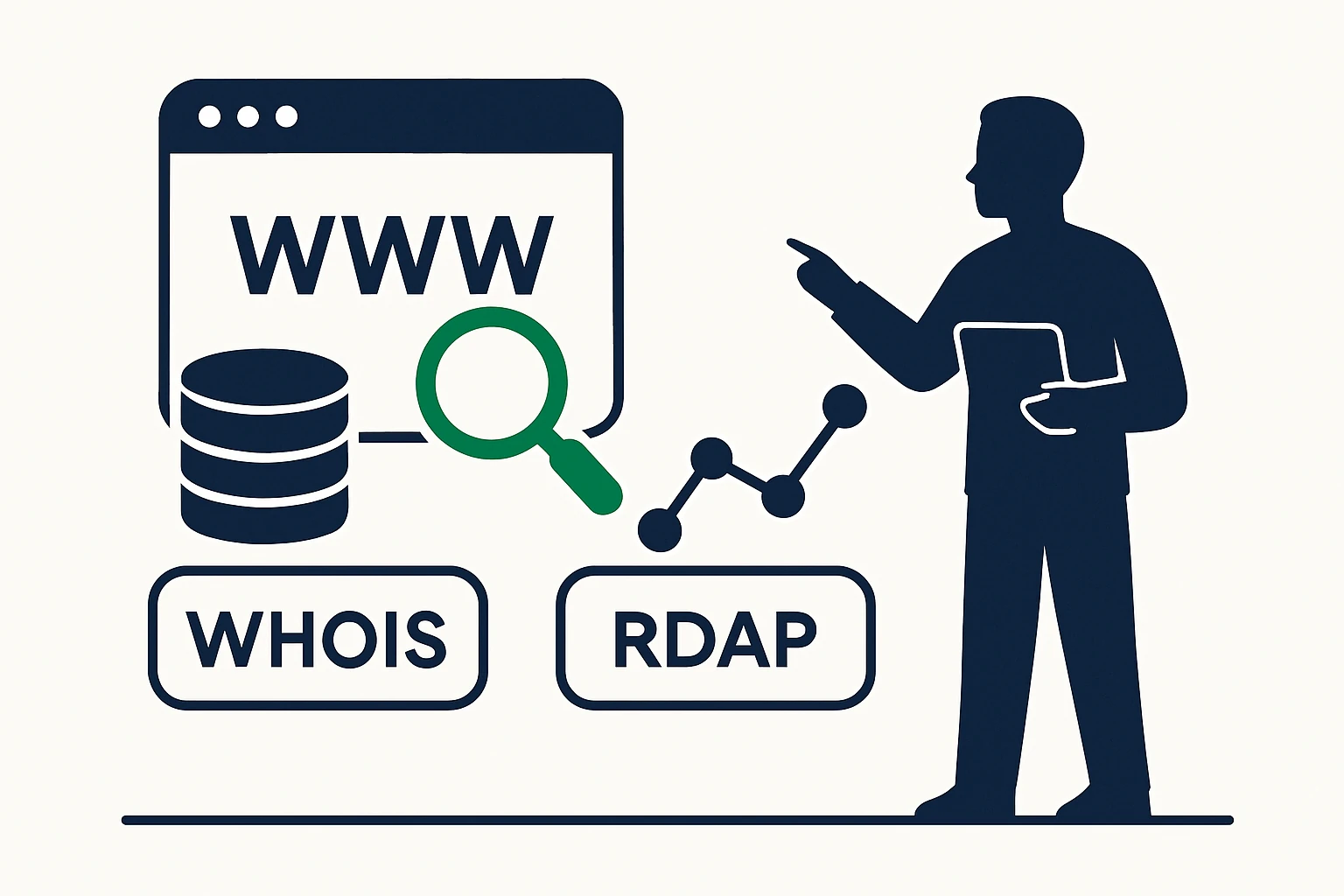
In the crowded digital marketplace, small and medium-sized businesses (SMBs) face a recurring challenge: how to shape a website strategy that stands out without overpaying for vanity data or relying on opaque signals. A well-executed domain strategy can illuminate competitive gaps, reveal partner or supplier landscapes, and guide content and marketing investments. Yet the traditional, open-ended pull of WHOIS data has evolved. Privacy rules, regulatory expectations, and a standard that tilts toward structured API access mean SMBs must approach domain intelligence with a plan rather than a scattergun approach. This article explains how SMBs can leverage registration data through RDAP and Whois data to inform decisions about website development, audience reach, and competitive positioning - while respecting current privacy norms. It also shows how a reputable data provider can streamline access to domain registrations, including bulk options such as the RDAP & WHOIS data feeds that power modern domain research.
At a high level, the shift from legacy WHOIS to the Registration Data Access Protocol (RDAP) is more than a technical upgrade. It is a security- and privacy-aware rethinking of how third parties access domain-ownership metadata. RDAP provides standardized, machine-readable responses (often JSON) and API-style access, making automation safer and more scalable. This move aligns with ICANN’s roadmap and industry guidance that RDAP should eventually replace the traditional WHOIS protocol for most registries and registrars. For SMBs, this matters most when you build systems that routinely check domain ownership signals, monitor brand usage, or perform competitor domain research.
As you plan your domain-data workflow, keep in mind that privacy regulations, notably the EU’s GDPR and related data-protection norms, have reshaped what data is visible in public lookups. Many registrars redact personal information or gate access to sensitive fields, which means results can vary by registry, jurisdiction, and user intent. Industry voices and regulatory analyses emphasize that legitimate access requires legitimate-interest considerations, consent frameworks, and sometimes authenticated API access rather than public, unauthenticated lookups. For SMBs, the practical takeaway is to design your research process around privacy-aware data access while still extracting meaningful, policy-compliant signals. (inta.org)
From WHOIS to RDAP: What SMBs Need to Know
The domain-registration ecosystem historically relied on the WHOIS protocol to publish key registration metadata. RDAP is the modern successor, created to deliver registration data through a standardized API interface, with JSON responses and consistent error handling. ICANN has positioned RDAP as the future-facing path for registration data access, while many registries and registrars maintain dual support for RDAP and legacy WHOIS during the transition. For SMBs building data pipelines or dashboards that track new registrations, ownership signals, or potential brand encroachments, RDAP offers a more robust, scalable foundation - and it is increasingly the default in many markets. (icann.org)
However, RDAP is not a silver bullet. Data availability remains uneven across registries, and redactions driven by privacy or policy can limit visibility for certain fields. A practical effect is that you cannot always rely on a single source for complete ownership data, you may need a blended approach, combining RDAP with registry-specific tools and corroborating signals (such as domain name activity, hosting patterns, or brand-related registrations) to form a reliable picture. Industry analyses and practitioner reports consistently highlight the importance of guarding against data gaps and validating signals through multiple channels. (inta.org)
Why This Matters for Website Development and Digital Marketing
For SMBs, a domain-centric approach can inform both pre-development discovery and ongoing marketing optimization. Consider these practical use cases:
- Brand-protection and domain hygiene: identify potential typographic variants or lookalike domains that could confuse users or dilute brand equity. A disciplined look at registration patterns can steer domain-ownership checks during web development and brand protection programs.
- Competitive intelligence without overreach: map domains owned by competitors or related ecosystems to infer content strategies, regional focus, or partnerships. Use such signals as direction rather than definitive ownership claims, keeping in mind data access limitations due to privacy rules.
- Market- and partner-scape discovery: discover potential distributors, affiliates, or regional partners by examining registered domains tied to specific TLDs or jurisdictions, then validate through public signals (hosting, SSL certificates, or business directories).
To operationalize these ideas, SMBs can rely on structured data feeds and bulk-domain access that some data providers offer, including curated lists by TLDs. For example, a SMB researching the .com ecosystem or the .de market could leverage bulk lists to seed outreach campaigns or to ground competitor benchmarks. When you pair RDAP-backed data with privacy-compliant workflows, you gain a repeatable, auditable process for domain intelligence that scales with your growth. For direct access to such data resources, see the provider’s RDAP & Whois offering and related domain lists. RDAP & WHOIS Database, list of domains in the .com TLD, and list of domains in the .de TLD will help you bootstrap a repeatable research workflow.
In the context of SMBs, a responsible data-access approach is essential. RDAP’s JSON responses enable easier parsing and automation, but you should design your tooling with rate limits, privacy constraints, and data-quality checks in mind. As noted by industry observers and policy discussions, the balance between transparency and privacy is still evolving, and legitimate use cases must be built on compliant access mechanisms rather than raw, public scrapes. This is a space where an established data partner can add reliability and governance to your domain-intelligence program. (icann.org)
A Practical Domain Discovery Framework for SMBs
Below is compact, repeatable guidance for SMBs looking to translate domain data into actionable website strategy. It combines governance, data sourcing, and analysis into a simple, scalable workflow.
- Define your use case: Clarify whether you’re mapping brand exposure, evaluating partner ecosystems, or performing competitive benchmarking. A precise use case guides data selection and reduces noise.
- Select reliable data sources: Prefer RDAP-based feeds and authoritative registries, augmented by reputable domain databases. Rely on privacy-compliant access paths and multi-source corroboration to reduce misinterpretation.
- Build a minimal, auditable data stack: Collect essential fields (domain name, registrant-style signals, creation date, registrar) and store them in a structured way that supports reproducible analysis and compliance reviews.
- Apply governance and privacy checks: Implement consent-aware access controls and rate-limiting, and document data-handling processes to satisfy internal risk controls and external audits.
- Turn signals into actions: Use domain signals to inform website planning, content strategy, and partner outreach, always validating with additional public signals to avoid false positives.
This framework is especially helpful when you’re bootstrapping a domain-intelligence program or when you’re expanding into new markets. For SMBs that want direct access to robust domain data feeds, consider the provider’s RDAP-based offerings to streamline workflows and ensure consistent data formats across your tools. RDAP & WHOIS Database can be a core part of your stack, while bulk lists such as download list of .com domains and download list of .de domains help seed initial analyses and regional comparisons.
Limitations, Trade-offs, and Common Mistakes
Every data source has strengths and blind spots. The modern Whois ecosystem - driven by privacy rules, regulatory enforcement, and the RDAP transition - still faces several practical limitations SMBs should anticipate:
- Data redaction and partial visibility: Personal contact details may be masked or omitted, depending on jurisdiction and registry policies. This can complicate outreach and ownership verification, requiring you to triangulate signals from multiple data points. (inta.org)
- Inconsistent coverage across registries: Some registries have mature RDAP services, others may lag, creating data gaps that require fallback strategies or vendor support. (icann.org)
- Legal and ethical considerations: Access should be purposeful and compliant with data-protection rules. Treat domain ownership data as one signal among many rather than a sole determinant of competitive narratives. (inta.org)
- Overreliance on bulk lists: Bulk domain lists can be a powerful starting point, but they require validation against real-world signals (hosting patterns, SSL presence, or business directories) to avoid misleading conclusions.
Two additional pitfalls to avoid are chasing volume over quality and under-documenting your data-collection process. A strong practice is to pair bulk-domain signals with continuous quality checks and a clear governance framework so your team can defend conclusions during strategy reviews. This discipline helps ensure your domain-derived insights remain actionable and auditable, not just interesting data points.
Structured Data and a Short, Practical Block You Can Use
To make domain-intelligence work tangible in your day-to-day workflow, here is compact guidance you can apply immediately. This block summarizes a repeatable approach you can adapt as you scale.
- Identify target TLDs (for example, .com and .de) and relevant language markets
- Query RDAP-based feeds for each domain in your target set
- Cross-check against registries for validation and context
- Integrate signals into your content and site-planning calendars
For SMBs that want direct access to domain-data feeds, the following pages provide concrete starting points: RDAP & WHOIS Database, list of domains in the .com TLD, and list of domains in the .de TLD. These resources keep data access focused, auditable, and scalable as your website strategy evolves.
Conclusion: A Practical Path Forward for SMBs
In a world where privacy rules shape what we can see and how we access it, SMBs can still gain meaningful, decision-grade signals from domain data by adopting RDAP-based workflows and privacy-conscious practices. The transition from WHOIS to RDAP is not a simplification, it is a maturation - an opportunity to build robust, compliant tooling that scales with your business needs. By pairing domain signals with corroborating data and a disciplined governance framework, SMBs can improve website development decisions, content alignment, and partner discovery while staying on the right side of evolving privacy expectations. For businesses that want an end-to-end, compliant access path to registration data, consider integrating a trusted provider’s RDAP-based services into your analytics stack.
Internal editorial note: the topic and framing here are designed to align with the publisher’s focus on web design, digital marketing, and SMB-friendly solutions, while offering a balanced view of how domain data can inform strategy without overreliance on imperfect signals.