Domain extension strategy for SMBs in 2026: more than a name on a letter
For US-based small and mid-size businesses planning an online presence, the domain you choose is a strategic asset - not just an address. Brand perception, trust, and discoverability hinge on whether your domain extension aligns with how customers search, where they live, and what they expect from a business like yours. This guide unpacks a practical, evidence-based approach to selecting domain extensions, balancing branding with search visibility, and building a defensible domain portfolio that scales with your marketing stack.
The domain market continues to grow in breadth. Verisign reports hundreds of millions of registered domains, underscoring that brands increasingly think in portfolio terms - owning primary domains and a handful of defensives to protect brand identity. This context matters for SMBs: it’s easier to get traction with a strong primary domain and a disciplined set of related extensions than to chase search visibility by chasing every new TLD. Domain registration dynamics and the broader market data highlighted in the Domain Name Industry Brief remain a useful compass for decision-making. (dnjournal.com)
How domain extensions influence branding and trust
Domain extensions shape first impressions. While search engines state that TLDs do not directly boost rankings, they strongly influence user trust, memorability, and click-through behavior - indirectly affecting SEO outcomes. In practice, a familiar, credible extension can reduce friction in the user journey, increasing the likelihood of brand recall and engagement. Industry coverage synthesizes this with practical guidance: choose a TLD that signals authority and aligns with your audience’s expectations, rather than chasing a supposed SEO advantage from a flashy extension. Domain extensions and SEO: what you need to know summarizes the consensus that all generic TLDs are treated equally by search engines, while geotargeting signals remain more nuanced in ccTLD scenarios. (searchengineland.com)
Brand trust is not fungible across all industries or audiences. Some extensions carry perceived risk or uncertainty, while others convey familiarity and stability. When a visitor encounters your brand via a search result or social share, the extension can influence perceived credibility and willingness to engage. This has real consequences for click-through rates and social sharing, both of which feed into downstream SEO signals such as backlinks and dwell time. For SMBs, understanding this dynamic helps you avoid low-trust extensions that could undermine a legitimate user experience. (searchengineland.com)
If you’re exploring niche extensions (for example, .buzz or others), you can use them strategically for campaigns, product lines, or regional efforts - but they should complement, not replace, a strong central domain. For businesses evaluating niche TLDs as part of a broader portfolio, consider how each extension reinforces your brand story and whether it introduces any confusion for customers. A practical way to explore options is to review available lists of niche domains and related assets, such as those cataloged by WebAtla’s TLD resources. See the Buzz TLD listing for actionable research material: download list of .buzz domains. In parallel, you can survey broader TLD options via the list of domains by TLDs. (investor.verisign.com)
Expert note: publicly available industry observations converge on a common point - TLDs don’t provide a ranking boost, but they do shape user perception, which in turn affects engagement signals that search engines observe. This nuance matters for SMBs that must compete on quality content, site speed, and credibility. A thoughtful extension strategy should center on branding clarity and user trust first, then optimize the technical SEO levers elsewhere. Domain Name Wire: Google emphasis on trusted TLDs. (domainnamewire.com)
Internal anchor note: throughout this article, you’ll see internal anchors that link to domain strategy resources such as brandable domains, tld impact, and domain portfolio to illustrate practical touchpoints SMBs can apply in their marketing stack.
A practical framework for SMBs evaluating domain extensions
For SMBs, the objective is to maximize brand recall and local relevance while keeping a clean, defensible domain footprint. The following framework translates these aims into concrete steps you can execute with a web design or digital marketing partner.
Domain decision framework (short form)
- 1) Start with a strong primary domain - aim for a memorable, brand-aligned name with a conventional extension (typically .com if available). This anchor domain should be your go-toUrl for brand campaigns and customer journeys.
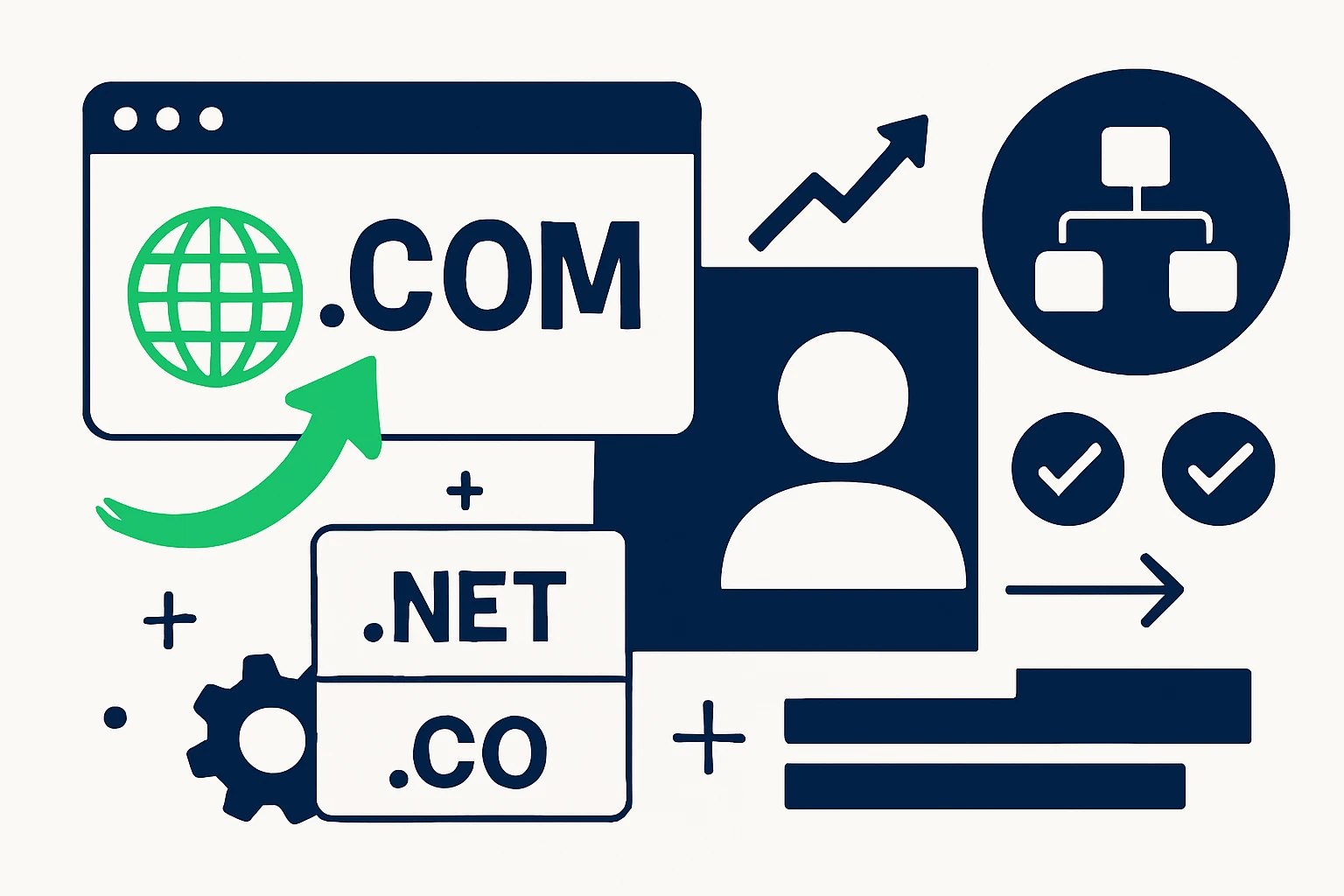
- 2) Defend your brand with related defensives - register closely related domains across a small set of TLDs (e.g., .net, .org, a country ccTLD if you target a specific market). This reduces the risk of phishing, brand confusion, and misdirection by competitors or scammers.
- 3) Use ccTLDs for local intent where appropriate - country-code extensions can signal geographic targeting, particularly for local services and markets. Use ccTLDs in parallel with careful geo-targeting via content and hreflang attributes to avoid mixed signals. Source: Domain extensions and SEO.
- 4) Plan a clean migration path for domain moves - if you decide to consolidate or switch primary domains, implement 301 redirects and update canonical URLs to preserve link equity, then audit with Google Search Console. Giushing domain migrations has real SEO consequences if mishandled. Industry note on TLDs and site moves.
- 5) Align branding and user trust across channels - ensure your extensions are consistent on social profiles, emails, and offline materials to reinforce recognition and trust.
- 6) Protect intellectual property - secure brand names and logos across multiple domains to prevent confusion and trademark issues. If you identify a risky extension or a potential counterfeit domain, act quickly to protect your brand.
To help operationalize this framework, consider this compact decision matrix:
- Primary domain: .com if possible, otherwise a highly credible gTLD relevant to your audience
- Defensive set: 2–4 related TLDs
- Regional focus: 1–2 ccTLDs for key markets
- Migrations: plan for 301s and canonical re-assignment
Internal anchor note: to support practical implementation, review related concepts such as SEO for domains and canonical URLs as you plan any cross-TLD strategies. These internal pages provide concrete checklists for site structure, hreflang usage, and URL normalization.
External reference: the geo-targeting and TLD discussions outlined by Search Engine Land provide a grounded view of how TLD choices interact with locale signals in search results. Source: Domain extensions and SEO. (searchengineland.com)
Structured block (framework in practice):
- Primary domain - choose a concise, brand-aligned name in a credible extension
- Defensive set - register 2–3 related TLDs for brand protection
- Geo-targeting - evaluate ccTLDs for the markets you serve
- Migration plan - design 301 redirects and update sitemaps
- Brand alignment - ensure consistent branding across channels
Internal anchor note: consider linking to brandable domains and domain portfolio as practical companion topics for building a resilient online presence.
Limitations, trade-offs, and common mistakes
While the framework above provides a robust starting point, there are real-world constraints SMBs should acknowledge. First, there is no direct ranking benefit to choosing a particular generic TLD, the SEO value comes from brand trust, content quality, and technical optimization, not from the letters after the dot. This nuance is echoed in industry coverage and practitioner analyses, which emphasize indirect effects more than direct signals. Source: Domain extensions and SEO. (searchengineland.com)
A second limitation is user perception. Even if a niche extension can be appropriate for a campaign, it may introduce friction or confusion for potential customers who default to typing a familiar .com. Surveys and experiments on branding and trust show that familiarity and perceived credibility drive clicks and engagement - factors that, in turn, influence SEO through user signals. See the market context and related domain discussions for more detail. Verisign and market data. (dnjournal.com)
Common mistakes SMBs should avoid include: overextending to too many TLDs (diluting focus), neglecting 301 redirects during domain moves, and failing to harmonize branding across channels. Another frequent pitfall is neglecting trademark clearance when expanding to new extensions, which can lead to costly rebranding later. For context on these dynamics, see industry coverage of TLD-related guidance and cautionary notes. Industry caution on spammy TLDs. (domainnamewire.com)
Real-world pathway: applying the framework with a digital partner
A well-structured domain strategy supports web design and digital marketing work - without forcing a sales-heavy tone. In practice, a digital agency can implement the framework in collaboration with clients by aligning technical configuration (301s, hreflang, canonicalization) with brand assets and content strategy. The result is a coherent user journey across domains, improved risk management, and cleaner analytics for decision-making.
For a research-ready starting point, SMBs can explore niche extensions and their implications using the Buzz TLD resource listed earlier, then broaden the scope with the broader TLD catalog. This approach lets you test a concept (for example, a campaign-specific extension) while preserving a strong primary domain for long-term authority. Buzz-domain research and TLD directory are practical companion resources during planning. (blog.verisign.com)
Internal anchor note: tie the pathway to actionable internal resources such as competitive domain analysis and local targeting domains to reflect how brands expand responsibly while maintaining search integrity.
Conclusion: a disciplined approach to domain extensions pays off
In 2026, SMBs gain more from thoughtful domain strategy than from chasing the latest novelty TLD. Your primary domain should anchor your brand, while a carefully chosen set of defensives and targeted ccTLDs can protect and extend reach. The indirect SEO benefits - better trust, improved click-through rates, and stronger backlink profiles - follow from a coherent branding and technical foundation. By applying the decision framework above, SMBs can reduce risk, improve user experience, and create a scalable domain portfolio that supports your growth goals. ,
For SMBs looking to operationalize this approach with expert support, VCWeb Digital Agency offers a broad set of services - web design, SEO services SMB, Google Ads management, and hosting - that can align with a disciplined domain strategy. See the Buzz TLD resource for niche exploration and the broader TLD directory for portfolio planning, and consider coordinating with a partner who specializes in integrated web design and digital marketing to ensure your domain strategy translates into measurable outcomes. Pricing and TLD directory pages can serve as practical stepping stones in your planning. (investor.verisign.com)