Domain Strategy for SMBs: Leveraging TLDs for Local and Global Marketing
Small and midsize businesses (SMBs) operate in a world where local trust, regional relevance, and consistent branding matter as much as product quality. A domain strategy is a foundational, often overlooked, lever in achieving those goals. Rather than chasing a single perfect URL, pragmatic SMBs adopt a portfolio mindset: align domain choices with markets, content strategies, and measurement plans. This article unpacks how to think about top-level domains (TLDs) in 2026, how data sources like domain lists can help you move faster, and how to integrate these choices into a broader web-design and digital-marketing program. For SMBs exploring data-driven domain fits, resources such as WebAtla’s catalog of TLD-specific domains can be a time-saver, see the practical links at the end of this article. download list of .ar domains and download list of domains by TLDs to explore how a curated dataset can inform your local-market strategy.
Why TLDs Still Matter for SMB Marketing (Even If Not Direct Ranking Signals)
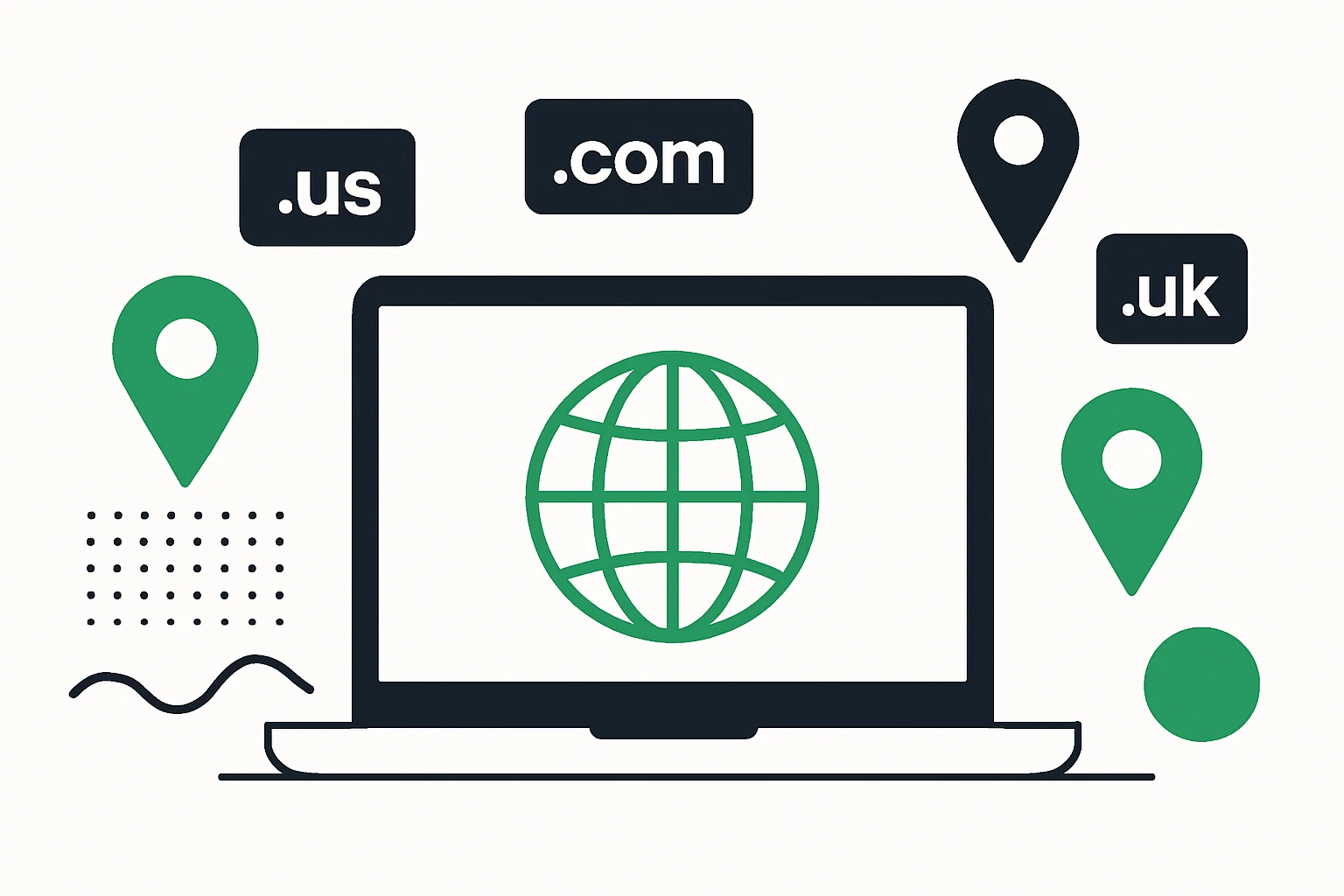
There is a long-running debate about whether the extension itself directly boosts search rankings. While most reputable sources agree that the top-level domain (TLD) doesn’t function as a direct ranking signal, the choice of TLD can influence user perception, trust, and local relevance - factors that indirectly affect SEO and performance. In practice, a local audience may respond more positively to a ccTLD (for example, a .uk or .de domain) when it signals a local presence, while global audiences may prefer a familiar gTLD like .com. This distinction matters for content strategy, link-building plans, and user experience. See ongoing guidance from major platforms and policy bodies that explain how geo-targeting and regional signals operate in real-world SEO workflows. Google Search Central: Managing multi-regional and multilingual sites.
From a consumer-trust perspective, many users still associate familiar extensions with reliability and credibility. This perception can affect click-through rates and brand recall, which in turn influence engagement signals that search engines observe. While the extension itself is not a ranking lever, the surrounding signals - content quality, local links, and language targeting - often hinge on the choice of TLD as part of a broader regional strategy. For a broader view on how search engines treat domain extensions and related signals, see industry analyses and SEO-focused discussion. Search Engine Land: Keywords in generic top-level domains won't help you rank better.
For researchers and practitioners, the key takeaway is to treat TLDs as signals within a broader system: local intent signals, content localization, and technical SEO hygiene matter more than the extension alone. When used thoughtfully, TLDs can reduce friction for local audiences and improve performance in targeted markets, even if they aren’t a direct dial for rankings.
How to Map TLDs to Audience Segments (A Practical Guide)
To minimize risk and maximize impact, SMBs should map TLD choices to audience segments, regional intent, and content strategy. Consider these dimensions:
- Geographic targeting: If your primary markets are in a specific country or region, a country-code TLD (ccTLD) can send a clear geographic signal to both users and search engines. Google’s guidance on geo-targeting and international targeting emphasizes that signals beyond domain extension - such as hreflang, localized content, and structured data - play a crucial role in ranking across regions. Google Search Central: Managing multi-regional and multilingual sites.
- Brand strategy and recall: A globally familiar TLD like .com supports brand cohesion for multinational campaigns, but local markets may respond better to locally trusted extensions, especially if you publish region-specific content and listings in local directories and GBP equivalents. The broader SEO literature agrees that while TLDs are not direct ranking signals, trust and familiarity do influence user behavior, which in turn affects performance signals. Search Engine Land: Keywords in generic top-level domains won't help you rank better.
- Content localization and hreflang: If you run multilingual sites, pairing TLD choices with language-directory structures and proper hreflang annotations helps search engines serve the right content to the right users. This is a core practice for international SEO. Google Search Central: Managing multi-regional and multilingual sites.
- Data readiness: For SMBs exploring domain data to plan campaigns, clean, verifiable datasets enable faster decision-making. A robust process includes verifying ownership, quality of links, and historical integrity. For instance, curated lists by TLDs can accelerate discovery and risk assessment, while ensuring you stay compliant with brand protections. See how data catalogs can accelerate decisions in practice with resource catalogs like WebAtla’s domain directories.
Data Sourcing and Validation: How to Use Domain Lists Effectively
A recurring friction point for SMBs is data quality. Domain lists - whether you’re looking to identify targets for outreach, discover potential brand-appropriate domains, or build a regional portfolio - are only as valuable as their accuracy and governance. Here is a practical workflow to make domain lists actionable without sacrificing credibility:
- Define clear criteria: Identify regions, languages, and audience intents you intend to target. Translate those into a filter for TLDs and associated keywords (for example, .ar for Argentina and content in Spanish).
- Source credible data: Use reputable directories and marketplaces that curate domain data with transparency. For businesses evaluating datasets by TLDs, provider catalogs can speed up discovery and validation. See how a general catalog approach fits into a pragmatic workflow with WebAtla’s TLD directory.
- Verify ownership and history: Before any acquisition or outreach, perform RDAP and WHOIS checks, review backlink profiles, and assess domain age and historical content to avoid reputational risk. (For reference on domain data governance, see ICANN’s discussions about the structure and governance of the domain ecosystem.)
- Assess relevance and quality: Ensure domains align with your content strategy and avoid domains with a history of spam or low-quality links that could harm brand credibility. Attribution and trust signals are essential to modern SEO and paid media alike.
- Test in a controlled environment: Pilot campaigns with a small, well-targeted subset of domains to measure impact on traffic, engagement, and conversions before scaling.
SMBs often ask where to obtain targeted datasets such as a curated set of .ar domains. Platforms that host domain catalogs by TLDs can be a practical starting point. See a real-world example of how these datasets are surfaced in practice with WebAtla’s TLD-based listings: download list of .ar domains and WebAtla’s domain catalog by TLDs.
Domain Strategy Framework for SMBs
To translate the above into a repeatable process, use the following four-step framework. It keeps domain decisions aligned with business goals, content strategy, and measurement:
- Step 1 - Define target markets: List the regions where you sell or plan to sell. Document language, currency, and local search behaviors that will inform domain choices and content localization.
- Step 2 - Map TLDs to audiences: Decide when to deploy ccTLDs vs. gTLDs based on local trust signals, branding needs, and operational considerations. Use geo-signals and hreflang in tandem with your domain strategy.
- Step 3 - Validate data quality: Establish a governance process for domain data. Validate ownership, check for historical issues, and confirm that the data will integrate cleanly with your CMS, analytics, and CRM.
- Step 4 - Measure impact and govern changes: Define metrics for local engagement, conversions, and SEO performance. Create a change-control process so you can iterate on what works and retire what doesn’t.
Limitations and Common Mistakes (Trade-offs SMBs Should See Clearly)
Domain strategy is powerful, but it is not a silver bullet. Here are the most common missteps and how to avoid them:
- Over-relying on TLDs as a ranking signal: Direct ranking benefits from TLDs are minimal, the real value comes from local trust, language targeting, and site-wide quality signals. See the broader industry consensus that domain extensions themselves do not guarantee higher rankings, even though they influence user perception and click behavior. Search Engine Land: Keywords in generic top-level domains won't help you rank better.
- Ignoring content and links: A strong domain with poor content or weak backlinks will underperform. Backlinks and on-page quality remain the primary ranking drivers, extensions are secondary signals. This aligns with industry observations about SEO fundamentals and domain signals.
- Inconsistent localization: If you deploy ccTLDs without proper hreflang or localized content, you risk confusion and weak user signals. Always pair domain choices with robust localization signals and clear language targeting. See Google’s guidance on multi-regional sites for practical implementation details. Google Search Central: Managing multi-regional and multilingual sites.
- Using low-quality datasets: Download lists and domain catalogs can accelerate discovery, but poor data quality increases risk. Validate datasets and maintain governance around data sources to protect your brand and marketing ROI.
Structured Quick-Reference: Domain Strategy Framework (Summary)
- Define markets - geography, language, currency, intent
- Choose TLDs strategically - ccTLDs for local trust, gTLDs for global reach
- Validate data - ownership, history, link profile, and governance
- Measure and iterate - track local metrics, refine domains, scale what works
Integrating Domain Tactics with Web Design and Marketing (Publisher Context)
For a web design and marketing agency serving U.S. SMBs, a disciplined domain strategy complements site design, content creation, and paid media. The right domain portfolio can sharpen local relevance, support regional landing pages, and align with ads and SEO efforts. In practice:
- Use local domains or subdomains to power region-specific landing pages that match localized keyword targets and user intents. Pair these pages with language targeting and local business signals (reviews, local citations, and Google Business Profile signals).
- Structure your site architecture so that local domains or subdirectories share the same core content system, ensuring consistent user experience and coherent analytics across markets.
- Plan paid media with domain signals in mind. Local domains can harmonize with geotargeted campaigns in Google Ads, YouTube, and Discover campaigns, reinforcing trust signals and improving quality scores over time. See Google’s guidance on geotargeting in paid environments and general localization practices.
For SMBs considering a domain catalog to accelerate discovery, WebAtla’s domain directories by TLDs provide a practical way to explore options and validate hypotheses in a structured way. Explore their .ar listing to see what’s available in that market: download list of .ar domains, and browse the general catalog at WebAtla’s domain catalog by TLDs.
Conclusion: A Thoughtful Domain Strategy Is a Foundation, Not a Footnote
In 2026, SMBs succeed by combining strong domain strategy with high-quality content, local-market signals, and disciplined measurement. TLDs matter primarily as signals that shape trust, relevance, and user experience - elements that search engines and users reward when your domain portfolio is aligned with your business goals and customer needs. Use data-driven workflows to validate domain datasets, structure your site for localization, and continuously test what delivers the best local-to-global impact. When integrated with a robust web-design and digital-marketing program, thoughtful TLD decisions can be a quiet but powerful accelerant for SMB growth.
Notes and sources for further reading include foundational guidance on how search engines handle regional and language targeting, and how the domain ecosystem is governed and evolving. See Google’s guidance on multi-regional sites, ICANN’s new gTLD program context, and industry analyses on the SEO impact of domain extensions: