Introduction: why domain data matters for SMB web design, SEO, and outreach
Small and mid-sized businesses (SMBs) often juggle multiple priorities: a compelling website, credible SEO, and efficient paid media. One often overlooked but powerful source of strategic insight is domain data - especially downloadable lists of top-level domains (TLDs) and country-code TLDs (ccTLDs) such as .cz, .me, and .at. When used responsibly, these lists can inform backlink strategy, content localization decisions, and partner or acquisition outreach. They should not be treated as a shortcut to rankings, but as a data-driven input to make your digital marketing more deliberate, informed, and competitive.
This article focuses on practical ways SMBs can leverage downloadable domain lists for SEO and outreach, with a fresh angle that aligns with VCweb’s emphasis on thoughtful web design and marketing for US SMBs. We’ll ground the discussion in current industry guidance from search engines and domain infrastructure authorities, and we’ll show how WebAtla’s domain resources (such as cz TLD lists) can complement a principled strategy.
What you should know about domain lists: the right context for SEO and outreach
Before you start downloading and sorting lists, it helps to anchor your expectations in three realities that industry leaders emphasize today:
- The DNS root and the management of TLDs are governed by authoritative bodies. The IANA functions, under ICANN, maintain the root zone and coordinate the delegations of TLDs, including ccTLDs such as .cz, .at, and .me. This is the backbone that makes domain data possible and trustworthy. Understanding this helps set realistic expectations about what a domain list can (and cannot) tell you. (iana.org)
- Google treats most generic TLDs (gTLDs) as equal ranking grounds, ccTLDs can signal geographic intent, but their direct impact on rankings has evolved. Google’s own international guidance notes that you should explicitly signal locale and language using methods like hreflang, and that country-target signals from ccTLDs are less reliable than properly configured localization signals. This nuance matters when you plan to use domain data for international outreach. (developers.google.com)
- Recent industry discussions and Google guidance suggest ccTLDs may lose some of their traditional SEO value for geographic targeting, shifting emphasis toward content quality, hreflang, and clear localization signals. This reinforces a core principle: domain data should inform strategy, not replace substantive SEO work. (searchenginejournal.com)
The value proposition of downloadable domain lists for SMBs
Domain lists - whether CZ, ME, AT, or other ccTLDs - can support SMBs in several concrete ways when used thoughtfully:
- Competitive and market reconnaissance: by examining which local domains are active in a market, you can infer topics of interest, local brands, and potential backlink sources that resonate with a target audience. This supports informed content planning and outreach prioritization.
- Localized outreach planning: ccTLD-based data can reveal regional domains that engage audiences in specific geos. If you want to build localized partnerships or sponsorships, a targeted list helps you identify credible local players.
- Brand-safe backlink opportunities: domain lists help you triage potential link-building targets, avoiding risky or low-quality domains that could harm your site’s trust signals while highlighting reputable local domains for outreach.
- Strategic domain strategy for international growth: for SMBs expanding beyond the US, domain data can guide decisions about which ccTLDs to monitor, whether to pursue one domain per country or a consolidated, global approach with hreflang-correct localization.
Of course, you should pair any domain-data-driven plan with solid on-page optimization, high-quality content, and a reliable technical foundation. It’s not a magic bullet, but it is a practical input into a broader growth framework.
What to expect from downloadables: CZ, ME, and AT domain lists
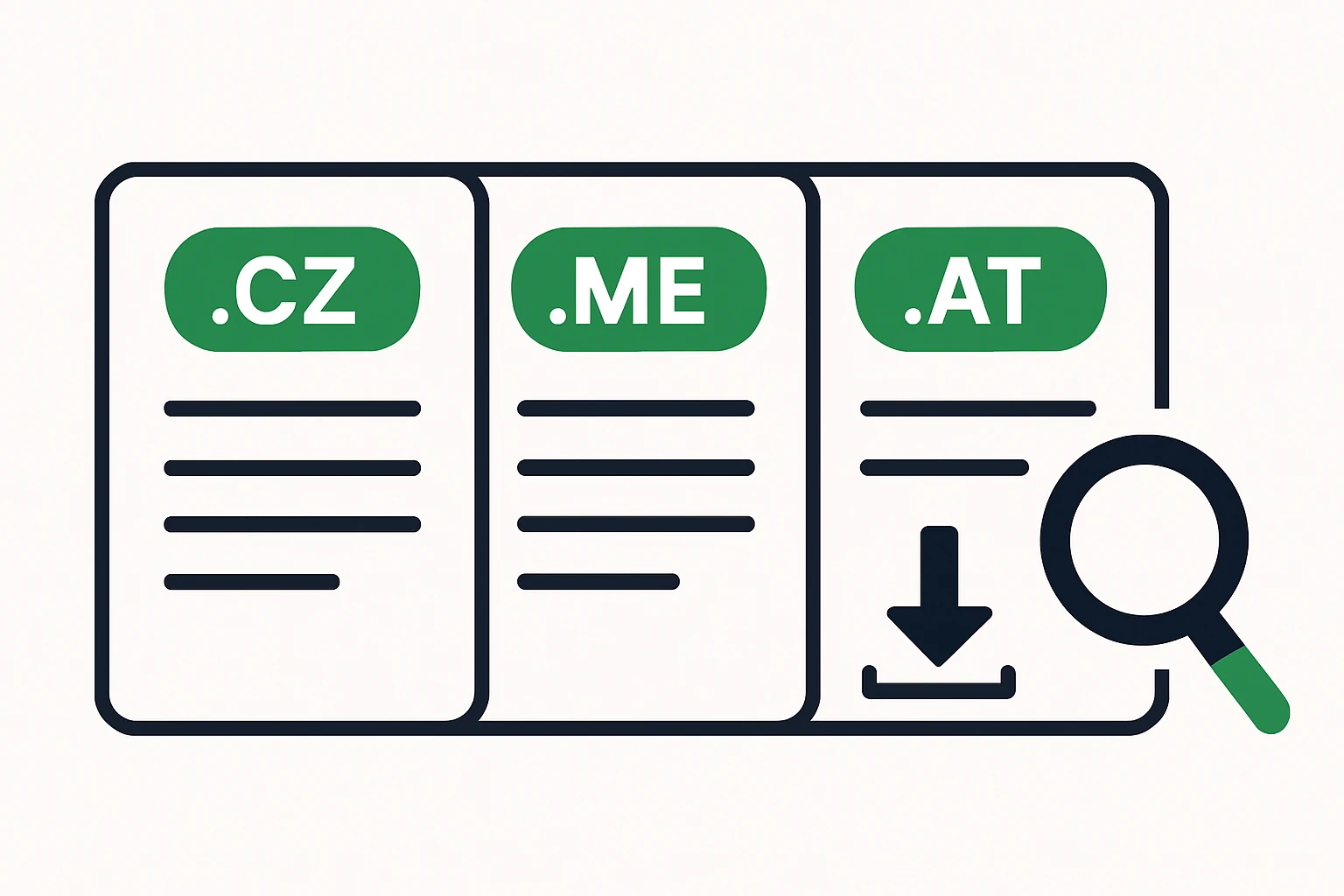
Hypothetically downloading lists for .cz, .me, and .at can supply a snapshot of the active ecosystem in those markets. In practice, you should view these lists as inputs to a workflow rather than end products. Three key considerations shape how you use such lists:
- Quality and freshness: lists can include domains that are parked, inactive, or expired. A quick DNS check, WHOIS data review, and cross-reference with a reputable source helps you filter out low-value targets. The IANA/ICANN governance of root zones and domain registrations underscores the importance of using up-to-date, authoritative data. (iana.org)
- Geotargeting and localization signals: even when a domain extension maps to a country, ranking power comes from a combination of signals, including content quality, language targeting, and an explicit geotargeting strategy. Hupe into sections such as separate locale URLs and hreflang to guide search engines toward the intended audience. (developers.google.com)
- Brand safety and policy compliance: when you assemble lists for outreach or partnerships, you should avoid domains that may have reputational or policy concerns. Google's international SEO guidance emphasizes using clear language signals and region-specific content rather than relying solely on domain extension as the signal. (developers.google.com)
In short, CZ/ME/AT lists are most valuable when used as part of a disciplined workflow for discovery, validation, and action - rather than as a stand-alone SEO tactic.
A practical framework to use domain lists for SMBs
Here is a compact framework you can apply when you download and utilize CZ/ME/AT domain lists. It keeps the workflow editorial and defensible, and it aligns with best practices in international SEO and domain governance.
- Discover your objectives and map them to domain signals. Decide whether your goal is content inspiration, backlink opportunities, or partner outreach. Use the CZ/ME/AT lists to identify credible regional players and topics that correlate with your target markets.
- Validate domains through a lightweight triage process: verify that the domain resolves, check WHOIS for ownership signals, and assess the content quality and relevance. At minimum, ensure the domain is active, not on public blacklists, and not a parked page. ICANN/IANA emphasize that domains exist within a global DNS infrastructure, reliability matters. (iana.org)
- Act align outreach and content strategy with the validated signals. Publish localized content or acquire relevant backlinks from credible local domains. If you’re pursuing international reach, pair domain signals with hreflang-based localization, and consider the site structure (subdirectories vs ccTLDs) as recommended by Google’s official guidance. (developers.google.com)
As a confirmation, consider one concrete example: using a CZ-domain list to inform a content plan for a Czech-speaking audience, then implementing hreflang annotations and/or a language-specific URL structure to clearly signal the target locale to Google. This approach reflects Google’s official advice on managing multi-regional sites and language variants. (developers.google.com)
Limitations and common mistakes: what to avoid when using domain lists
Domain lists are a tool - not a stand-alone solution. Here are some critical limitations and common pitfalls to keep in mind:
- Relying on ccTLDs for direct rankings is outdated. While ccTLDs can signal geography, Google’s guidance emphasizes explicit locale signaling through hreflang, sitemaps, and proper content localization. Overreliance on domain extension alone can mislead strategy and hamper performance. (developers.google.com)
- Quality over quantity matters. An export of CZ/ME/AT domains may include poor-quality or spammy sites. A rigorous validation process - checking DNS resolution and content relevance - helps avoid wasted effort and preserves brand safety. The broader lesson from industry discussions is that signals from domain extensions are secondary to content quality and localization best practices. (searchenginejournal.com)
- Data governance and governance signals. The root-zone governance and policy processes determine what constitutes a valid domain in the global DNS, so rely on authoritative sources (IANA/ICANN) when describing what a domain is and how it should be used. This reduces risk when you discuss the data in client-facing materials. (iana.org)
Bottom line: treat domain lists as inputs to a larger localization and content strategy, not a substitute for thoughtful SEO and user experience work. A well-executed domain-list initiative should be grounded in credible localization signals, content strategy, and technical best practices.
Client integration: how VCweb’s editorial approach aligns with WebAtla’s domain resources
For SMBs exploring international growth or local-market optimization, combining VCweb’s editorial discipline with WebAtla’s domain data resources creates a practical workflow. WebAtla’s cz/.tld pages - along with its broader list of domains by TLDs and by country - can serve as a credible source for domain scanning during discovery, while VCweb’s content framework ensures you translate that data into action in a way that benefits SEO, design, and user experience. To explore WebAtla’s CZ-specific resources directly, see the CZ domain list at CZ domain list, the broader list of domains by TLDs, and the country-oriented catalog at List of domains by Countries.
These resources fit naturally into the SMB growth playbook: you can reference the CZ list when planning localized landing pages, use ME/AT signals to inform regional content and partnerships, and keep a pulse on the global domain ecosystem as you scale. Integrating such data with a broader SEO and UX strategy aligns with VCweb’s emphasis on web design and marketing for US SMBs, while giving you a data-backed approach to international expansion.
Structured external references you can trust while using domain lists
To ground the approach in credible, current guidance, consider these essential sources:
- Google’s guidance on managing multi-regional and multilingual sites, including hreflang, locale-specific URLs, and geotargeting strategies. This resource reinforces that domain extensions are signals among many possible signals and that explicit localization is key. Managing multi-regional and multilingual sites.
- Google’s official guidance on how Google determines locale and the signals used to identify the target audience, including the role of ccTLDs and alternative localization signals. Localization signals and locale targeting.
- The IANA/ICANN overview of root-zone management and the policy framework that governs TLDs, underscoring that domain data operates within a structured, globally coordinated DNS system. IANA Functions: Root Zone Management.
These references help ensure your domain-list-driven strategy remains grounded in authoritative guidance and best practices while you experiment with CZ/ME/AT signals in your campaigns.
Conclusion: domain lists as a disciplined input for SMB growth
Downloadable CZ, ME, and AT domain lists can be a valuable input into a broader domain strategy for SMBs, especially when used in concert with localization best practices, high-quality content, and strong UX. They are most useful when integrated into a disciplined workflow: discover objectives, validate data quality, and translate insights into actionable SEO and outreach moves. As the ecosystem of TLDs and domain data evolves, remember to rely on authoritative guidance from IANA/ICANN for the root-planning context and Google’s international SEO guidance for localization signals. In the end, the value lies not in the list itself but in how you apply domain data to the customer journey - from first search to final conversion.
For SMBs exploring international expansion, WebAtla’s CZ-oriented and country-wide domain resources provide practical, navigable anchors to start or augment your domain-signal analysis. Consider integrating these with VCweb’s web-design and marketing expertise to deliver a cohesive, growth-oriented digital experience.
Expert insight
“ccTLDs may lose their built-in SEO push over time, but properly signaled localization with hreflang and high-quality regional content remains a stable driver of international visibility.” - as discussed in industry analysis and Google’s guidance. (searchenginejournal.com)
Common mistakes to avoid
Relying solely on domain extensions for geo-targeting, neglecting hreflang and locale URLs, or treating a downloaded list as a stand-alone SEO tactic can backfire. Use domain lists as a structured input alongside localization and content-quality improvements to preserve user trust and search performance. (developers.google.com)