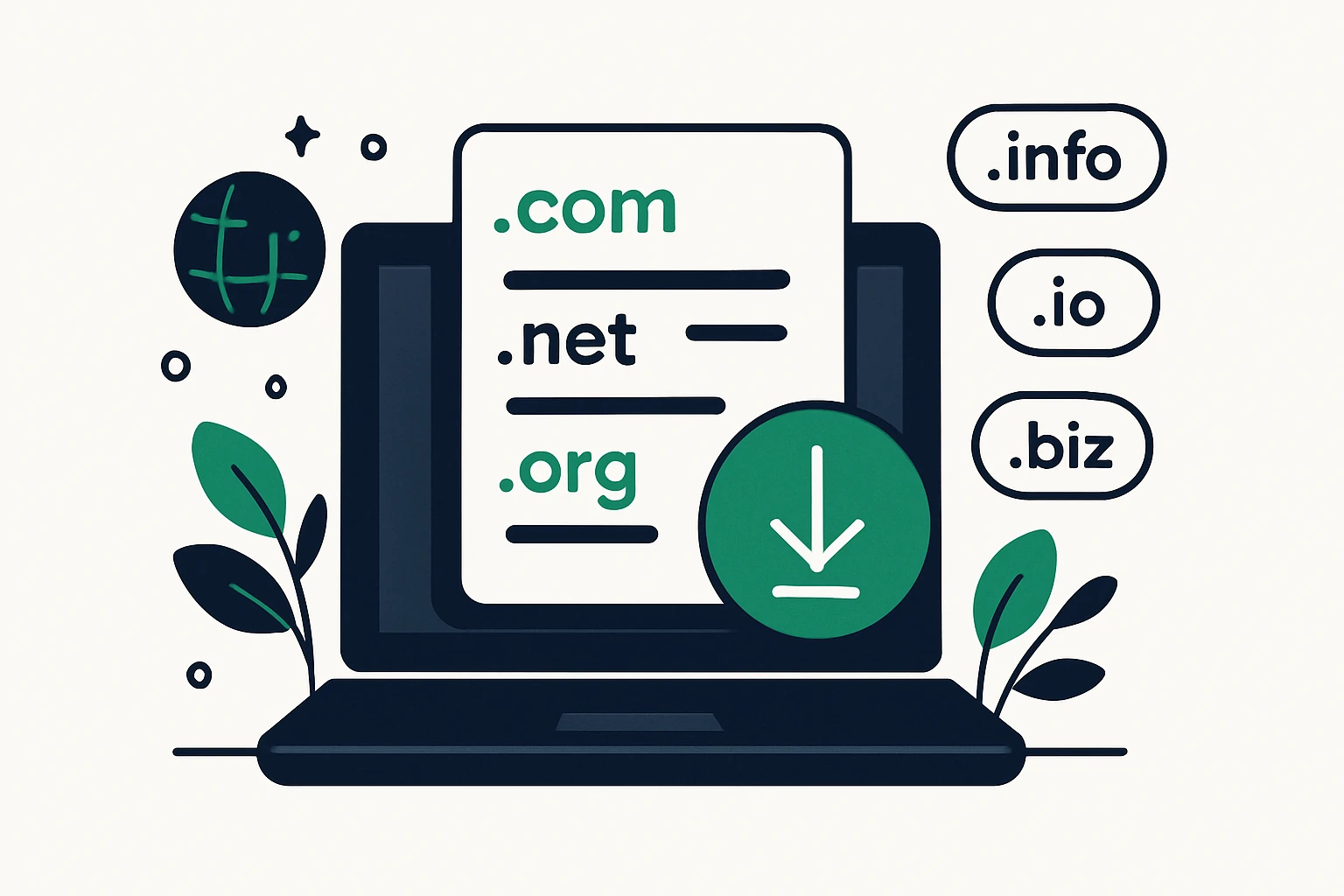
The domain landscape is a powerful signal for digital strategy. For small and medium-sized businesses (SMBs) looking to expand, monitor, or protect their online presence, lists of registered domains by top-level domain (TLD) can illuminate competitors, potential partners, and market gaps. Yet the path to access these lists, especially for specific TLDs such as .eu, .site, and .co, is not a simple matter of clicking a download button. Data access is governed by registry policies, licensing terms, and privacy rules that have evolved under global data protection regimes. This article explains how SMBs can approach domain lists by TLD in a lawful, practical way, with a view toward actionable insight rather than raw volume.
What domain lists by TLD are (and why they matter for SMBs)
Domain lists by TLD refer to compilations of registered second-level domains within a given top-level namespace (for example, all domains ending in .eu, .site, or .co). These lists can help marketing teams understand which terms and brands are actively registered in a market, identify gaps for domain strategy, and assess competitive activity. However, there is a crucial distinction between public keyword suggestions for SEO and authoritative domain lists used for risk assessment or strategic planning. Zone files and related data are controlled by the registries that operate each TLD, and access is not always public or free. ICANN and registry operators outline the governance around these data assets to balance industry needs with user privacy. [ICANN zone file access policy] and related registry guidance emphasize that access is typically conditioned by licensing and verified use cases.
For context, the .eu namespace operates under EURid, which manages registrations and related tooling for European domains. While individual users typically manage domains via official portals, data access for bulk or research purposes requires the registry's licensing framework and adherence to data-protection rules. My.eu (EURid) is the portal through which registries and accredited partners manage identity and domain-level operations, reinforcing that domain data access is built on accountability and stewardship.
Access options, licensing, and privacy considerations
Two broad paths exist for SMBs when seeking domain lists by TLD:
- Registry-backed access (zone files or equivalent data feeds): Registries like the operators of each TLD control the zone files that enumerate domain names within their namespace. Access to these zone files is typically available only under a registered, licensed arrangement with the registry or via contracted data providers. This framework is designed to protect the integrity of the DNS and comply with privacy and data-protection requirements. ICANN’s registry operations guidance discusses how zone file access is managed and implemented across TLDs.
- Qualified data providers and licensed channels: For many SMBs, category-appropriate data licenses or curated datasets offered by reputable providers are the practical route. These channels help ensure that use cases (for marketing, security, or brand protection) are aligned with policy and privacy rules. The GDPR era has profoundly shaped how WHOIS-like data is accessed and published, pushing Registry and ICANN initiatives toward standardized data access models. ICANN GDPR considerations and industry playbooks outline the broader shifts in data access expectations.
For the .eu namespace specifically, EURid governs the registration ecosystem, and access to bulk data typically requires appropriate licensing arrangements or partnerships. While individual end users can manage domains through the official EURid portals, bulk access for research or commercial use follows a controlled process. EURid: Welcome to My.eu and related registry guidance illustrate how data access is structured in practice.
Two additional context points are worth noting: (1) the legal framework around data publication, such as GDPR, has redefined what is publicly visible in WHOIS-like records, and (2) ICANN has published policy and industry guidance to facilitate legitimate data requests while protecting privacy. See ICANN’s Domain Industry Playbook for GDPR-related considerations and the ongoing discussions around Registration Data Access Protocol (RDAP) and related services. ICANN Domain Industry Playbook (GDPR).
A practical workflow: from exploration to action
The following framework offers a pragmatic path for SMBs to work with domain lists by TLD without overcommitting to data assets that are expensive or misaligned with regulatory rules.
- Define objective and scope - Clarify whether you seek market intelligence, brand-protection signals, or SEO-portfolio planning. The objective will drive whether you pursue license-based zone data or rely on alternative signals from vetted tools. Internal alignment with marketing, security, and legal teams helps prevent scope creep.
- Choose a data-access path - If your use case justifies it, apply for a registry-backed data feed or zone file access through an accredited partner. Otherwise, leverage compliant datasets and approved tools that provide domain-level signals with explicit usage terms. Consider how GDPR and local privacy laws affect data visibility and sharing. ICANN Operations Handbook (zone file access discussion) and GDPR Domain Industry Playbook for deeper context.
- Process and analyze - Normalize data (deduplicate, timestamp, and align by TLD), then apply business-relevant filters (brand presence, domain age, registration activity). Integrate findings with your SEO and content strategy, product naming, and digital marketing plans. While raw lists can be insightful, actionable intelligence comes from timely, clean data paired with context from your team. For example, a periodical review of domain activity can inform keyword targeting and competitive benchmarks without exposing your outreach to compliance risks.
To support these steps, a structured approach helps: define → access → analyze. This 3-step loop keeps data governance tight while still delivering practical value for marketing decisions. For a real-world read on how data access policies shape governance for domain data, see ICANN’s guidance and EURid’s public documentation.
Structured framework: 3-step domain data workflow
- Define. Clarify objective and permitted use
- Access. Obtain data via licensed channels or vetted providers
- Analyze. Normalize, filter, and apply to strategy
Limitations, trade-offs, and common mistakes
- Limitation: Zone file access is not universally open, and licensing costs or agreements may apply. Data may be incomplete or delayed depending on update cycles and licensing terms. Registry policies govern who can access what, and under what conditions.
- Trade-off: Public signals (e.g., keyword-based domain suggestions) are cheap and fast, but they are not substitutes for actual ownership or registration data. Relying solely on public tools can miss nuanced trends visible only in official data channels.
- Common mistake: Treating data as comprehensive or current without verifying the data’s provenance and licensing. Misuse or overbroad use can raise privacy or policy concerns, especially under GDPR regimes. See ICANN’s GDPR guidance and the zone-file access discussions for best practices.
Being disciplined about data provenance and licensing is essential. In practice, most SMBs benefit from pairing any domain data exploration with a clear policy on data retention, use, and compliance, rather than chasing volume alone.
Use cases: marketing, brand protection, and competitive intelligence
Strategic domain data can support a variety of business goals when used responsibly:
- Digital marketing planning: Identify which domain terms competitors are actively pursuing in related markets and adjust content and keyword strategies accordingly.
- Brand protection: Monitor new registrations that resemble your brand to detect potential impersonation or trademark issues early.
- Competitive intelligence: Track domain ownership patterns that indicate strategic moves (e.g., portfolio expansion, regional focus shifts) and align responses with your growth plan.
Integrating these signals into your broader SEO and site-building efforts can help improve relevance and reduce risk. For teams considering a broader data program, note that a comprehensive domain-data approach often benefits from partnering with a trusted digital marketing provider that can interpret signals within the context of your business. For more on how data-driven marketing ties into agency capabilities, you can explore the services in WebAtLa’s domain data and TLD services or review general pricing and options in WebAtLa pricing.
Conclusion
For US SMBs, the appeal of bulk domain lists by TLD (.eu, .site, .co) is clear: it can sharpen market understanding, inform branding decisions, and guide digital strategy. Yet the path to obtaining and using these lists must respect registry licensing, privacy considerations (notably GDPR-era expectations), and data governance best practices. By defining your objective, selecting an appropriate data-access path, and applying disciplined analysis, you can turn domain signals into meaningful business actions - without overreliance on raw lists. If you’re considering how to operationalize this within a broader web presence and marketing program, a partner like WebAtLa can help translate data insights into practical website, SEO, and marketing outcomes.
Explore more on domain data offerings and related resources through the publisher’s domain-systems focus, including practical overviews of domain lists by TLD and related tools. Domain lists by TLD and Pricing provide starting points for how data-informed strategies can be aligned with affordable, scalable solutions.