Introduction: why smart domain lists matter for SMBs in 2026
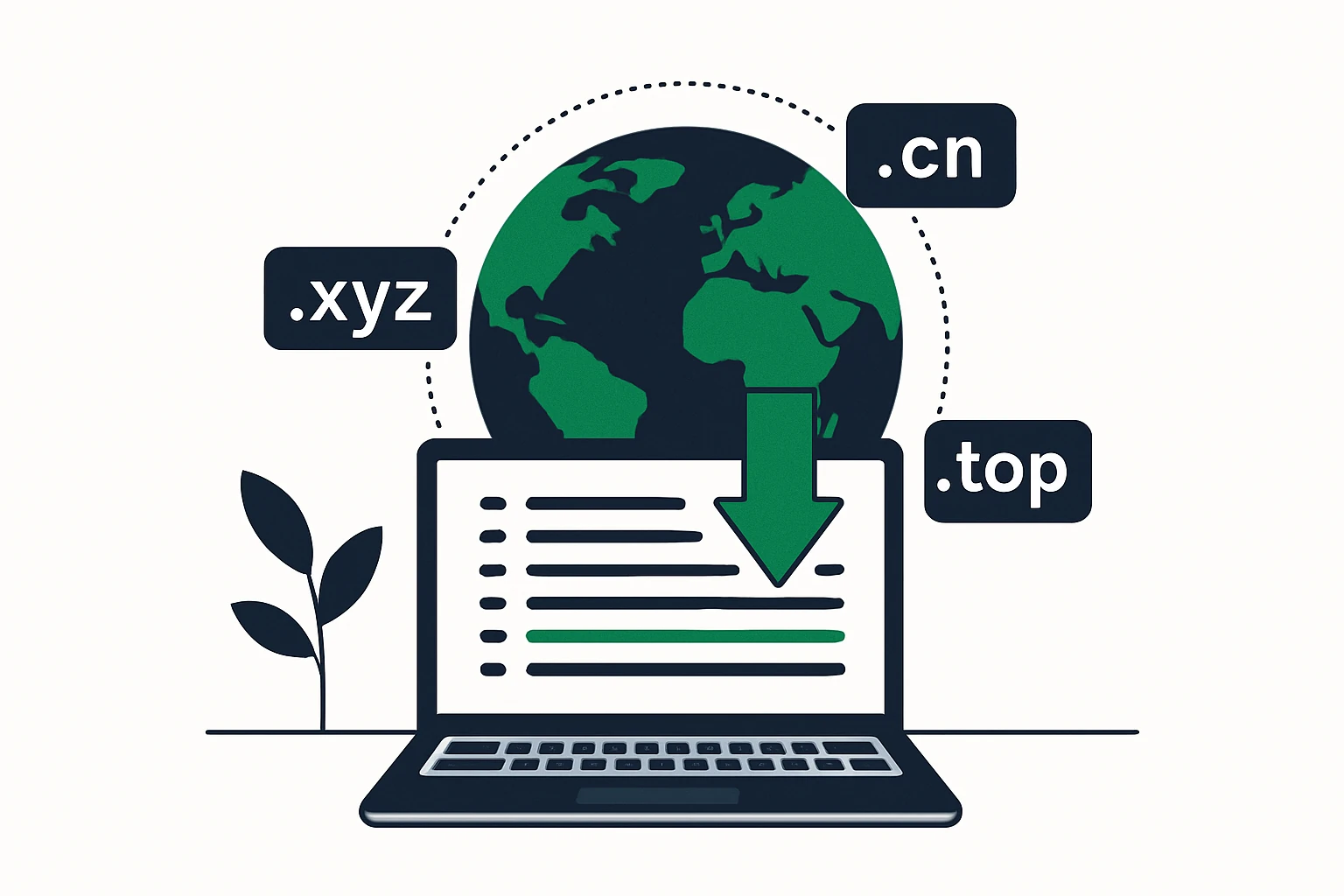
For small- to mid-sized US businesses aiming to grow, the domain strategy often sits at the intersection of branding, SEO, and international reach. A well-curated set of domain names - whether you’re exploring new markets, protecting your brand, or testing digital campaigns - can unlock measurable advantages. But not all domain lists are created equal. The real value comes from deliberate selection, verification, and a compliant workflow that turns a bulk list into a high-signal asset for marketing and search visibility. This article unpacks a practical approach to downloading and using domain lists for three high-potential TLDs: .cn, .xyz, and .top, while staying mindful of risk, cost, and compliance.
To ground the discussion, consider the broader context of domain registrations as a global resource. Industry data consistently shows vast scale and ongoing growth in the domain market, with country-code TLDs (ccTLDs) like .cn continuing to account for a significant share of registrations in many markets, even as generic TLDs proliferate. While the exact numbers shift over time, the underlying dynamic - whether a brand is targeting local China audiences or crafting a global digital presence - remains stable. Verisign’s quarterly data on global registrations provides a credible backdrop for planning domain-based initiatives.
Understanding the terrain: what .cn, .xyz, and .top can offer SMBs
Choosing the right TLDs is not just about price or novelty. Each domain extension carries signals about audience expectations, trust, and risk. A disciplined approach helps you decide where to invest effort and where to avoid edge-case risk. The following overview distills practical takeaways for the three extensions you’re most likely to encounter in bulk lists.
.cn: navigating the China opportunity with care
China remains a major hub for internet activity and commercial intent. .cn domains are among the most registered ccTLDs, reflecting significant local market presence. However, registering and maintaining .cn domains often involves local regulatory and technical considerations, including potential presence requirements and language-specific content considerations. For US SMBs, the .cn space can offer a route to local SEO signals and brand awareness in China, but it requires careful due diligence and ongoing compliance. Industry context supports the strategic role of ccTLDs in global branding, even as the registry landscape remains complex.
For decision-makers, it’s essential to pair domain strategy with appropriate hosting, privacy, and risk controls. See credible market context from Verisign’s Domain Name Industry Brief materials for the broader landscape of ccTLDs and domain growth. Verisign DNIB context.
.xyz: a branding-friendly, flexible option
Originally popularized as a flexible branding alternative to traditional .com, the .xyz space gained traction with brands seeking memorable, short, and globally accessible identifiers. For SMBs, .xyz can support creative campaigns and domain strategies that test new markets or product lines without the premium risk of high-cost legacy TLDs. While it is well-suited to marketing experiments and modern branding, it also requires careful vetting of landing pages, security posture, and brand consistency to avoid consumer confusion or trust issues. Industry overviews show ongoing diversification of TLD usage beyond the long-established players, underscoring why many SMBs consider .xyz as part of a broader portfolio. For more on the range of TLDs available, see a comprehensive listing from Namecheap. Full TLD list.
.top: opportunities and cautions for aggressive campaigns
the .top extension has grown as a cost-effective option for campaigns, domain parking, and experiments. However, it has also attracted security concerns: research into abuse patterns highlights phish-prone and risky usage in some periods. When SMBs consider .top, it should be within a framework that includes rigorous domain screening, security hygiene, and a clear plan to pivot away from low-quality domains if needed. The presence and treatment of such TLDs in security-focused research and analytics illustrate why a disciplined, risk-aware approach is critical for any bulk-domain project. For broader context on how top-level domains vary in security risk, see Interisle’s 2025 phishing landscape report. Phishing landscape 2025.
How to build a download-ready domain list: a practical framework
Downloaded domain data can accelerate discovery and testing, but only if you convert raw names into a structured, decision-ready set. Below is a lightweight framework you can apply to queue up a list for further validation, testing, and deployment. The steps are designed to be repeatable and auditable, so your team can scale without sacrificing quality. A structured block follows to make the workflow concrete.
- Step 1 - Define objectives: Start with precise marketing or product goals. Are you evaluating brand presence? Testing international SEO signals? Or identifying potential domains for paid campaigns? The objective will drive how granular your filtering should be (keywords, geography, language, etc.).
- Step 2 - Source credible lists: Use reputable providers and official registries to assemble candidates. For example, bulk or bulk-like lists often come from established services, validate the provider’s credibility and data freshness. In parallel, review the legality and terms of use for bulk-download data to ensure compliance with data privacy and anti-abuse guidelines.
- Step 3 - Quick availability screening: Run a fast pass to identify which domains in your list are currently registered versus open. This helps you prioritize a deeper validation pass rather than chasing dead ends. When you’re ready, you can extend the screening to check DNS health and basic security posture.
- Step 4 - Ownership and risk verification: For each candidate, verify who owns the domain and whether it’s parked, for sale, or associated with potential phishing/abuse. Tools and registries can help you confirm ownership metadata and historical usage without exposing your team to legal hazards.
- Step 5 - Quality scoring: Score domains on brand fit, trust signals, and technical health (HTTPS, DNSSEC, uptime) plus risk indicators (abuse reports, malware associations). A simple scoring rubric keeps decisions transparent and repeatable.
- Step 6 - Action plan: Decide whether the domain becomes a 1) branding test, 2) redirect or regional landing, or 3) a defensive brand-protection asset. Align actions with resource constraints and ongoing monitoring plans.
- Step 7 - Documentation and governance: Maintain a shared log with domain names, owner data, status, and next steps. This prevents duplicate efforts and supports cross-team coordination (marketing, product, and security).
To help operationalize these steps, you can reference a curated set of resources that focus on domain inventories and TLDs. For example, a dedicated catalog like "List of domains by TLDs" serves as a centralized start point for SMBs exploring portfolio expansion. See the client’s resource hub for domain lists by TLDs List of domains by TLDs, as well as related pages like com TLD listings and the pricing page Pricing for practical budgeting guidance.
Limitations, trade-offs, and common mistakes
As with any data-driven tactic, bulk domain strategies carry pitfalls. Below are the most common missteps SMBs encounter when downloading and using domain lists, along with pragmatic mitigations.
- Over-reliance on bulk lists without validation: A wide net is not enough if you don’t verify ownership, legitimacy, and hosting setup. Always pair list builds with a validation workflow and security checks rather than assuming all domains are ready for campaigns.
- Ignoring local regulatory and branding considerations: Especially with ccTLDs like .cn, ensure content, language, and regulatory compliance align with audience expectations and local laws.
- Underestimating security and abuse risk: Some TLDs experience higher rates of phishing or malicious use, implement ongoing monitoring and quick remediation paths for any flagged domains. See security-focused analyses as context for this risk.
- Failing to sequence and govern workflow: Without governance, domain lists can multiply without clear ownership or exit strategies. A documented process ensures consistency across marketing campaigns, product teams, and security review.
- Underutilizing the right tooling: Basic checks are not enough for enterprise-grade decisions, lightweight automation for availability checks, WHOIS lookups, and DNS health can dramatically reduce cycle times.
The takeaway: bulk domain lists are a powerful starting point, not a final deliverable. They excel when integrated into a disciplined, auditable workflow that prioritizes brand integrity, user trust, and measurable outcomes. A thoughtful process helps you leverage opportunities in .cn, .xyz, and .top while avoiding common landmines that erode ROI.
Practical example: a hypothetical SMB workflow in action
Imagine a US-based SMB launching a regional product line aimed at North American and European audiences, with a separate micro-site for a China-focused landing page. The team uses a bulk download to assemble a pretend inventory of candidate domains across .cn and global gTLDs such as .xyz and .top. They apply the framework above, filtering for brand-aligned keywords, reputable landing-page health (HTTPS, legitimate content), and historical abuse signals. After a quick availability pass and risk screen, they select a subset of domains to test with regional landing pages and 301 redirects to measure click-through rates and on-site engagement. If the test proves positive, they scale the effort with a more formal portfolio plan and ongoing monitoring. A practical takeaway is that domain lists work best when used as a strategic instrument - not as a standalone solution. For a hands-on comparison of different domain strategies and pricing, you can explore the client’s pricing page and related tools linked earlier in this article.
For those seeking a credible sense of the broader market landscape, credible sources provide context on how TLDs fit into global growth and security considerations. See the Verisign DNIB-driven context for TLD dynamics, and the Namecheap full-TLD listing for a snapshot of current availability across popular extensions. Verisign DNIB context • Full TLD list.
Conclusion: turning domain lists into strategic advantage
For SMBs, domain strategy is not a marketing gimmick, it’s a structured vector for growth that spans branding, local-market signals, and search visibility. Downloadable domain lists for .cn, .xyz, and .top can illuminate opportunities - provided you apply a disciplined validation workflow, guard against security risks, and align actions with your brand strategy. The articles above offer a practical starting point, and the most durable advantage comes from integrating domain exploration with a broader digital strategy that includes high-quality web design, robust SEO, and intelligent, compliant expansion into global markets. If you’re looking for editorially sound guidance and a platform to coordinate these efforts, consider tapping the client resources linked in this piece for actionable, domain-focused assets that complement your SMB’s web design and marketing initiatives.