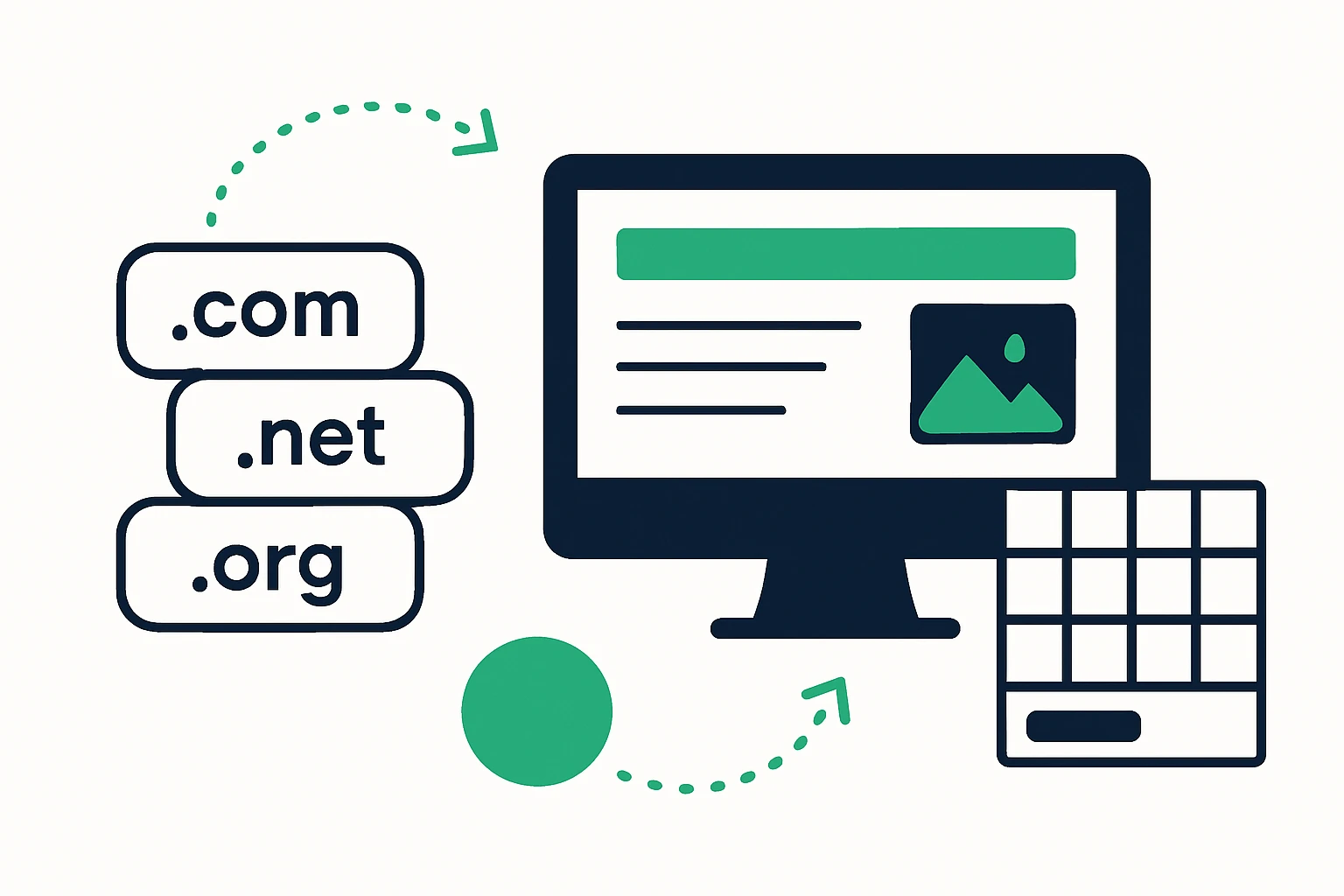
Introduction: the overlooked asset inside your brand strategy
Many small to mid-sized businesses (SMBs) register a handful of domain names and assume their work is done. But a truly resilient online presence requires more: a deliberate, governed portfolio of domains that protects branding, supports region-specific campaigns, and can be monetized or redirected as your business scales. Treating a "list of domains" as a living asset - not just a purchase order - can help SMBs capture missed traffic, reduce brand confusion, and accelerate digital growth. This article explains how to move from a static list to a live, well-governed domain portfolio that aligns with web design, marketing, and ROI goals. Note: this approach benefits from practical governance and, when appropriate, professional support from a domain-management partner. (dn.org)
For SMBs exploring scalable, budget-conscious options, partnering with an agency that understands both branding and technical execution can be a force multiplier. WebAtla offers domain-management and hosting capabilities that complement web design and digital marketing services, helping small teams convert a collection of domains into a coherent growth engine. See WebAtla pricing for an overview of bundled options. pricing (dreamhost.com)
Why a domain portfolio matters for SMBs
A domain portfolio extends branding beyond a single URL. It allows you to:
- Protect your brand by preventing cybersquatters from capturing variants of your name
- Target regional or product-specific audiences with relevant, keyword-rich domains
- Capture misspellings or common typos to funnel traffic back to your site
Industry perspectives consistently highlight brand protection and regional targeting as core benefits of owning multiple domains. While some claim direct SEO bonuses from extra domains, the strategic value often lies in branding, user experience, and controlled traffic flows rather than pure search engine tricks. For a grounded view, see industry analyses and practical guides from reputable sources. (dreamhost.com)
Key concepts: turning a list into live domains you can act on
To translate a mere inventory into actionable assets, it helps to distinguish between three realities:
- List of domains - all domain names your business or teams own or are tracking for future use.
- All domains - a comprehensive catalog including variations, misspellings, and regionalized extensions you may consider protecting.
- Live domains - those that currently point to a web host, have active landing pages, or forward traffic to your primary site.
Bringing discipline to these categories makes it easier to assign ownership, schedule renewals, and decide when a domain should point to a dedicated landing page, a regional site, or a 301 redirect to a core product page. The practical upshot is clearer branding and less friction for users typing variants into their browsers. This disciplined approach is echoed in mainstream guidance on owning multiple domains for branding, including best practices around marketing with several domain names. (verisign.com)
How to audit your domain inventory: a practical, repeatable process
Use a simple, repeatable framework to transform chaos into clarity. The following steps lay a foundation you can reuse quarterly or with major product launches.
- Inventory - assemble every domain you own or have controlled historically. Include TLDs, country-code domains, and common misspellings.
- Classification - tag each domain by purpose: brand protection, regional marketing, product-specific campaigns, or parking/monetization.
- Health check - verify DNS configuration, renewal dates, and whether the domain resolves to an active landing page or a redirect.
- Action plan - for each domain, decide whether to (a) keep and forward, (b) develop a landing page, (c) redirect to a main product page, or (d) monetize via parking or sale.
Ultimately, the audit should produce a prioritized list of live domains that align with current marketing goals and a longer list of protected variants you may want to acquire or retain for future campaigns. The practice of consolidating administration and monitoring renewals is widely recommended as essential for brand integrity and operational efficiency. (dn.org)
A simple, repeatable framework: from inventory to optimization
The following framework helps SMBs move from a raw list of domains to a strategy that informs design decisions, content planning, and paid campaigns. Use it as a quarterly sanity check or a yearly strategic review.
- Audit and consolidate - ensure you know what you own, remove duplicates, and consolidate under a governance process. If you discover gaps (missing variants or regional domains), consider acquiring them or setting up forwarding rules.
- Prioritize by ROI and risk - allocate resources to domains that (a) protect your brand from cybersquatters, (b) have known traffic potential, or (c) support important regional marketing efforts.
- Establish governance - assign ownership, renewal calendars, and access controls. Your governance should include who can edit DNS, who approves redirects, and how content aligns with branding guidelines.
- Plan activations - create landing pages or content assets for high-priority domains, or set up clear, trackable redirects to relevant sections of your primary site.
- Measure impact - track type-in traffic, referral quality, and conversion metrics attributed to domain-related campaigns to refine the portfolio over time.
This approach is supported by industry guidance that emphasizes the strategic value of multiple domains for branding, regional reach, and campaign precision. While SEO benefits from owning related domains can vary, the real ROI is often seen in brand protection and the ability to deliver precise, intent-aligned user experiences. (dreamhost.com)
Structured block: a practical, repeatable domain-portfolio framework
Use this compact framework to operationalize your domain portfolio. It stitches together inventory, governance, and activation into a single, repeatable process:
- Phase 1 - Inventory and taxonomy
- Compile all domains (list of domains) and variants (all domains).
- Mark live domains with current hosting/redirect status.
- Categorize by purpose: brand protection, regional marketing, product-specific campaigns, or parking.
- Phase 2 - Governance and risk management
- Assign domain owners and establish renewal timelines.
- Set access controls and DNS-change protocols.
- Define brand guidelines for landing pages and redirects.
- Phase 3 - Activation and optimization
- Build targeted landing pages or implement clean redirects to core pages.
- Monitor performance: traffic quality, bounce rates, and conversions attributable to domain-led campaigns.
- Phase 4 - Review and refinement
- Quarterly or per-campaign reviews to prune underperforming domains and acquire new variants.
- Update DNS configurations and ensure renewals are current.
In practice, many SMBs discover that domain portfolios are not just about ownership, they’re about shaping user experience. A well-structured portfolio lets you direct users efficiently, preserve branding, and manage risk across markets. For further context on multi-domain strategies and their branding value, see industry discussions and practical guides. (verisign.com)
Limitations and common mistakes: what not to do with domains
Even with a solid plan, domain portfolios come with caveats. Here are common pitfalls to avoid:
- Over-segmentation without a plan - creating many regional or product domains without content or purpose to justify them can drain resources and confuse users. A focused approach typically yields better ROI.
- Neglecting renewals and access controls - domain portfolios are administrative assets. Missed renewals or weak access controls invite risk and disruption to campaigns.
- Relying on domains for SEO alone - while owning related domains can support branding and traffic capture, SEO outcomes depend on quality content, proper redirects, and a strong overall site strategy. This nuance is commonly highlighted in industry analyses. (dreamhost.com)
Another practical note: you may encounter opportunities to monetize unused domains via parking. This can generate modest revenue while you prepare for a sale or redevelopment, but it requires careful management and clear policy on ad content and redirects. For background on domain parking and related monetization concepts, see general explanations of parked domains. (en.wikipedia.org)
Putting it into practice: a real-world SMB workflow
Here is a compact, repeatable workflow you can adopt today. It keeps the process editorially clean and execution-ready for your website design and marketing initiatives.
- Step 1 - Assemble gather every domain the business owns or has considered, plus common misspellings and regional variants.
- Step 2 - Align map each domain to a business objective (brand protection, regional campaign, or product-specific landing).
- Step 3 - Activate for high-priority domains, build targeted landing pages, or set up redirects to your main product page.
- Step 4 - Govern establish renewal calendars, assign owners, and document changes in a shared, auditable ledger.
- Step 5 - Review perform quarterly checks to prune the portfolio and refresh with timely acquisitions or redirects.
For SMBs seeking hands-on support, WebAtla offers scalable domain management options that fit alongside web design and hosting services. Learn more about pricing and bundled options to see how a portfolio-based approach integrates with your digital presence. pricing (dreamhost.com)
Conclusion: turn a list into momentum for growth
A disciplined, well-governed domain portfolio is more than a safety net, it’s a growth enabler. By turning a basic list of domains into a live, actionable asset, you improve branding consistency, shrink friction for regional campaigns, and unlock new channels for traffic and conversions. The framework outlined here is intentionally repeatable so SMBs can use it in tandem with website design initiatives and marketing campaigns. If you’d like a curated domain directory that aligns with your branding and ROI goals, you can explore a directory of domains by TLDs and other categories on WebAtla’s platform to see practical options in your market. List of domains by TLDs (dreamhost.com)