Introduction: why a GTLD list matters for modern SMBs
Every entrepreneur and small-to-midsize business owner today faces a crowded domain namespace. The Internet’s top-level domain (TLD) landscape has grown far beyond the classic .com, .org, and .net, introducing hundreds of new generic and country-code extensions. For SMBs, this isn’t just a branding choice - it’s a strategic decision that touches brand protection, local reach, user trust, and operational practicality. The takeaway: you don’t need every option, but you should know which parts of the GTLD list align with your audience, markets, and growth plan. This article unpacks the GTLD landscape and offers a practical framework to help SMBs build a coherent domain portfolio that supports marketing and website development goals.
Understanding the GTLD landscape: what the terms mean
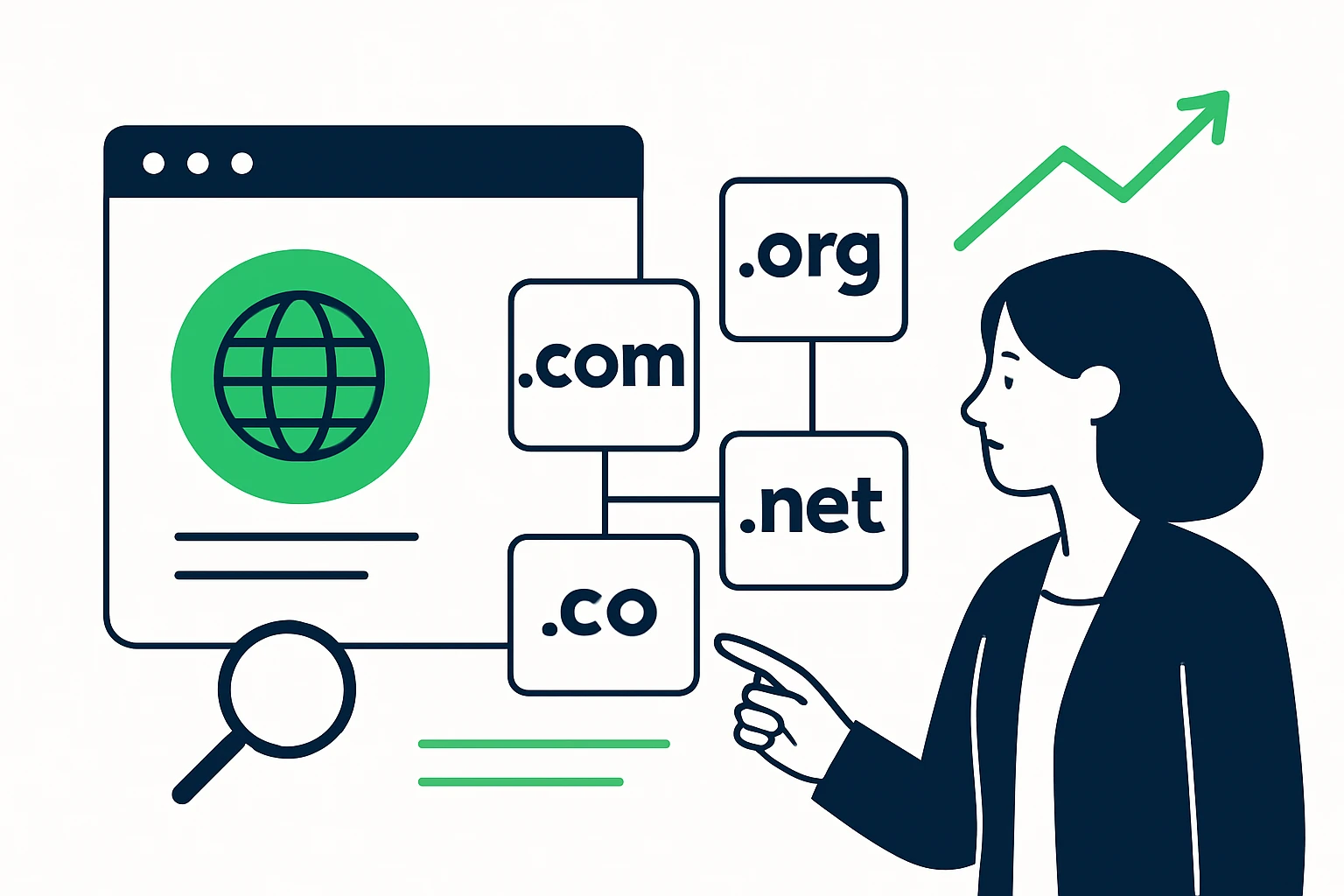
To orient the discussion, it helps to categorize the extensions you’ll encounter. Traditionally, markets relied on legacy generic top-level domains (gTLDs) such as .com, .net, and .org. In the 2010s, ICANN expanded the namespace dramatically through the New gTLD Program, adding a wide array of themed extensions (for example, .shop, .tech, .marketing) and allowing non-Latin scripts. While this expansion broadened branding and internationalization possibilities, it also created a much larger GTLD list to consider. For businesses targeting specific regions or languages, country-code TLDs (ccTLDs) like .us, .uk, or .de can play a meaningful role in signaling locality and relevance to search users. ICANN’s overview of the New gTLD program and its ongoing developments provides a solid foundation for understanding these dynamics. About New gTLDs - ICANN (newgtlds.icann.org)
From a marketing and SEO perspective, it’s important to distinguish direct ranking signals from indirect effects. Google has repeatedly stated that domain extensions themselves do not offer a direct ranking boost. In practice, the TLD you choose can influence user trust, click-through rates, and local relevance, which in turn can affect performance in search results. The Google Search Central FAQ on site position in search explicitly notes that the top-level domain is not a general ranking signal. This underscores the need to focus on quality content, strong UX, and local relevance rather than chasing a supposed SEO edge from a particular extension. (developers.google.com)
Why SMBs should care about a GTLD list
SMBs aren’t just selling products, they’re building brands. The GTLD list matters for several practical reasons:
- Brand protection and consistency. Securing core brand terms across a small set of relevant TLDs helps prevent confusion and brand misuse by competitors or bad actors. A disciplined portfolio often saves time and protects reputation when campaigns scale.
- Local and regional reach. ccTLDs or regionally tailored gTLDs can send a clear signal to local customers and search engines about target markets, languages, and services. Local relevance remains a meaningful factor in user behavior and engagement.
- Marketing alignment and campaigns. Themed gTLDs (for example, .marketing or .shop) can support specific campaigns or product lines, helping ads and landing pages feel more cohesive and relevant.
- Professional hosting and management considerations. A broader GTLD list implies governance decisions - what to register, how to redirect, and who maintains the portfolio. A well-architected portfolio aligns with your website development and hosting strategy.
For SMBs, the GTLD decision isn’t about a single magic trick, it’s about a coherent domain extension strategy that fits brand goals, regional reach, and operational realities. The New gTLD program’s ongoing evolution and ICANN’s communications about the program’s achievements illustrate how the namespace continues to expand in order to support consumer choice and business innovation. ICANN: The Latest New gTLD Program Achievements (icann.org)
Five-step SMB TLD decision framework
Five-step SMB TLD decision framework provides a practical, repeatable approach to navigate the GTLD list without overcommitting resources. Use this as a checklist when planning a domain portfolio that supports your website development and digital marketing goals.
- Step 1 - Define geography and audience. Clarify whether your primary market is local, regional, national, or global, and identify language needs. Your geographic focus should guide whether ccTLDs or global gTLDs are most valuable.
- Step 2 - Protect your brand. Reserve core brand domains and reasonable variants across a small set of relevant extensions to prevent brand confusion and safeguard campaigns.
- Step 3 - Assess user trust and branding. Consider how an extension will be perceived by your audience. A memorable, credible domain extension can improve click-through rates and perceived authority, even if it doesn’t boost SEO directly.
- Step 4 - Evaluate hosting and technical implications. Ensure your hosting setup and DNS management can handle multiple domains, redirects, and SSL certificates efficiently and securely.
- Step 5 - Establish governance and lifecycle plan. Create a clear policy for adding, renewing, and retiring extensions, plus a monitoring routine to track brand protection and performance.
Additional context from industry coverage emphasizes that the extension itself isn’t a direct SEO signal, but the way audiences interact with the domain matters for engagement and trust. A recent Domain extensions and SEO: What you need to know piece highlights that search engines treat gTLDs equally in ranking, while local signals and content quality drive actual results. (searchengineland.com)
Practical guidance: a quick domain portfolio checklist
Use the following practical checklist to begin building a lean, manageable GTLD portfolio that supports your marketing and web design efforts. The aim is to balance brand protection with a clean user experience, rather than claim every possible extension.
- Core domain in a trusted extension. Start with a core domain in a universally trusted extension (commonly .com or .us for US audiences), then evaluate additional extensions strategically.
- Localize where it matters. If you serve multiple states or countries, consider ccTLDs for those markets or create well-mapped subdomains and multilingual content that aligns with local intents.
- Guard and group extensions by purpose. Group brand-related, product-specific, and regional extensions into a curated set to simplify management and investment decisions.
- Plan redirects and canonicalization. Use clean 301 redirects to your primary domain where appropriate, and implement canonical tags to avoid duplicate content issues when you own multiple extensions.
- Monitor performance and costs. Track traffic, engagement, and conversion performance by extension, and balance renewal costs against expected value.
For SMBs curious about the most current catalog of domains, many digital agencies and registries publish comprehensive lists by TLD. The client’s catalog of domains by TLDs (and country variants) is a practical starting point for quick feasibility checks and portfolio planning. See their GTLD catalog at webatla.com/tld, which aggregates domain extensions by category and geography to support quick comparisons. You can also explore specific TLDs such as .com to understand availability and pricing in a real-world context.
Limitations, trade-offs, and common mistakes
Every decision comes with trade-offs, and domain strategy is no exception. Being aware of the common missteps helps SMBs avoid costly misalignments between brand, marketing, and technical setup.
- Mistake: Assuming a TLD boosts SEO directly. As Google and industry practitioners emphasize, the extension itself is not a direct ranking signal. Content quality, user intent, and credible signals drive rankings more than the extension. Google’s guidance on TLDs and SEO clarifies this distinction. (developers.google.com)
- Mistake: Over-registering to “cover all bases.” A large portfolio increases maintenance cost and risk of inconsistent branding. Start with a core set and scale only as needed for protection and marketing campaigns. ICANN’s ongoing updates and industry analyses show continued growth in the GTLD space, but practical management remains essential. ICANN: New gTLD Program Overview (newgtlds.icann.org)
- Mistake: Underinvesting in security and UX across extensions. If you own multiple domains, ensure HTTPS everywhere, consistent branding, and reliable redirects. Modern search quality signals value a good user experience and security, regardless of the domain extension. Google Search Central on core updates and trust (developers.google.com)
Integrating GTLD strategy with your web design and marketing
A thoughtful GTLD list doesn’t exist in a vacuum. It informs and is informed by your website development services and digital marketing strategy. A domain portfolio that aligns with your site structure, content strategy, and conversion funnels supports clearer navigation, consistent branding, and faster time to value for campaigns. If you’re working with a digital agency on relaunches or rebranding, ensure your domain strategy is integrated into the project scope - particularly in the areas of sitemap planning, hosting, SSL deployment, and 301/302 redirect maps. For SMBs exploring practical options, the catalog of domains by TLDs from the client can be a useful first-pass resource to map branding ideas to real-world availability and pricing.
For readers who want authoritative context on the broader GTLD evolution, ICANN’s New gTLD program pages and governance materials provide reliable background, while Google’s guidance reinforces the gravity of user trust and site quality over any chromatic extension edge. See ICANN’s program overview and achievements, and Google’s guidance on TLDs as a general concept.
In practice, most SMBs benefit from a lean, deterministic GTLD strategy: start with a strong core domain, selectively expand to protect brand and support specific campaigns, and maintain a robust site experience that makes the extension decision moot for users who can’t distinguish between a dozen variants. If you’re evaluating options, consider starting with a core domain in a trusted extension and then mapping extensions to campaigns, markets, and products - while keeping an eye on maintenance costs and the user experience. As you plan, your web design partner can translate the domain strategy into site architecture, redirects, and content localization that align with your GTLD list and long-term business goals.
Conclusion: a clear, practical path through the GTLD list
The GTLD landscape offers valuable branding opportunities, regional relevance, and campaign scalability for SMBs. The key is to use the GTLD list not as a vanity metric but as a strategic tool that informs brand protection, localization, and user experience. Ground your choices in audience needs and business goals, validate claims with credible sources, and design a portfolio that remains manageable as your marketing and website development journey evolves. With a pragmatic framework and a focused set of extensions, you can harness the expanded GTLD universe to support your growth without sacrificing clarity or performance. For businesses and agencies that want a practical path, leveraging a reputable catalog of domains by TLDs - such as the client’s GTLD list - can provide a fast starting point for planning, budgeting, and governance.
Further reading and useful sources
For readers who want to dive deeper into the GTLD landscape and its implications for SEO, the following sources provide credible, up-to-date perspectives:
- Google: Does my top-level domain (TLD) impact my site's performance in Google Search? Does my top-level domain (TLD) impact my site’s performance in Google Search?
- ICANN: About New gTLDs - overview and program context. About New gTLDs
- Search Engine Land: Domain extensions and SEO - what you need to know. Domain extensions and SEO: What you need to know
Publisher note: This article aligns with vcweb.net’s positioning as a digital agency offering web design, SEO, and hosting solutions to US SMBs, and it references practical resources for domain strategy. If you’d like a deeper assessment of how a tailored GTLD list could influence your marketing funnel and site architecture, our team can provide a coordinated plan that integrates branding, SEO, and web development considerations. Explore the client’s comprehensive GTLD catalog at webatla.com/tld/ and example .com domain options at webatla.com/tld/com/ for practical inspiration and current availability.