Introduction: The international expansion puzzle for US SMBs
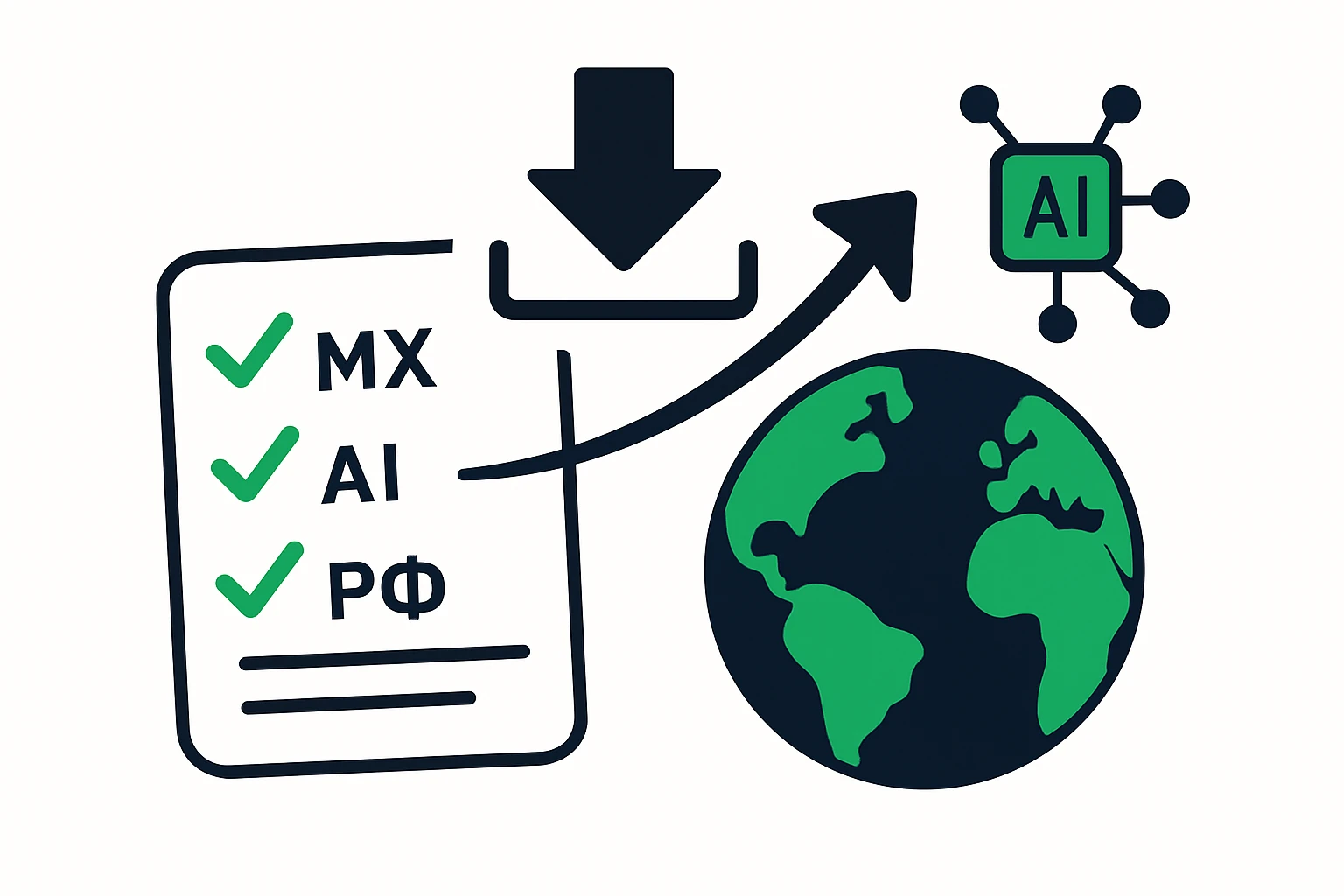
Across the United States, small and medium-sized businesses are increasingly looking beyond domestic borders for growth. The challenge is not merely selling in another country, it’s signaling relevance to local audiences in a credible, scalable way. One practical starting point is to assemble downloadable domain lists tied to target markets - for example, MX (.mx) domains for Mexico, AI (.ai) domains for AI-centric brands, and Cyrillic Cyrillic-script domains that align with regional audiences (often denoted in punycode as xn--...). This approach is not a magic lever by itself, but it can surface actionable market signals when paired with solid localization, hosting, and SEO planning. For SMBs, a carefully curated domain-list exercise can complement a broader web design and marketing strategy, especially when the publisher’s audience values practical, data-driven guidance. See how a broader directory of TLDs can help your team map markets and priorities at WebAtLa’s TLD directory or dive into MX-specific assets at WebAtLa MX domain list.
From an editorial and optimization perspective, this article blends actionable guidance with SEO-focused insights. It draws on established international SEO practices - especially how search engines understand and rank multilingual and multi-regional sites - while offering a practical framework SMBs can apply when evaluating downloadable domain lists. The discussion is grounded in credible standards while remaining attuned to the realities of US SMBs navigating cross-border marketing, content localization, and site architecture.
Experts point out that Google does not prescribe a single universal domain structure for global reach, ccTLDs, subdirectories, and subdomains each have merits depending on context, execution, and localization. The takeaway is less about choosing a single path and more about making deliberate, well-implemented choices that align with local intent and technical SEO best practices. Expert insight: Google’s guidance emphasizes explicit localization signals (hreflang, canonical links) and properly labeled regional pages rather than a one-size-fits-all approach. (developers.google.com)
For SMBs targeting Mexico, Russia, or AI-related markets, credible registries govern how domains are issued and managed. For example, the Mexico ccTLD (.mx) is administered by NIC México, which oversees the registry and related policies. This means any download-and-use plan should respect the registry’s rules and licensing terms. Likewise, international TLDs require attention to how content is localized and served to users in specific regions. See the MX registry page for context and governance details: WebAtLa MX domain list, and the MX registry data in the broader MX namespace at NIC México. (sitio.nicmexico.nic.mx)
Why MX, AI, and РФ domains matter for SMBs
Choosing the right domain structure signals intent to both users and search engines. When markets differ in language, culture, and consumer behavior, a domain that mirrors local expectations can improve trust, click-through, and engagement. The MX domain, for example, has a long history of enabling Mexico-based branding and local-market targeting. In practice, MX domains - especially when complemented by country-specific hosting and hreflang signals - can improve perceived relevance for Mexican audiences while supporting global brand coherence. This aligns with international SEO best practices that recognize multiple valid strategies (ccTLDs, subdirectories, subdomains) when correctly implemented.
Similarly, AI-focused markets often leverage high-visibility TLDs like .ai, which have gained traction with AI-first brands and technology startups. While the branding value is clear, the operational reality - data ownership, licensing, and ongoing maintenance - requires disciplined governance. A credible industry update highlights the growing activity around the .ai domain, including registry development and market demand. SMBs evaluating this space should pair domain decisions with solid content strategy and user-experience (UX) design to maximize relevance. For industry context on .ai domain development and management, see specialist industry updates in the domain space.
In Russia and other Cyrillic-script markets, Cyrillic TLDs (such as .рф) illustrate the importance of IDNs - Internationalized Domain Names - for native-language branding and local-market trust. When you consider IDs and punycode representations, you’re looking at a broader set of signals that can help or hinder international reach depending on implementation. International SEO guidance from credible sources stresses that the exact URL structure matters for performance and crawlability, especially when content is localized for multiple markets.
What to download and how to use domain lists responsibly
Downloading lists of domains by TLD is a data-gathering step, not a complete strategy. The practical value lies in using these lists to identify potential markets, product-name availability, brand-alignment opportunities, and potential partners or registrars in a target country. However, raw lists must be evaluated for quality, licensing, and compliance before you begin any outreach or domain acquisitions. A disciplined approach includes three core considerations: data quality and freshness, licensing and usage rights, and how you will operationalize the data within your SEO and site infrastructure.
From an SEO perspective, you’ll want to think through how the domain list informs your international targeting. Google’s guidance clearly shows that if you have distinct language or regional versions, you should structure your site to signal these variations with explicit URLs and correct hreflang annotations. The goal is to ensure Google serves the right version of a page to the right audience, rather than creating duplicate content signals that dilute authority. A practical takeaway is to map each target market in your list to a specific URL structure (ccTLD, subdirectory, or subdomain) and then implement hreflang and canonical signals consistently.
In practical terms, SMBs can use these lists as input to a broader international-domain-strategy rather than as a direct purchase list. For MX, you may explore the MX namespace and registry information from NIC México to understand registration options and potential constraints. The MX domain signal can be integrated into a larger plan that includes country hosting, localized content, and a regional link-building approach. See the MX-specific resources linked above and consider pairing them with broader TLD insights in a single, coherent strategy.
In addition to MX, AI-focused domains can serve as branding assets for AI-powered products or services. The .ai domain has seen rising interest among AI startups and tech brands, and studies note that registry transitions and market dynamics influence availability and pricing. Any official data on licensing or ownership should be reviewed directly with the registry or accredited registrars. A credible industry update highlights the evolving management and use of the .ai namespace in recent years.
For Cyrillic markets and IDN usage, understanding how non-Latin scripts are represented in the DNS is essential. IDNs enable native-script addresses and can improve local-market resonance, but they also introduce technical and UX considerations (for example, how users perceive and navigate IDN-driven URLs). Guidance from international SEO authorities stresses explicit URL structures, careful hreflang setup, and avoiding “auto-redirect” behaviors that can confuse both users and search engines. This is particularly important when your domain-list experimentation intersects with localized content and cross-border UX decisions.
Domain List Evaluation Framework (a structured path to action)
- Step 1 - Define market priorities: Start with a short list of priority markets based on demand, competition, and your product fit. Map each market to a potential URL structure (ccTLD, subdirectory, or subdomain) that you can realistically support with localized content and hosting.
- Step 2 - Assess data quality and licensing: Validate the provenance of downloaded domain lists, confirm licensing terms, and ensure you have rights to use or act on the data for outreach or research.
- Step 3 - Evaluate technical feasibility: Consider hosting requirements, performance in target regions (latency, CDN strategy), and whether you’ll deploy in-country hosting or a centralized approach with edge caching.
- Step 4 - Align with SEO and UX signals: Plan hreflang implementation, canonical signals, and cross-link structure to avoid duplicate content or mis-targeting. Ensure language and country signals are consistent across pages and sitemaps.
This framework is designed to be practical and adaptable for SMBs. It emphasizes a disciplined, capability-focused approach rather than a one-off data extraction exercise. The goal is to translate the data into concrete site-architecture choices, content localization plans, and an SEO workflow that scales with your international ambitions.
SEO considerations for international domain lists
When you’re considering downloadable domain lists as a starting point, the SEO payoff comes from executed signals, not the raw numbers. Google’s guidelines for multi-regional sites emphasize explicit localization signals and URL-level differentiation. They recommend selecting a consistent URL structure for each market variant and using hreflang annotations to help Google serve the most appropriate language or regional version to searchers. In addition, if you consolidate international pages under a single domain (for example, a global site with localized folders), you need to manage the technical SEO implications carefully to preserve link equity and crawl efficiency.
One practical implication for SMBs is to pair any downloaded market signals with a robust hreflang strategy and a clear canonical approach. The absence of consistent signals can lead to crawl inefficiencies and potential content duplication issues that undermine visibility. The guidance is explicit: there isn’t a universal “best structure” for every business, the right approach depends on your resources, markets, and localization depth. This means the MX/AI/РФ lists should be seen as one input in a broader, structured international SEO plan rather than a stand-alone tactic.
Expert insight
As Google’s own documentation emphasizes, the effectiveness of ccTLDs, subdirectories, or subdomains hinges on careful execution of hreflang and canonical strategies. There is no universal winner, the strength of signals comes from consistent implementation across markets and content types. This perspective reinforces the practical approach of using domain lists as a planning input within a broader SEO and localization program. (developers.google.com)
Limitations and common mistakes (the reality SMBs need to plan around)
- Over-reliance on lists without localization: Lists point to markets, but without localized content and UX, performance gains may be limited. Localization is the multiplier, not the currency, of international SEO.
- Fragmented infrastructure: Maintaining multiple country-specific domains without in-country hosting or a cohesive performance strategy often leads to slow pages and poor user experience in target regions.
- Inconsistent signals: Inadequate hreflang and canonical setup can cause Google to misinterpret regional variants, reducing visibility and diluting authority.
- Licensing and compliance concerns: Downloads and downstream actions must respect registry policies and data-use rights, using lists without verifying licensing can create legal risk.
- Resource constraints: For SMBs, allocating resources for in-country hosting, localization, and ongoing SEO maintenance can be challenging, plan a staged approach with clear milestones.
Integration: bringing the domain-list approach into a live SMB project
Implementing an international-domain strategy for a US SMB often requires coordination across design, development, and marketing teams. A domain-list exercise can inform decisions about where to host, how to structure URLs, and what language versions to prioritize. As part of an editorial and technical automation pipeline, the domain-list insights can feed into site architecture decisions, content localization calendars, and regional link-building plans. This is where a digital agency can play a critical role by harmonizing web design, SEO, and advertising with the data-driven signals surfaced by domain lists.
From a practical standpoint, consider pairing this approach with the following actions: - Create two or three regional landing pages that map cleanly to the most promising markets surfaced by your MX/AI/IDN data. - Implement hreflang-based targeting with x-default where appropriate, ensuring consistent canonical signals across variants. - Use regional hosting or a robust CDN strategy to improve page speed in target markets. - Maintain a lightweight, scalable multilingual content production process and a straightforward process for updating language variants as markets evolve.
As a concrete example, a US SMB could begin by exploring an MX-targeted strategy (Mexico) while running parallel pilots in AI-focused markets using AI-domain branding, then gradually expand to Cyrillic markets as localization matures. The WebAtLa MX page and broader TLD directory provide a practical starting point for teams beginning this journey, while the broader market templates guide the expansion path. WebAtLa MX domain list is a good first stop for market-specific signals, with a broader TLD overview at WebAtLa TLD directory.
Implementation plan: a practical, phased path for SMBs
Start small, scale thoughtfully, and ensure every step aligns with user experience and search intent. Here is a phased plan SMBs can apply, with a focus on MX, AI, and IDN opportunities:
- Phase 1 - Map markets and capabilities: Use MX/AI/IDN signals to identify 2–4 priority markets and define a practical URL structure (for example, example.mx or example.com/mx/).
- Phase 2 - Localize core assets: Localize critical product pages, pricing, and support content, ensure translation quality and cultural relevance, prepare localized metadata.
- Phase 3 - Build the foundation: Deploy hreflang, canonical signals, and XML sitemaps, configure hosting or CDN to optimize regional performance.
- Phase 4 - Test, learn, and optimize: Run performance and search visibility tests in each market, adjust keyword targeting and content based on data from local search behavior.
- Phase 5 - Scale with discipline: Expand to additional markets using the same framework and maintain a centralized governance model for consistency and efficiency.
In addition to the MX/AI/IDN-focused signals, you can leverage VCweb’s digital marketing services to align technical SEO with paid media and hosting. The client’s MX-focused domain pages - along with the broader TLD catalog - offer a natural entry point for linking strategies and localized ad campaigns. For more on the broader domain catalog, see the WebAtLa TLD directory and MX-specific page cited above.
Conclusion: a data-informed, architecture-first approach to international growth
Downloadable MX, AI, and РФ domain lists should not be treated as a standalone growth hack. They are a planning input - providing market signals that, when paired with robust localization, international hosting considerations, and sound SEO practices, can help US SMBs extend reach and relevance across borders. The right approach is to embed these signals into a coherent domain architecture and content strategy, supported by a structured evaluation framework and disciplined execution. By combining editorial quality with technical SEO discipline, SMBs can unlock predictable, scalable international growth without overcommitting resources or compromising user experience.
If you’re ready to start, explore WebAtLa’s MX and broader TLD offerings to inform your next steps in international expansion, and consider integrating these signals with your existing web design and marketing efforts. WebAtLa MX domain list and WebAtLa TLD directory can serve as practical catalysts for your team’s planning and execution.