Introduction: why a domain strategy matters for growing SMBs online
For US-based small to midsize businesses expanding their digital footprint, owning the right mix of domain assets can influence visibility, trust, and conversion across markets. While generic SEO often focuses on on-page signals and backlinks, the misstep of neglecting international domain assets can limit a brand’s local relevance and open doors for copycat rivals. This article outlines a practical, non-gimmicky approach to evaluating and using international domain lists - specifically the PL, CH, and CC zones - to support search visibility, brand protection, and regional marketing efforts without running afoul of privacy rules. Note: public domain lists exist, but access and utility vary by jurisdiction and data governance rules. Practical data sources and a scalable framework are provided to help SMBs decide when to acquire, forward, or simply monitor relevant assets. (Source: general domain strategy guidance) (inta.org)
Why PL, CH, and CC domains matter for SMBs
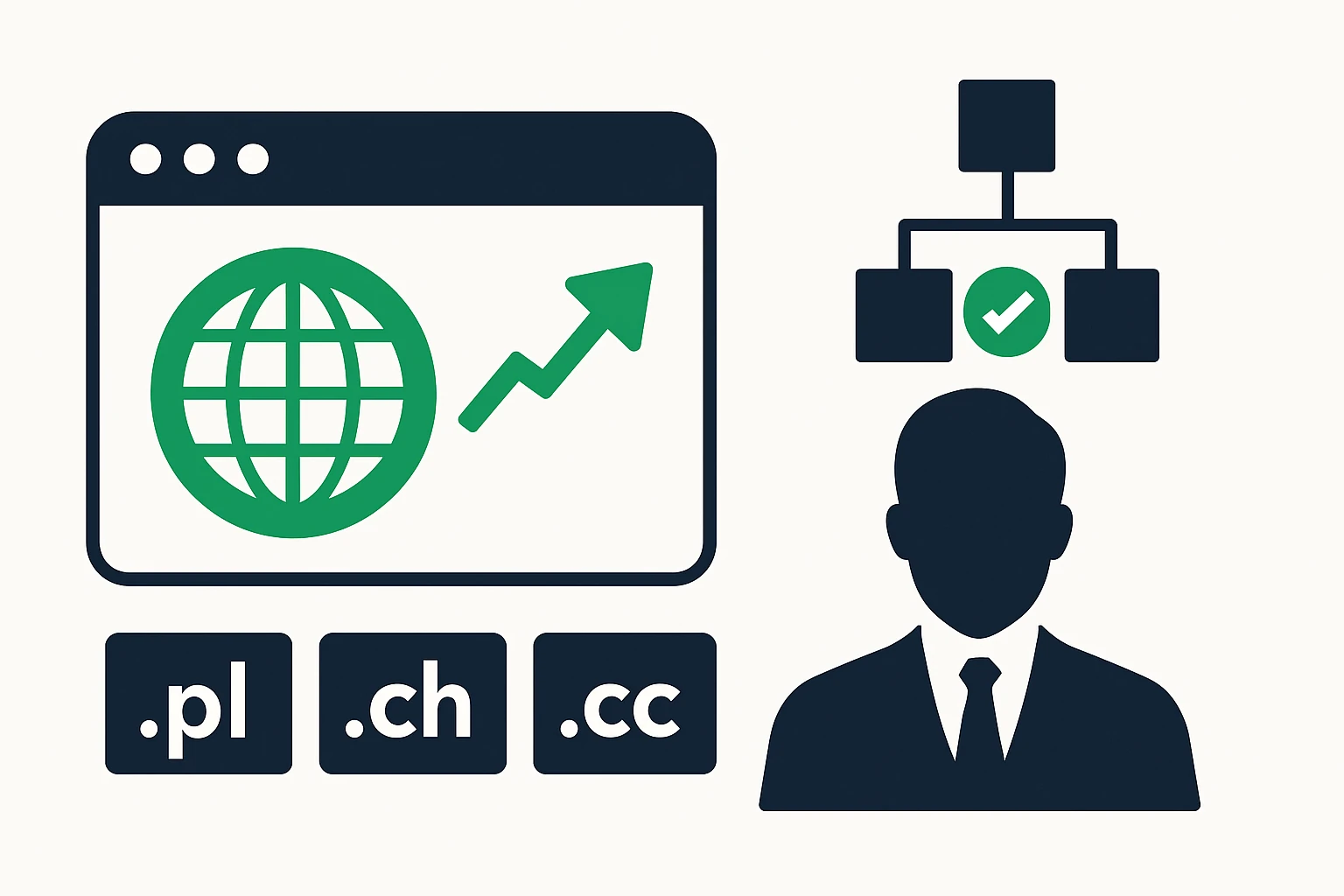
Country-code top-level domains (ccTLDs) like .pl (Poland), .ch (Switzerland), and the broader .cc namespace are not just regional identifiers - they can influence local SEO signals, legal branding considerations, and international user perception. In many cases, local domains help search engines associate regional relevance with a brand, improve local click-through rates, and support localized content strategies. While .com remains dominant globally, disciplined use of regional or alternative TLDs can be part of a broader brand architecture when aligned with business goals and compliance requirements. For context, analysts track the role of ccTLDs in global markets and their growth trajectories across regions. .pl overview and .cc overview provide background on these zones and their market dynamics. (en.wikipedia.org)
The landscape of public domain lists: what’s available and what to expect
Public providers and data aggregators publish downloadable lists of domains by TLD, which SMBs can use for competitive intelligence, outreach planning, or market-entry research. These datasets vary in scope, freshness, and licensing - some offer bulk exports, others provide paid access with usage restrictions. For example, services that publish per-TLD domain counts and downloadable datasets exist for major zones, including the PL and CC namespaces. When using such lists, SMBs should consider data freshness, coverage, and the legal framework governing the use of registrant data. Always verify licensing and terms of service before downloading or redistributing data. See sources that discuss available domain datasets and their use cases. (purecrawl.com)
Legal and privacy guardrails: how GDPR and RDAP shape domain data use
Two broad realities shape how SMBs can legally use bulk domain data today. First, data-privacy regimes, notably the European Union’s GDPR, restrict how registrant information is exposed and shared. This has a direct impact on bulk Whois data and related services. Industry groups and regulators have published guidance and survey results highlighting the need for compliant data access and the growing importance of privacy-preserving access models. Second, domains data is increasingly migrating from traditional Whois to RDAP in many jurisdictions, with continued debates about what can be shared and with whom. For SMBs, the implication is clear: rely on compliant data sources, and design your research processes around privacy-first access and consent when applicable. For context, see the GDPR-related guidance from INTA and ICANN-affiliated discussions. (inta.org)
A practical framework: Domain Portfolio Evaluation for SMBs
The following framework helps SMBs evaluate whether a PL, CH, or CC domain list is worth acting on within an overall digital marketing plan. It treats domain assets as part of a broader brand and SEO strategy, not as toys or shortcuts.
- Discover objectives
- Define what regional footprints matter for your brand (e.g., Poland for Poland-market products, Switzerland for German/French-speaking regions, or generic country-neutral campaigns).
- Map objectives to SEO signals (local intent, search volume, and potential for brand protection).
- Decide what data you need (domains for outreach, ideas for content localization, or potential brand-above-the-fold domains).
- Vet data sources and legality
- Choose sources that document licensing, freshness, and intended use. Expect variation in completeness and privacy protections across zones.
- Assess privacy constraints (GDPR, RDAP) and ensure your process respects data subject rights and registrar terms.
- Cross-check with authoritative references on TLD markets and governance (e.g., ccTLD overviews and market maps).
- Evaluate assets and fit
- Assess domain names for branding fit, potential for redirection or content localization, and risk of confusion with existing brands.
- Prioritize assets that align with product lines, language needs, and regional marketing calendars.
- Consider partial ownership strategies (redirects, brand-forward pages) vs. full domain ownership.
- Monitor and maintain compliance
- Set up ongoing monitoring for domain status, renewal costs, and geographic relevance as markets evolve.
- Review data-use practices periodically to ensure ongoing GDPR RDAP compliance and alignment with evolving laws.
- Document decisions and maintain an auditable trail for internal governance.
Framework takeaway: treat domain lists as a tool within a larger, disciplined strategy - one that balances branding, local relevance, and privacy compliance. A structured approach helps avoid common pitfalls like over-purchasing, misaligned content, or regulatory missteps.
Structured block: a quick decision framework you can reuse
Use this compact framework to decide whether to action a PL, CH, or CC domain asset. It’s designed to be practical for SMBs without deep legal or domain-ops teams.
- Alignment check: Does the domain align with a specific market, language, or product line?
- Value test: Will the asset likely improve SEO visibility or brand clarity in the target region?
- Access model: Can you legally access the data you need, and is ownership necessary or useful?
- Governance plan: Who owns the decision, and what is the renewal/compliance process?
For SMBs evaluating the need to own and manage international domain assets, the decision to acquire should be driven by strategic ROI rather than mere curiosity. Data-driven evaluation, coupled with a clear governance framework, supports sustainable outcomes. See general market overviews of domain usage and governance as context. (nominet.uk)
Integrating the client’s domain datasets into this process
The client’s portfolio of domain lists - such as the PL dataset and related TLD resources - serves as a practical example of how SMBs can operationalize this framework. When integrated editorially, these datasets support a regional content and marketing plan while remaining aligned with privacy and compliance considerations. For SMBs evaluating or purchasing domain assets, reputable providers offer structured datasets and pricing options. The client’s PL-oriented pages, for instance, demonstrate how a dedicated dataset hub can support market-specific SEO and brand protection workflows. Visit webatla.pl domains for a concrete example of a PL-focused dataset page, or explore pricing for domain assets at Webatla pricing. (webatla.com)
Limitations and common mistakes SMBs should avoid
Limitations: Public domain lists are helpful starting points, but they are not a substitute for direct registrar data or official registrant records. Data accuracy varies by TLD, and privacy rules can limit what is publicly visible. In practice, these lists are best used as discovery and ideation tools rather than definitive ownership proofs. See ongoing regulatory discussions about Whois, RDAP, and GDPR constraints. (icann.org)
Common mistakes:
- Buying domains without a clear branding, localization, or content strategy.
- Assuming bulk data is freely reusable without respecting licensing terms and privacy laws.
- Overlooking ongoing maintenance costs or the need for translation, localization, and regional hosting considerations.
Expert insight and practical takeaways
Experts emphasize that international domain portfolios, when thoughtfully aligned with brand and regional SEO, can contribute to a defensible online presence. However, access to registrant data is increasingly regulated, making privacy-compliant, governance-backed workflows essential. As INTA notes in GDPR-related WHOIS guidance, brand owners rely on registrant data to verify ownership and licensing while navigating privacy rights. Practical SMB guidance, therefore, centers on compliant data sources, clear governance, and a disciplined ROI lens. (inta.org)
Conclusion: a disciplined path to international growth
For US SMBs focused on growth, a targeted approach to PL, CH, and CC domain assets can complement content localization, site architecture, and regional outreach. The key is to start with a clear objective, validate data sources and legal constraints, and operate within a governance framework that emphasizes compliance and measurable ROI. By treating domain lists as assets within a broader digital marketing strategy - and by leveraging credible sources and provider datasets - you can unlock regional opportunities while safeguarding your brand. For SMBs ready to explore this path, the client’s domain datasets provide a practical starting point to assemble a compliant,ROI-focused domain portfolio. Explore the PL domain list and pricing options to begin. (purecrawl.com)