Introduction
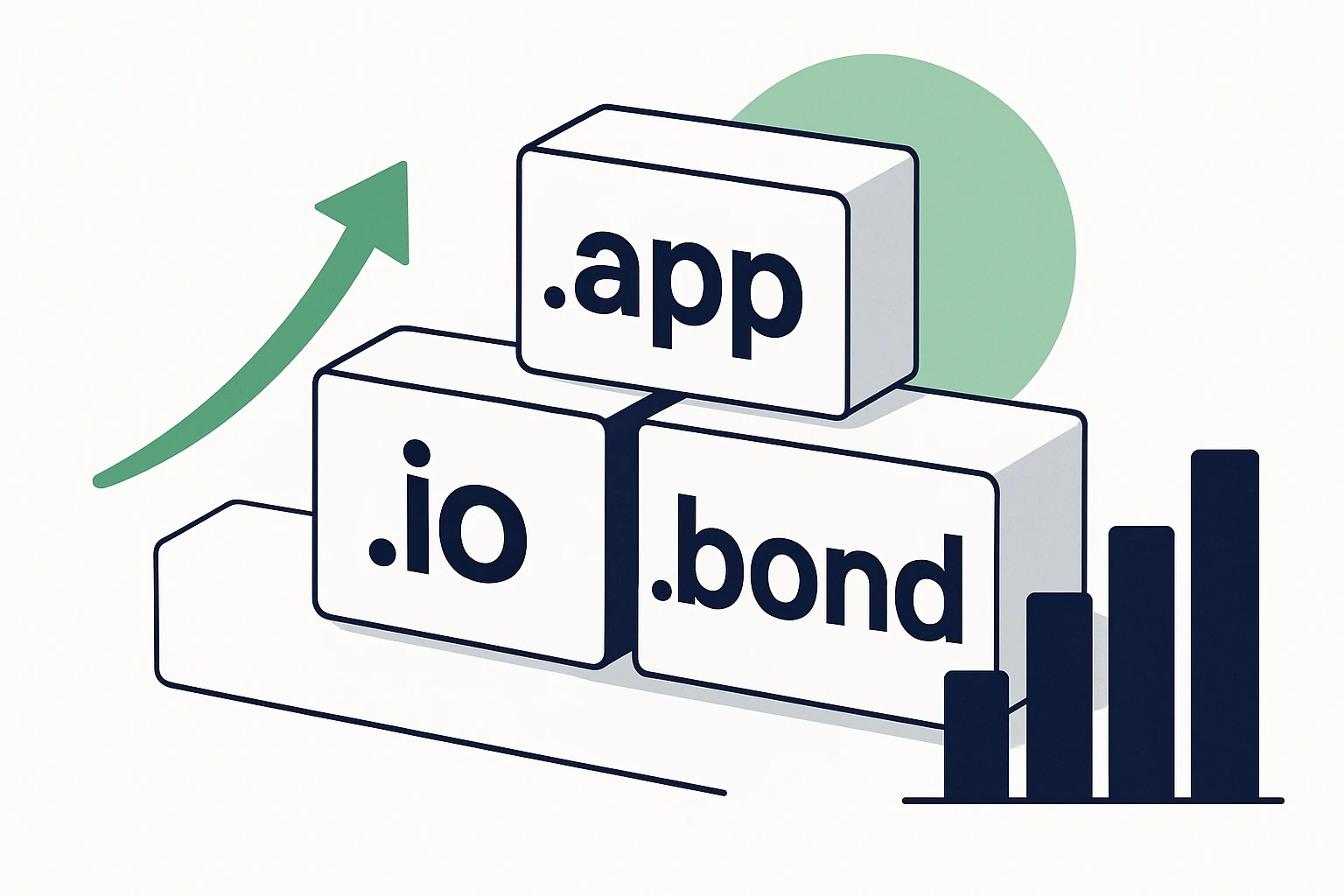
In today’s crowded online marketplace, the domain name you choose is more than a curb appeal - it's a strategic asset. For small and medium-sized businesses (SMBs) aiming to stand out, niche top-level domains (TLDs) like .io, .app, and .bond offer branding signals that can complement your marketing strategy. But the value is not automatic: it hinges on how you use the TLD, who you’re trying to reach, and how it aligns with your growth goals.
This article explores why SMBs should consider niche TLDs, what each of these extensions communicates to users and search engines, and a practical decision framework to decide whether a non-.com domain makes sense for your business. We also show how to source and evaluate domain lists responsibly - an increasingly common research step for brand protection, market analysis, and competitive benchmarking.
Throughout, you’ll see how Webatla’s domain catalogs and TLD resources can support your research and planning. For example, you can explore Webatla’s catalog of domains by TLDs to compare options, including io- and app-based inventories, as a starting point for brand-building experiments. Webatla’s .io page and Webatla’s domain-by-TLD catalog offer practical, domain-level context to accompany this guide.
Why niche TLDs matter for SMBs in 2026
Generic domains like .com remain the default for many brands, but the reality of the modern market is different. Niche TLDs can unlock naming options that are otherwise scarce, communicate a domain’s focus more clearly, and help a startup establish a contemporary tech identity. Several industry analyses have highlighted the appeal of .io among technology companies and startups, in part because “IO” evokes computing concepts in common usage and branding. This association can translate into stronger initial impressions when a tech-forward audience visits your site. Note: Google generally treats .io as a generic TLD in practice, which is relevant for SEO considerations (HubSpot’s overview of .io and related discussions). (blog.hubspot.com) Are .io Domains Good? Why Tech Startups Love .io Domains
In parallel, the .app extension has been positioned as a secure namespace - largely because browsers expect HTTPS for sites loaded from .app. This security posture can build trust for app-centric brands or software products, though it also imposes operational requirements for site configuration. Wikipedia provides an overview of .app and its security expectations, and practical registries emphasize the need for SSL/TLS to ensure your .app site loads securely due to HSTS preload considerations. (en.wikipedia.org)
Finally, the .bond extension, while newer and less ubiquitous, represents a brand-positioning opportunity for finance, professional services, and risk-management topics. Industry listings and registrar materials indicate that .bond exists as a branded gTLD with its own registry rules and marketing positioning, which may resonate with audiences seeking credibility and trust in financial-type services. (godaddy.com)
Deep dive: io, app, and bond - what they signal to users and search engines
.io: technology branding and SEO signals
Origins aside, .io has become shorthand for technology, software, and innovation in the startup ecosystem. The extension has broad adoption among software companies and developers, with many founders noting the advantage of availability and branding flexibility when short, memorable names are scarce in the .com space. An important SEO note is that Google treats .io as a generic top-level domain, which means it may not carry country-specific signals and can behave similarly to other generic extensions in search results. This dynamic makes .io a compelling branding choice for tech-focused brands that want a modern, global perception. Trade-off: while .io can signal tech focus, it may invite higher renewal costs and scrutiny around country- or region-specific branding expectations.
Expert perspective from a leading marketing resource highlights the enduring appeal of .io for startups and tech teams, especially when the brand name is otherwise unavailable in .com. The same sources note that the extension can be a strong differentiator in crowded markets, provided the site communicates clear value and relevance to tech audiences. (blog.hubspot.com)
.app: security expectations and trust
.app has been positioned as a secure namespace from the registry level, with browsers requiring HTTPS for loaded pages due to the registry’s HSTS-related policies. For SMBs marketing software, apps, or SaaS solutions, the .app extension can signal a security-oriented, consumer-friendly product. However, this positioning comes with operational obligations: you must configure SSL/TLS correctly and maintain ongoing certificate hygiene to ensure a smooth user experience and to avoid browser security warnings. These requirements are not mere formalities, they influence user trust, site performance, and conversion potential. (en.wikipedia.org)
.bond: niche credibility for financial and professional services
The .bond extension is a newer, branded gTLD that registries market toward trust, expertise, and professional credibility. For SMBs in finance, legal, consulting, or risk management, a .bond domain can convey seriousness and authority - especially when paired with strong site content and transparent messaging. As with any new TLD, the key lies in aligning the brand’s promise with a credible online presence and ensuring the domain layer is part of a broader trust-building strategy (privacy, security, and user experience matter).
How to source domain lists ethically and legally
For market researchers, competitive benchmarking, or brand-protection diligence, having access to domain lists by TLD can be valuable. Several providers offer downloadable lists by TLDs, including .io, .app, and .bond, which can accelerate discovery of available names, competitor footprints, and naming patterns. When procuring and using such data, it’s important to respect privacy and data-usage norms and to verify the data’s freshness and accuracy. For example, you can find services that advertise downloadable lists of .io domains and other extensions, which can support research and outreach planning. Download list of .io domains (example provider) illustrates the practical utility of these resources.
Within the marketing and branding workflow, pairing domain-list data with brand-protection checks - such as ensuring a proposed name isn’t already owned or actively used in a conflicting market - helps reduce risk. It’s also wise to cross-check domain data with public registration records and Whois privacy considerations. For SMBs, a cautious, project-based approach to domain-list usage often yields the best balance of speed and reliability.
For organizations evaluating or consolidating domain assets, Webatla offers a comprehensive catalog that includes lists by TLD. These catalogs can serve as a structured research companion to your internal brainstorming and validation processes. Explore Webatla’s resources here: Webatla’s .io domain catalog and Webatla’s list of domains by TLDs.
A practical framework for evaluating niche TLDs
To translate branding opportunity into a disciplined decision, use the following four-step framework. This is designed to be lightweight enough for SMBs to apply without throwing your budget off course, yet robust enough to surface real trade-offs.
- Step 1 - Define audience and brand promise: Identify the primary audience you want to reach and the brand attributes you want to signal (tech-forward, secure, professional, global). See the io versus com trade-offs for branding alignment in practice. io-domain-popularity
- Step 2 - Assess SEO and reach implications: Consider how Google and other search engines treat the TLD, and whether the audience’s expectations align with a non-.com extension. Evaluate potential geotargeting implications and CTR signals from search results. seo-with-tlds
- Step 3 - Validate with real-user tests: Run small campaigns or landing pages using candidate TLDs to gauge click-through, time on page, and conversion differences before committing to long-term branding. domain-research-methods
- Step 4 - safeguard and harmonize the ecosystem: Ensure SSL/TLS readiness (especially for .app), check brand-name availability across related TLDs, and align with broader brand-protection and privacy plans. brand-protection-tld
In applying this framework, SMBs can avoid common missteps, such as overemphasizing novelty at the expense of user trust or neglecting security requirements that accompany certain extensions. For example, the .app ecosystem explicitly enforces secure deployment, a factor many startups initially underestimate. io-domain-popularity and brand-protection-tld are examples of how a structured approach can clarify when a non-.com TLD is worth pursuing.
Limitations and common mistakes
- Perceived branding vs. real SEO impact: While niche TLDs can improve brand perception, SEO performance is still driven by content quality, relevance, and technical optimization. Treat a TLD as a branding signal, not a substitute for solid on-page and off-page SEO. This aligns with industry observations that Google treats .io as a generic TLD rather than a country-targeted extension, so the SEO benefits must come from overall site authority and relevance. HubSpot perspective on .io. (blog.hubspot.com)
- Operational constraints: Some TLDs impose security or configuration requirements (for example, .app requires HTTPS load due to HSTS). If you cannot maintain the required security standards, the TLD may underperform as a trust signal. See notes on .app security requirements. .app overview. (en.wikipedia.org)
- Brand risk with newer or niche TLDs: Less familiarity among certain audiences can create friction if people expect a traditional .com experience. It’s important to pair the TLD with clear messaging and consistent branding across channels. External sources emphasize that while .io is popular in tech spaces, it isn’t universally trusted for every audience. (godaddy.com)
- Availability vs. credibility: A strong, short brandable name may exist in .com but be unavailable in other extensions. The benefit of non-.com options depends on whether the branding value outweighs potential confusion or trust issues for your market.
Structured resource block: a quick reference framework
- io-domain-popularity - context: technology branding and startup signaling
- tld-branding-strategy - how to align TLDs with brand promises
- domain-list-downloads - practical data sources for domain research
- startup-domain-trends - keeping abreast of market adoption patterns
- branding-and-tld - branding considerations when selecting a TLD
When you’re evaluating options, consult practical sources such as domain catalogs and vendor lists. For SMBs that want a consolidated research resource, Webatla’s catalog can be a helpful companion: Webatla’s .io domain catalog and Webatla’s list of domains by TLDs provide concrete examples of available and in-market names to inform your decision.
Real-world application: a hypothetical SMB digital marketing plan using niche TLDs
Consider a small software company launching a new productivity app for teams. The core product name is unobtainable in .com due to rivalry or existing ownership. A staged approach might look like this:
- Phase 1 - Brand framing: Pick a TLD that communicates the product focus and tech-forward posture (for example, .io for a developer audience, or .app to signal app-centric value). Validate that the chosen name remains memorable and pronounceable when paired with the TLD.
- Phase 2 - Trust scaffolding: Prepare a security-forward website with an SSL certificate, clear privacy policy, and robust uptime. If choosing .app, ensure HTTPS loading is enforced, if choosing .io, emphasize technical credibility in messaging and case studies.
- Phase 3 - Market testing: Run a small PPC or content experiment using landing pages on candidate domains to measure click-through rates, engagement, and conversions before wide rollout.
- Phase 4 - Brand protection: Map related domain variants (including care for possible confusion with existing brands) and secure a set of supportive domains to reduce misdirection and protect brand integrity.
This kind of measured approach aligns with best practices for SMBs exploring niche TLDs and helps avoid common missteps such as assuming a TLD alone will drive SEO or customer trust without accompanying quality content and security.
Conclusion
Niche TLDs like .io, .app, and .bond can be powerful tools in an SMB’s branding and go-to-market toolkit when used deliberately. They offer branding flexibility, potential audience signals, and, in some cases, performance benefits when matched with strong content, a credible user experience, and a clear positioning. The decision to adopt a non-.com domain should rest on a disciplined assessment of audience expectations, technical readiness, and a concrete plan for measurement and protection. For SMBs ready to explore, reputable resources and catalogs - such as Webatla’s domain-by-TLD offerings - can accelerate learning and reduce risk as you validate the fit for your brand’s growth journey.