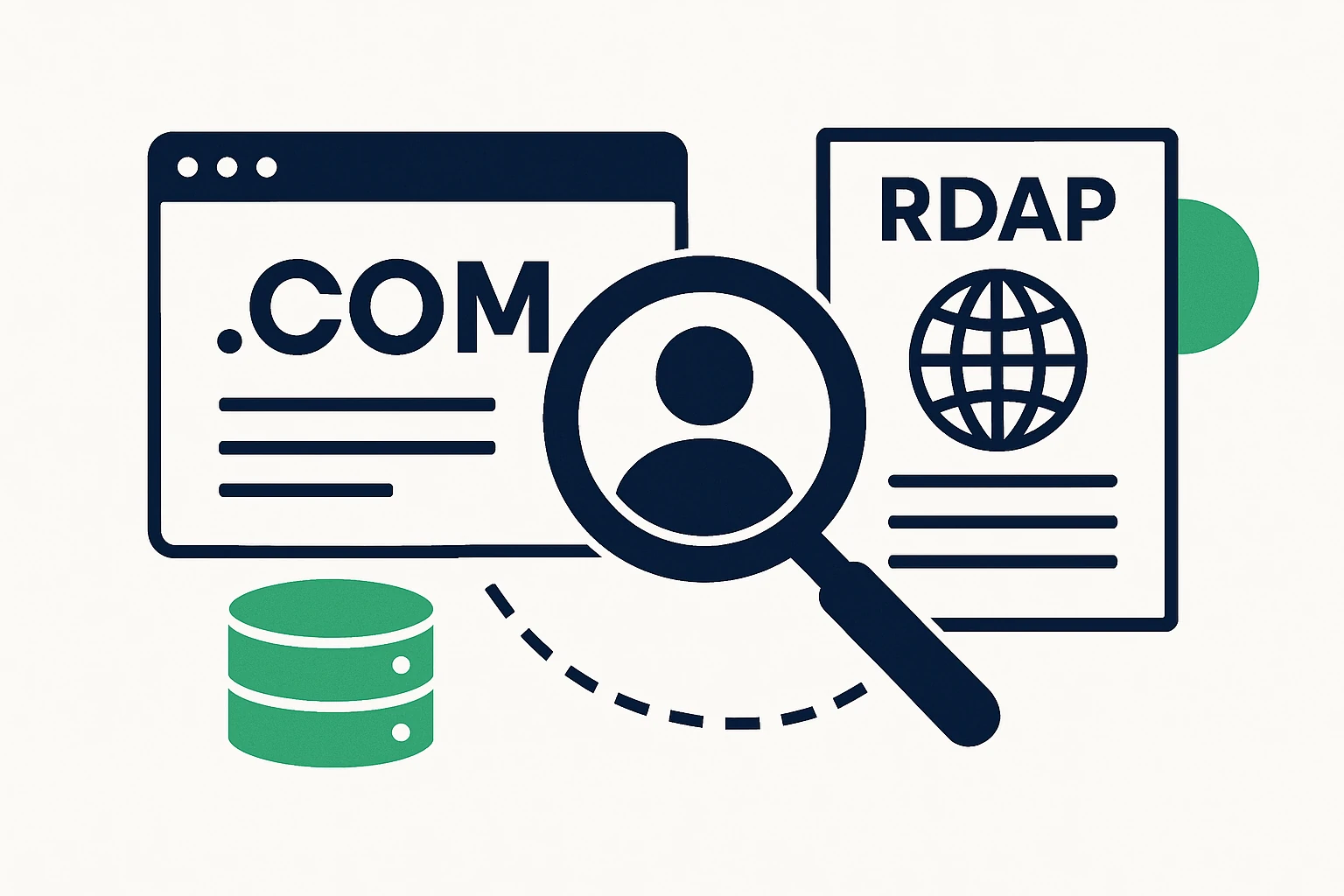
For US-based SMBs building an online presence, domain data is more than a breadcrumb trail to a website. It’s a governance artifact that informs brand protection, competitive intelligence, and risk management. As the internet governance landscape evolves, the way we access and use domain ownership information has shifted from traditional whois to Registration Data Access Protocol (RDAP). This article explains what a whois database is today, why RDAP matters for small businesses, and how to integrate reliable domain data into your workflows without overreaching privacy rules or compliance constraints. This is not merely a tech topic, it’s a practical risk-management discipline for growing brands.
What is a whois database and what data does it contain?
The term "whois" refers to a set of registries that maintain publicly accessible records about domain name registrations, including the registrant (owner), administrative and technical contacts, domain status, and lifecycle dates. Historically, these databases have been used to verify ownership, contact the responsible party for domain-related issues, and perform basic due diligence during branding or acquisition activities. However, the public visibility of personal data has become a focal point of privacy regulation, and not all data is equally accessible across all top-level domains (TLDs) or jurisdictions. As a consequence, the reliability and completeness of whois data vary by registry, and many items are now subject to privacy protections.
ICANN has long guided registration data access and is overseeing a transition away from traditional port-43 WHOIS toward RDAP, with an emphasis on privacy, internationalization, and machine-readability. As registries and registrars implement RDAP, the public-facing data model becomes more standardized and queryable, which is a boon for automation and risk screening in SMB contexts.
RDAP vs WHOIS: what changed and why it matters for SMBs
RDAP is designed to replace or augment WHOIS by delivering registration data via a modern, standardized API that supports structured data, easier parsing by machines, and better internationalization. The shift is not merely a cosmetic upgrade: it reflects a broader push to make domain data faster to access, easier to consume programmatically, and more privacy-aware. ICANN describes RDAP as the eventual replacement for the WHOIS protocol, with the goal of delivering current registration data in a consistent format across registries and registrars. This standardization is particularly valuable for SMBs that integrate domain information into their risk, compliance, or sales workflows.
Key practical implications for SMBs include:
- Consistent data fields: RDAP returns predictable fields (for example, registrant, admin contact, domain status) in a machine-friendly format, reducing custom parsing work.
- Improved privacy controls: Privacy-preserving disclosures are part of the design, with redactions where appropriate under local regulations, which means SMBs must adapt their processes to obtain legitimate access without exposing private data unnecessarily.
- Sunset of legacy WHOIS: The industry is moving toward RDAP adoption as the primary data access mechanism, with formal sunset timelines for WHOIS in many gTLDs. This affects who you can reach and how you verify ownership over time.
As a practical takeaway, SMBs should start with RDAP-capable lookups when available and treat WHOIS as a transitional data source, rather than the sole source of truth. For a deeper dive into RDAP’s role, see ICANN’s RDAP overview and related guidance.
Why RDAP adoption matters for SMBs in 2026
In the SMB context, data accessibility and reliability translate directly into faster decision-making. RDAP’s standardized responses enable easier automation, enabling small teams to triage domain ownership questions, assess risk indicators, and monitor brand-impersonation threats more efficiently. Additionally, privacy protections and regulatory expectations continue to shape what you can publicly access. The industry’s trajectory - toward RDAP with regulated visibility - highlights a longer-term advantage for SMBs that invest in compliant data-access practices today.
ICANN has explicitly noted that registration data access is evolving and that RDAP is the intended pathway for standardized access across registries. The ongoing transition includes guidance on how data can be queried and how redactions and consent rules may apply, depending on jurisdiction and registry policy. SMBs that align their data workflows to RDAP now will experience lower friction later when the last registries sunset legacy WHOIS services.
A practical SMB data-access framework
To operationalize whois data and RDAP for a small business, consider a lightweight framework that maps to typical SMB workflows: brand protection, domain acquisition, and risk management. The framework below is designed to be actionable and adaptable for teams without deep technical resources.
- Define data needs: What questions are you trying to answer? Ownership verification for a potential acquisition, tracking impersonation, or monitoring competitors’ domain footprints?
- Choose the access path: Prefer RDAP where available for standardized data, supplement with WHOIS only when a registry has not yet migrated. Plan for API-based integration if you routinely ingest data into a CRM or governance platform.
- Assess privacy and compliance: Expect redactions for personal data and prepare workflows to obtain lawful access through appropriate channels when needed.
- Integrate into your workflows: Connect RDAP/WHOIS data to your risk screening, brand-monitoring alerts, and vendor onboarding checks to detect potential brand- or security-related gaps.
- Governance and retention: Establish data-retention policies and assess how long you keep ownership or contact data, balancing business needs with privacy obligations.
For SMBs aiming to operationalize this framework quickly, a robust RDAP/WHOIS data solution can be a strategic capability. See how a dedicated RDAP & WHOIS database service can streamline access and governance for small teams.
How SMBs use whois data: three concrete applications
Domain data is most valuable when applied to real-world decisions. Here are three practical use cases that align with typical SMB objectives:
- Brand protection and impersonation prevention: Regularly monitoring for similar domains, typosquats, and unauthorized affiliates helps protect brand perception and customer trust. RDAP makes it easier to automate checks and to link ownership data to escalation workflows in incident response plans.
- Domain acquisition diligence: When evaluating a target domain, verify ownership, contactability, and domain history to inform negotiation strategy and ensure a clean transfer process. Data quality and consistent fields minimize surprises during due diligence.
- Cyber risk and vendor risk management: Cross-reference domain owners with security-relevant indicators (e.g., hosting changes, DNS records) to flag risk signals in third-party relationships and throughout the supply chain.
These applications become even more powerful when integrated with existing marketing, legal, and IT workflows. For SMBs, this means a practical, repeatable data source rather than ad-hoc lookups. A single, reliable data feed can reduce handling time and improve cross-functional alignment across marketing, security, and operations.
Limitations, trade-offs, and common mistakes
Like any data source, whois databases and RDAP have limitations SMBs should respect. The most common missteps include assuming all data is uniformly present across all TLDs, ignoring privacy redactions, and treating RDAP as a one-size-fits-all replacement without accounting for registry-specific policies. Specific trade-offs to consider:
- Data completeness is uneven: Some registries limit visibility or redact personal contact information, which can hinder direct reachability even when ownership is clear.
- Privacy rules vary by jurisdiction: GDPR and other privacy regimes affect what can be publicly disclosed and how data should be accessed for legitimate purposes. Plan to justify data requests and implement privacy-compliant workflows.
- Migration timing matters: While RDAP is the future, not all registries have fully migrated, so some lookups require fallback to older WHOIS interfaces in the short term.
- Data quality varies by source: RDAP responses can differ in format or field naming across registries, standardization efforts mitigate this but don’t eliminate it entirely.
One expert takeaway is that RDAP’s standardized data fields and machine-readable responses reduce the heavy lifting required to normalize data from multiple registries, which is a meaningful advantage for SMBs with limited technical resources. Still, it’s essential to pair RDAP with governance rules and a routine data-quality check to avoid misinterpretation.
A practical, structured approach to access and use
To help SMBs navigate this transition, here is a concise, action-oriented framework you can adopt today. This is not a technical spec sheet, it’s a decision-ready blueprint that balances accessibility with privacy and compliance.
- Assess your data needs: Decide whether you need ownership verification, contactability, or historical domain information for risk screening or acquisitions. Align these needs with the data fields RDAP typically provides.
- Prioritize RDAP-first, WHOIS-second: Use RDAP as the primary data source where available, and reserve WHOIS for registries that have not migrated yet. Be prepared for redactions and lawful access processes.
- Automate with governance in mind: If you ingest domain data into systems (CRM, alerting, risk portals), design a lightweight data map that handles both RDAP and WHOIS formats and logs data provenance.
- Plan privacy-compliant workflows: Build a justification and approval path for accessing or sharing domain data, especially when handling personal data under privacy rules.
For SMBs seeking a managed solution that consolidates these concerns, consider a dedicated RDAP & WHOIS database service. It’s a way to institutionalize data access while staying aligned with regulatory expectations. RDAP & WHOIS Database provides a consolidated channel for domain data access, and you can review pricing to plan accordingly.
Expert insight
Expert insight: RDAP’s standardized data fields and machine-readable responses are a meaningful efficiency gain for SMBs looking to integrate domain data into risk and brand-protection workflows. This standardization reduces the custom parsing burden and helps teams move faster with fewer errors.
Where to start and how to evaluate providers
Starting with RDAP for domain data requires evaluating providers on a few practical axes: data completeness by registry, the availability of an API or bulk lookup options, privacy- and compliance-friendly access controls, and clear data-retention policies. A 360-degree view of these factors ensures your SMB avoids gaps that could impede brand protection or due-diligence processes. If you are evaluating third-party solutions, verify that the provider supports both RDAP and legacy WHOIS fallback where needed, offers predictable uptime and response quality, and provides clear avoidance of unnecessary personal data exposure.
Limitations and a note on attribution
Because domain data is governed by multiple registries and privacy regimes, attribution is important. When you use data from RDAP or WHOIS in your workflows, ensure you reference the data’s source and respect any redactions or access controls that apply in your jurisdiction. ICANN’s ongoing RDAP work and privacy guidance emphasize that data access should be governed by policy and consent where appropriate. See ICANN’s RDAP overview and related policies for a fuller picture of how the ecosystem is evolving.
Conclusion: turn-domain data into a governance advantage
For SMBs, whois data remains a valuable signal - when accessed responsibly and in a future-proofed way. The transition to RDAP brings a more consistent, machine-readable data landscape, while privacy rules and registry-specific policies shape how much information is publicly visible. By adopting an RDAP-first approach, aligning with governance practices, and using a reputable data-source partner when needed, SMBs can strengthen brand protection, streamline domain due-diligence, and reduce risk across their digital footprint. For ongoing access or a managed solution, consider the RDAP & WHOIS database service as part of your digital-risk toolkit.
Additional resources and listings related to domain data can be found through the WebAtla domains catalog, including a dedicated RDAP & WHOIS database page and related pricing information. Pricing provides a quick way to assess options for teams of different sizes.